On November 4, Iran launched a drone attack targeting the autonomous Kurdistan Region of northern Iraq. It is the latest in more than 1,000 Iranian attacks on territory administered by the Kurdistan Regional Government (KRG). More broadly, northern Iraq faces persistent political divisions and security threats. In the Sinjar region, home to the Yazidi minority, political disputes make stability difficult. In Kirkuk, Iraq’s Counter-Terrorism Service (ICTS) captured an Islamic State suspect on November 5.
Iranian threats to the KRG are linked to the wider security picture. While the KRG’s security forces are independent of Baghdad, to a large extent, they also cooperate to keep groups like the Islamic State in check. Iran, which seeks to maintain its influence in Baghdad, has been attacking Kurdish Iranian opposition groups that are based in the KRG.
The November 4 drone attack targeted “a Komala headquarters in northeast Erbil with two explosive drones” and struck “a house in Halabja province, causing property damage but no casualties,” the Komala group told Rudaw Media Network. Komala is one of five Kurdish Iranian opposition groups that joined a coalition against the Iranian regime in February 2026. The drone attack happened in “the Alana valley of Balisan, about 90 kilometers northeast of Erbil, at around 8:45 am on Wednesday,” Rudaw added.
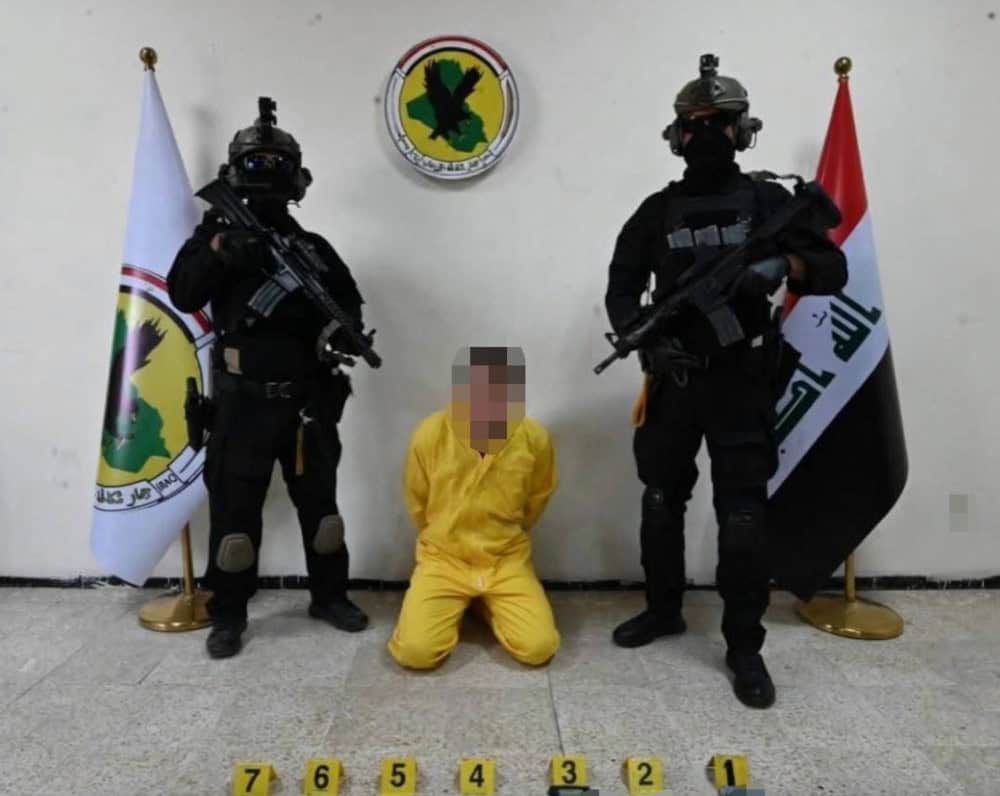
In Kirkuk on November 5, the ICTS arrested an Islamic State-linked suspect. The counterterrorism service said the operation was “part of its ongoing efforts to pursue the remnants of the terrorist ISIS gangs and track down their members.” The ICTS added that it is continuing “high-precision operations to track down individuals wanted by the judiciary and pursue the remnants of the terrorist ISIS gangs, thereby strengthening security and stability and safeguarding the safety of citizens.”
US coalition forces that had been supporting Iraq against the Islamic State withdrew from the country on September 30 as part of an agreement between Washington and Baghdad. US President Donald Trump spoke with Iraqi Prime Minister Ali al Zaidi on November 5 about regional security challenges, with Zaidi emphasizing Iraq’s sovereignty and the need to prevent attacks on neighboring countries from Iraqi territory.
Iraq is also seeking to stabilize the Sinjar region in northern Iraq, along the Syrian border and west of the KRG. “Uncertainty looms over the future of the conflict-ridden Yazidi heartland of Shingal (Sinjar) amid deepening political disputes between the Kurdistan Democratic Party (KDP) and the Patriotic Union of Kurdistan (PUK), with a parliamentary committee intervening to halt a new nomination process over the disputed status of a mayor appointed in 2024,” Rudaw noted on November 3.
The latest political divisions in Sinjar are part of a larger dispute between the KDP and PUK. “Patriotic Union of Kurdistan (PUK) leader Bafel Talabani announced on Thursday that his party has decided to withdraw from the Kurdistan Regional Government (KRG) cabinet in protest against the reactivation of the Kurdistan Parliament without the PUK’s participation, declaring the legislature illegitimate,” Rudaw reported on November 5.
The dispute adds to political uncertainty in northern Iraq as tensions with Iran persist and Baghdad seeks to stabilize the country and strengthen foreign ties.
US Special Presidential Envoy for Syria and Iraq Tom Barrack visited Baghdad on November 5 and met with Prime Minister Zaidi. “Under Prime Minister Al-Zaidi, [Iraq] is choosing sovereignty over dependency, investment over stagnation, and partnership over proxy,” Barrack wrote on X after the meeting. “We also discussed the harder work of lowering the temperature across the region, containing crises before they spread, and choosing diplomacy over escalation,” he added.