Iran is looking to Russia to bolster its depleted air defenses after Iran’s June 2025 war with Israel and as it faces the largest US military buildup in the Middle East since the 2003 invasion of Iraq. The Financial Times reported on Sunday that the two regimes had struck a €495 million deal for Russia to supply “Verba” shoulder-mounted air defense systems to Iran. However, these defenses would be unlikely to significantly impact a possible US operation against the Islamic Republic.
Tehran formally requested the Verba in July after its 12-day war with Israel, and the two sides signed the contract in December, FT reported. During that war and in a pair of earlier strikes in 2024, Israeli forces destroyed or damaged many of Iran’s air defense systems, including its Russian-supplied S-300 long-range surface-to-air missile batteries.
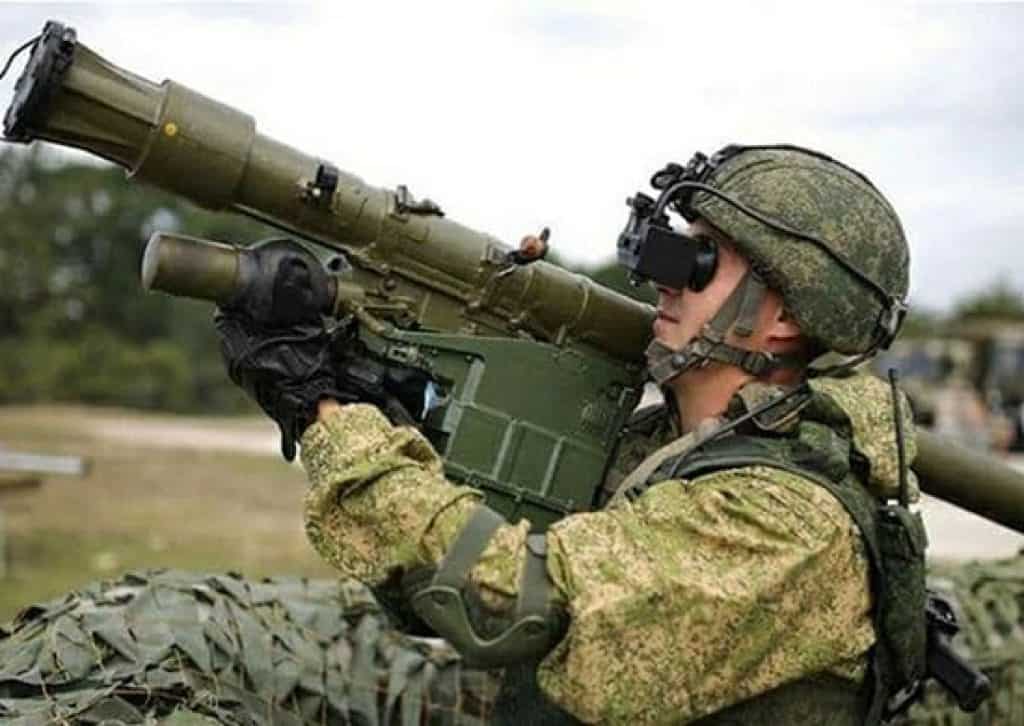
The 9K333 Verba, whose NATO reporting name is SA-29 Gizmo, is Russia’s most advanced man-portable air defense system (MANPADS) in mass production. It can reportedly hit aircraft up to 6 kilometers away at altitudes of nearly 15,000 feet using the missile’s multi-spectral (ultraviolet, near-infrared, and mid-infrared) seeker.
The deal reportedly calls for Russia to supply 500 launch units, each equipped with “Mowgli-2” thermal imaging sights, along with 2,500 9M336 missiles. Deliveries will occur in three stages between 2027 and 2029, meaning they would arrive after a potential US operation targeting Iran.
One source familiar with the contract told the FT that a small number of the Verba MANPADS may already have been delivered. It is also possible that Russia could accelerate the delivery timeline by drawing on existing stocks, though Moscow would likely be hesitant to deprive its own forces fighting against Ukraine. Russian Il-76TD transport planes have flown to Iran at least four times since late December, but it is not known what cargo they were transporting.
Regardless, these systems are unlikely to have a decisive effect on a potential US military operation against the Islamic Republic. Iranian forces could use MANPADS to target some drones, helicopters, or other low-flying aircraft, which would complicate potential US air assaults or search-and-rescue missions. However, they would be of little help against fighter jets and bombers flying at higher altitudes.
Nevertheless, this contract is another example of how Moscow and Tehran have bolstered their ties since the start of Russia’s full-scale invasion of Ukraine four years ago. In 2022, Iran began providing Russia with various unmanned aerial systems, most notably Shahed-136 one-way attack drones that Russia used mainly to strike critical infrastructure deep inside Ukraine. Iran also supplied Russia with artillery ammunition and other materiel, including close-range ballistic missiles in 2024, though the missiles have apparently yet to see combat.
Most significantly, Iran helped Russia localize production of the Shahed-136 at its new Alabuga drone manufacturing facility in Tatarstan. This capability has enabled Russia to mass-produce modified versions of the drone in far larger quantities than it had received from Iran, churning out several thousand per month between Alabuga and another factory.
In May, Moscow and Tehran finalized a 20-year Comprehensive Strategic Partnership Treaty, cementing a collaboration in “all spheres, including defense, counter-terrorism, energy, finance, transport, industry, agriculture, culture, science, and engineering.” Notably, the agreement did not include a mutual defense clause, absolving Russia of any obligation to defend Iran if it is attacked.
Russia’s lack of meaningful support for Iran during its 12-Day War with Israel did not go unnoticed in Tehran. Despite Iran’s significant contributions towards Russia’s war with Ukraine, Russia offered little more than a condemnation of Israel and the United States as they decimated Iran’s air defense capabilities, missile-production facilities, and nuclear facilities, as well as many of its top military leadership and nuclear scientists.
Al Arabiya quoted Mohammad Sadr, a member of Iran’s Expediency Discernment Council, as stating that the “war proved the strategic alliance with Moscow is worthless.”
The latest collaboration may be Russia’s attempt prove that it’s still a worthwhile partner, even though it no longer depends on Iranian deliveries of drones to supply its military. News of the MANPADS deal comes after reports that Russia began delivering Mi-28NE attack helicopters to Iran in January, a big improvement over Iran’s aging pre-revolution AH-1 Cobras, which were provided by the United States in the 1970s.
Iran is also believed to have pursued a deal for Russian Su-35 “Flanker-E” multirole fighter jets. Whether that will happen is unclear, but Iran did begin receiving Russian Yak-130 training jets in 2023.
In recent weeks, Russian officials have spoken out in opposition to potential US military strikes on Iran, calling for all parties to show restraint. Last week, Russian and Chinese vessels joined Iran in naval exercises near the Strait of Hormuz and the Gulf of Oman. However, it is unlikely that Russia will intervene if US President Donald Trump decides to strike Iran.