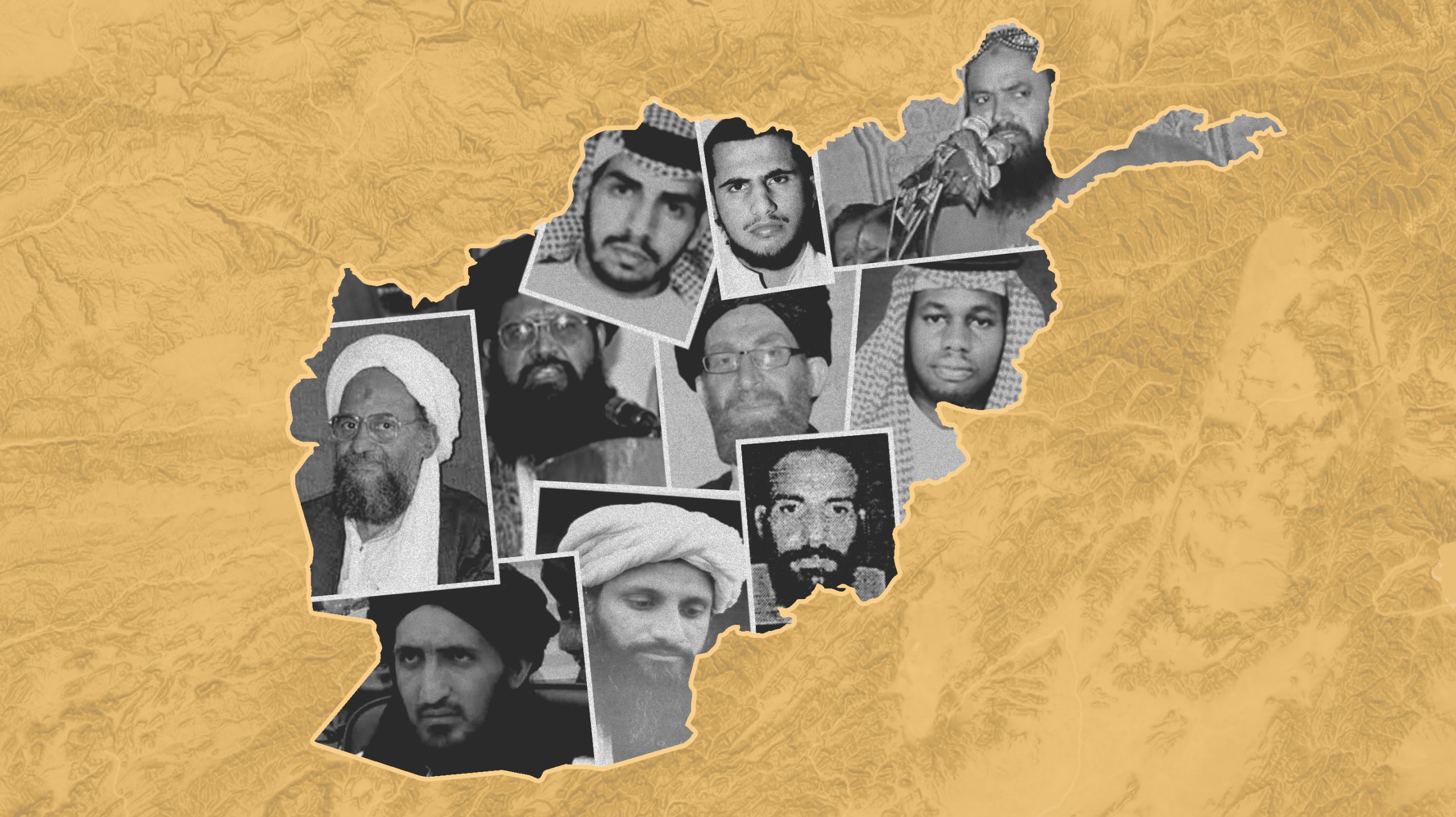
Mullah Abdul Salam, the Taliban’s shadow governor for the embattled Afghan province of Kunduz, has denied reports by Afghan intelligence that he was killed in a US airstrike after the city of Kunduz fell to the jihadist group on Sept. 28. Afghan soldiers have since retaken the center of the city and are battling the Taliban in several neighborhoods.
Afghanistan’s National Directorate of Intelligence claimed that Salam, a Lashkar-e-Taiba commander who was identified in the Afghan press as “Haris,” and 15 Taliban fighters were killed in an airstrike in Kunduz on the evening of Sept. 29. The US is thought to have carried out the airstrike based on intelligence provided by the NDS.
“Taliban shadow governor for Kunduz, Mawlawi Salam and dozen [sic], the head of #Lashkar-e-Tayeba got killed in NDS coordinated airstrike in KDZ [Kunduz],” the NDS reported on Twitter on Sept. 30. The NDS said that Salam was targeted twice before he was purportedly killed.
“Taliban Shadow Governor for Kunduz had escaped 2 NDS coordinated attacks in last 48 hours before last night’s attack in which he was killed,” the NDS later stated.
The Taliban quickly responded to the NDS claim that Salam was killed, and published a quick interview with Salam on Voice of Jihad’s Pashto language website. Voice of Jihad, the group’s official propaganda outlet, is published in five languages.
“Neither my deputy Mohammad, myself, nor any other comrades have been hurt; we are alright,” Salam stated in an interview that was clearly recorded on Sept. 30. In the interview he described the current fighting in Kunduz city.
“I assure everyone of my health,” Sala continued. “I heard the news on radio in which the enemy had claimed that they had martyred me and my comrades. Praise be to God, I am fine till this moment — although martyrdom is our main goal, wish, and desire, and we seek from God to grant us martyrdom.”
Salam is an influential senior Taliban leader in the Afghan north. He was one of several Taliban commanders who was purportedly detailed by Pakistani intelligence in 2010 before being released in 2013 and returning to the fight. He was last seen in public in late August with hundreds of Taliban and Islamic Jihad Union fighters while swearing allegiance to Mullah Mansour, the new Taliban emir.
Afghan troops re-enter Kunduz
The Afghan military and police are attempting to regain control of Kunduz and are said to have entered the city center and several neighborhoods. The Taliban controlled the city for three days before Afghan forces regrouped and launched a counterattack. Afghan forces retreated to the main airport outside of Kunduz, and beat back a Taliban attempt to overrun the facility, with the help of US Special Forces and airstrikes.
The Afghan military offensive, which was launched last evening, is spearheaded by Afghan commandos backed by US military advisors and air support. Afghan soldiers and police are also said to be participating in the operation.
While Afghan officials have made bold proclamations that the city has been cleared of the Taliban and hundreds of Taliban fighters have been killed, independent journalists in the city have indicated that Kunduz remains contested.
“[The] Situation there doesn’t seem to be under control. Fighting still ongoing in the city and at the city’s outskirts,” Habib Khan Totakhi, an Afghan journalist, wrote on Twitter. “It will likely take weeks for Afghan forces to entirely clear the city of #Kunduz from the #Taliban,” he continued.
Matthias Gebauer, a reporter for Der Spiegel, said that as of 10 a.m. Eastern on Oct. 1, the Taliban’s white flag was “back up at the main traffic circle” in the city’s center.
At one point, a Taliban spokesman confirmed that the bulk of their forces have withdrawn from the city center. “It was our tactic to vacate the city to allow enemy troops to enter so we could encircle them,” Taliban spokesman Zabihullah Mujahid told Reuters.
While the city of Kunduz remains contested, the Taliban have claimed to have seized control of three more districts in the Afghan north: Khwaja Ghar in Takhar; Qala-i-Zal in Kunduz; and Talaw Barfak in Baghlan. Afghan officials claimed that they repelled attacks in Khwaja Ghar.
If the Taliban’s latest claims are accurate, then the group has seized eight districts in four provinces (Khak-e-Safid in Farah; Khwaja Ghar, Yangi Qala, Ishkamish, and Bangi districts in Takhar; Khanabad and Qala-i-Zal in Kunduz; and Talaw Barfak in Baghlan) and the provincial capital of Kunduz in the span of span of four days.