
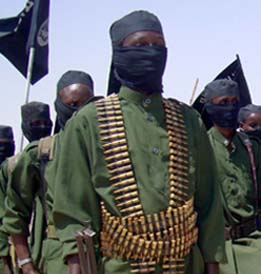
Just one week after the Pakistani government agreed to implement sharia, or Islamic law, in the vast Malakand Division, the Taliban are flaunting the peace agreement with the government and pushing into neighboring regions.
President Zardari signed the sharia legislation into law on April 13 as part of an effort to quell the brutal Taliban insurgency in Swat, which has been ongoing since the summer of 2007. The Pakistani military was defeated in its three offensives designed to oust the Taliban, led by Mullah Fazlullah, which prompted the government to promise the implementation of sharia and an end to military operations in exchange for peace.
But the Taliban have violated the peace agreement multiple times since the initial ceasefire was instituted in mid-February, and have continued to do so since Zardari signed the sharia legislation into law. And the Taliban are forcefully expanding their influence in neighboring regions.
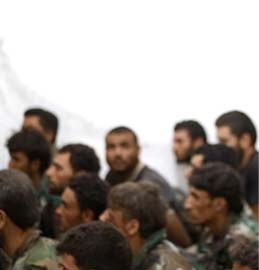
The Taliban have reestablished checkpoints in Swat and have started to conduct patrols. Yesterday, the Taliban kidnapped six soldiers and a driver in Swat. Today four civilians were kidnapped while four of the captured soldiers were placed in front of the hastily established sharia courts.
In the neighboring district of Buner, a region the Taliban overran in just eight short days with minimal resistance, the Taliban are sending in more troops. The Taliban are patrolling and manning checkpoints in Buner, while their followers are preaching in mosques and openly recruiting young men to fight. Local courts have closed and judges have gone ‘on leave,’ while a local TNSM official said his group fully backs the Taliban.
In Shangla, more than 70 Taliban fighters occupied a hospital while others fanned out and took over control of government buildings. In Swat, Buner, and Shangla, the local administration and the police did not protest the Taliban moves.
The Taliban are also signaling their intent to moving into the districts of Swabi, Malakand, and Mardan. Last week, the Taliban conducted a victory road march through the three districts after conquering Buner. The Taliban have now begun to establish armed checkpoints in Swat and Buner along the roads that border Swabi, Malakand, and Mardan.
The Swat Taliban are also flaunting their control of the region. Muslim Khan, a spokesman for Fazlullah, hit the media circuit and bragged that al Qaeda leader Osama bin Laden and other associates were welcome to shelter in Swat.
“Osama can come here,” Khan told The Associated Press on April 20. “Sure, like a brother they can stay anywhere they want. Yes, we will help them and protect them.”
Khan also said the Taliban would not lay down their weapons, nor would they stop fighting until sharia was enforced throughout all of Pakistan. Jihad “will continue till the Day of Judgment,” Khan told Dawn. He demanded Pakistan shut down traditional courts and threatened lawyers that they would be punished if they tried to practice law in Swat.
Khan’s statements echoed those of Sufi Mohammed, the leader of the banned pro-Taliban movement that negotiated the peace agreement with the government. During a rally in Swat on April 19, Sufi said has followers would not rest until sharia is enforced through all of Pakistan.
Sufi demanded the Pakistani government halt all activities by the secular courts in Swat and decreed that decisions made by his Islamic courts cannot be challenged by Pakistan’s Supreme Court. Sufi said that if his demands were not met within four days, “The government will be responsible for all the consequences if our demands are not implemented.” Sufi also described Pakistan’s democracy as a “system of infidels.”
Pakistan’s government has been virtually silent on the Taliban’s flaunting of the peace agreement and the Taliban’s promises to shelter international terrorist leaders. Other than the secular Muttahida Qaumi Movement, the MQM or the United National Movement, no political party has raised an objection to the Taliban’s actions.
The MQM walked out of the parliament session that voted in favor of the sharia law. Pakistan’s remaining members of parliament unanimously voted in favor of the legislation after Sufi said anyone who voted against the bill was a “non-Muslim.”
Political leaders such as President Asif Ali Zardari, Prime Minister Syed Yousuf Raza Gilani, and opposition party leader Nawaz Sharif have expressed “concerns” over the situation in Swat, but have continued to support the agreement with the Taliban. Gilani even went so far as to say recently that the situation in Swat is “returning to normal.”

18 Comments
Gilani is correct. Pakistan is ‘returning to normal’ and normal for Pakistan is the full implementation of Islamic Sharia.
Those of us bought up on Judeo-Christian principle of law do not understand Pakistan. Pakistan was set up for the Indian Muslim so that they did not have to interact with their non muslim fellow country men/women. Well with the implementation of the Taliban version of Sharia they have got their wish. Took them 60 odd years but never mind!!!
All I want is public display of the fact that Pakistan’s main ability to cause a major danger to the world has been neutered and I can sleep easy. Also I want my government to stop sending my tax £££’s to Pakistan as aid in an attempt to stop the Taliban.
We can’t and must leave Pakistan to its people!!!
Hell Saudi Arabia is a Islamic Sharia state and we appear not to have any problems with it so it should be with Pakistan. The people wanted it either through act of commission or omission and they can have it, since I don’t see why my taxes are used to stop the implementation of something that everyone wants.
I wonder how normal Gilani will think the situation to be once he is deposed and the Taliban execute him.
The Thunder Run has linked to this post in the blog post From the Front: 04/22/2009 News and Personal dispatches from the front and the home front.
Mr. Raj- I think the reason why we can’t let Pakistan off the hook is because they are constantly planning attacks against us. Saudi has so called Sharia law but they are not our direct enemies. May be in couple of years but I don’t see that happening anytime soon. We have got to stop Taliban before the cancers spreads in the area. If they gain control of Pakistan I am pretty sure they would have plan for India as well.
G-shock,
India is not muslim majority. So if Taliban spread to India then there may be significant resistance not only from India but from UN as well because this involves crossing the border.
Sure Saudi is also an enemy. We just can’t see that because we want their oil. 19 hijackers of 9/11 were Saudi. Saudi supported/ignored bin Laden until he insulted Saudi royal family. Their opposition did not involve West’s interests.
To be consistent and not sound like a hypocrite the West must not say “Sharia is alright in Saudi but not in Pak”
Raj Kumar, their reasons for establishing Pakistan was based on a mostly unfounded fear of persecution, not because they wanted Wahabi style Sharia law. Gilani says its normal because like the other politicians, he’s trying to shirk his responsibility. Don’t make the statement something it isn’t.
I was under the impression that Malakand District was already under Taliban control. Is that not the case anymore? Why do they have to retake it?
Spooky,
Malakand is a large area. Some parts are already int their control while some are not. The article is addressing the parts that are not. You will get a much better picture by looking at this graphic
https://www.longwarjournal.org/maps/Pakistan/NWFP_redmap_04142008.php
Pat
I don’t think it is a matter of saying that Shariah is all right in Saudi Arabia and not OK in Pakistan, but more determining what is possible and what is not possible.
Saudi has had a hardline Wahabi bent for several centuries and changing that to a more liberal POV will take a while.
Pakistan had less of the hardline Wahabi – Deobandi mindset (compared to Saudi Arabia) and is regressing towards an ultra conservative POV.
With Saudi Arabia, moving them forward into the present is all that is possible.
With Pakistan, there is a desire by other countries to prevent it from slipping into the past.
Two different starting points for Pakistan and Saudi Arabia, but Pakistan seems determined to Catch up to the Saudi standard.
The people of Pakistan aren’t doing enough to force their government and Army to stop the militants. The support & monetary aid from other countries will be wasted in trying to save Pakistan from slipping into the past.
“You can lead a horse to water, but can’t force it to drink”.
That appears to be where we are at with Pakistan.
Perhaps there is a weakness in all of this. Economically speaking, it sounds like Sharia law and Taliban rule results in extreme poverty and suffering. Afghanistan under Taliban rule was an example of this. If so, then the Taliban resources will have to be spread around.
They will get some infusion when they conquer a district and pillage its existing resources but then there will be minimal new generation of money etc after they take control. They will have to feed and shelter the people there and spread their jihadi resources around even more. As they spread themsleves and their resouces around, they will be vulnerable.
Also, larger swaths of territory require more people to subcomb to their will. That means there is a much larger pool of people who may be disenfranchised and may oppose Taliban rule. They may be more inclined to help the US. Our money and help may become more valuable to them.
Pat-
I’m not talking about Malakand DIVISION, I’m talking about Malakand DISTRICT, which is the small bit of land just above Charsadda. In LWJ’s map it was already red and it was also already considered lost from what I have read in the newspapers and other sources. I was under the impression that Charsadda was being attacked from Malakand. So my question remains, is Malakand under Taliban control or what?
Spooky,
The governemnt cut one of their “peace deals” with the Taliban in both Malakand and Mardan last year. I colored Mardan red then – that is one of the criteria of the red map. A Taliban military advance into Malkand/Mardan will be the finishing touch on their control of the districts.
Raj,
I sincerely wish we could just leave them alone and they would leave us alone. However, they won’t and we can’t. As much trouble as it causes, it is greatly preferable that we attack AQ and their Taliban allies in Pakistan, rather than allowing them to kill our people in London or Ottawa or Washington. Because left untouched, that’s what they will do.
Lets not forget there is also a nuclear arsenal at stake as well. these maniacs wouldn’t hesitate to pull that trigger. in defense of other mass murders AQ has already declared it a religious duty to use whatever means at their disposal to advance the cause of jihad around the world. That includes nukes.
bard207, I think it is better to let pakistanis decide what they want. If they want sharia let them have it. Democracy simple and easy.
JR, again, its not wise to bomb Iraq for what Afghans did. Leave Pakistanis to themselves and bomb them to stone age if they attack you. I do not think even UN will object in such a scenario. If people want sharia, they needs to take responsibility for their actions. If they attack someone they deserve the oncoming suffering.
The nukes can be destroyed. If one gives green signal/money to Israel they can take care of the nukes.
Apparantly the Taliban have reached the western most Tehsil of Mensehra and will soon encroach upon Mansehra city itself.
http://www.thenews.com.pk/top_story_detail.asp?Id=21689
Looks like they’re making a move to both Pincer Peshawar as well as to cut off the Army in their stronghold in Haripur-Abbotabad from the Northern Areas. Wondering why they haven’t seized Kohistan first though.
The FC are ill equipped to deal with this, as has been proven time and again, even if General Tariq Aziz is one of the commanders actually trying to fight.
What can you do with a group like the Taliban? As soon as they are given a little leeway they take it and run with it, essentially laughing in the face of Pakistani sovereignty. Then again, the Taliban see this land as their ancestral home, which it is, and unsurprisingly have little respect for the fledgling and unstable Pakistani regime.
A year ago my thoughts on how to deal with the Afghanistan situation would have been to hand over control to the Taliban, as they are the only dominant political force in Afghanistan, on condition of some human rights issues. However when they maintain the position of sharia forever until judgement day, it is reminiscent of Kruschev’s explosive statementm “We will crush you.” Language and actions like this are not assisting the Taliban in preserving their culture in a world slowly changing around them, which is what I think their reactionary policies and ideology is at a basic level. This only serves to further alienate them from any government in a position to religitamize their power.
I should think, that in terms of democracy, leaving it up to a country to put 50% of its population under the slave yoke of sharia is not really an option. Like cattle in a barn, women are reduced to birthing machines and menial work slaves. Do we have a right to call this democracy?
I say, observe how democratic Pakistan will act. And when it acts like a loonatic towards its own demise, we HAVE to step in with force.