|
|
|
Iraqi and Coalition forces Order of Battle as of March 31, 2009. |
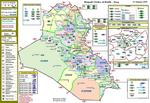
The April 2009 updates to the Iraqi Security Forces Order of Battle are now available at the ISF OOB homepage. The significant changes to the Order of Battle that occurred in March are summarized below.
The Budget Crunch.
The impact of Iraq’s national budget crunch on the Iraqi Security Forces has been serious. On March 8, the Government of Iraq’s spokesman, Dr. Al-Dabbagh said:
“I want to say that we have problems with the budget because of the oil. We — The Iraqi (inaudible) the Council of Representatives are trying through — by restructuring the, the budget, to, to fulfill all our needs. There are — certain sectors are not going to get affected. One of them is the purchasing of equipment and the expansion of the Iraqi Security Forces because it’s a big responsibility, which we have a big responsibility which is taking over the security responsibility after the American forces leaving Iraq. And we have to have the right number of equipment in order to have — be self-reliant and self-sufficient — and after 2011.”
However, this shielding does not apply to personnel. There has been a hiring freeze in all services for the last six months. New units have been formed by reorganizing and re-assigning personnel within the Iraqi Security Forces. The intentional 120-135 percent recruiting authorization for Iraqi Army combat units was terminated. Those over-strength units have been transferring personnel to form new units. The Sons of Iraq recruitment into the Iraqi Security Forces has been frozen. In October 2008, the Iraqi Army suspended Basic Combat Training after it surpassed its mandated manpower authorization. Boot camp has not been resumed since. The expansion of Ministry of Interior Emergency Police continues, but it is a reorganization of local Iraqi Police between paramilitary units and local police. The Iraqi Special Operations Forces (ISOF) has personnel who passed the selection course but:
“The ISOF brigade currently has 824 soldiers who passed the Selection Course in May 2008 but cannot be added to the official rolls due to the hiring freeze. These personnel would be sufficient to bring all units to full operational capability by July 2009 and complete force generation. However, the ISWCS [Iraqi Special Warfare Center and School] has encountered persistent difficulties obtaining support from the MoD [Ministry of Defense] for ammunition, equipment, and pay for the trainees, causing courses to be postponed. Failure to resolve the funding issue for the 824 Selection graduates is already having a significant impact on INCTF’s [Iraqi National Counter Terrorism Force] sustainment capability. INCTF advisors have made this a priority in the months ahead.”
The Government of Iraq has also canceled the use of previous years funding in the current year. This means that any ministry that did not spend its 2008 budget lost the unobligated portions when it reverted back to the central government reserves at the end of the year. This included the security forces.
Throughout the latest 9010 Quarterly Report to Congress, the impact of the Iraqi budget crisis is the single most prevalent theme. There are two factors to consider when considering the input from the 9010 Report. The information in the report pre-dates the passing of the 2009 Iraqi budget and the reporting deals only with Iraqi Security Force elements that are officially recognized by US forces. Multi-National Security Transition Command-Iraq’s (MNSTC-I) force generation section does not officially recognize the existence of the 17th Iraqi Army Division and Kurdish Regional Guards (KRG) units. The operational side of Multi-National Force-Iraq (MNF-I) does recognize the 17th Iraqi Army Division, but also does not deal with the Kurdish Forces except at the highest levels. “MNSTC-I does not have a relationship with KRG. There is a dialogue with counterparts in MoD/MoI, KRG, and MNF-I.” Thus the data submitted to the public reports omits these forces and recognizes only 13 Iraqi Army Divisions in their Iraqi force projections.
The budget crunch and the resulting hiring freeze probably explain why the Kurdish 15th and 16th Divisions have been mustered, but not become part of the Iraqi Army. The hiring freeze started the same time these two divisions were to be commissioned into the Iraqi Army.
Iraqi Arms Purchases.
The 9010 Quarterly Report to Congress also noted the difference in budgetary practices between the Iraqi Ministry of Defense (MoD) and the Ministry of Interior (MoI):
“The most significant difference between the MoD and the MoI budget execution success-and the reason the MoI is realizing greater progress-is that the MoI effectively delegates decision-making authority, including areas of budget execution, contracting, and hiring. In contrast, all management decisions within the MoD (e.g. approving all but very minor facility maintenance and all contracting requirements) must be approved by the Minister of Defense, and in some cases, by the Prime Minister. Until this process is replaced with delegated decision making, MoD’s acquisition, force management, and logistics processes will continue to be hampered. Despite these challenges, both ministries achieved a near 100% budget execution for 2008. However, the increasing public friction between the Minister of Interior and the Prime Minister may produce unintended or unforeseen consequences in MoI functionality.”
Since the 2009 Iraqi budget passed, several purchases have been announced:
• General Dynamics Land Systems has ordered long-lead items for the second set of 140 M1A1 Situational Awareness tanks. The SA enhancements to the M1A1 for Iraq include a second generation FLIR thermal site, Tank Urban Survivability (TUSK) enhancements and a driver’s vision-enhancing thermal viewer. The tanks will also be equipped with the TIGER engine, the Pulse Jet System, and embedded diagnostics. The TIGER engine has a monitoring system that is able to identify and alert the crew if there are potential problems with the tank.
• A contract for Korean T-50 jet training aircraft has been announced. No details were provided on this purchase. Standard strength of an Iraqi Air Force training squadron is 20 aircraft, but it is probable that more of the attack version have been or will be ordered. Delivery dates were not provided.
• On March 25, 24 Eurocopter EC-635 attack helicopters were sold to Iraq by France. This contract was negotiated last summer, but apparently was not executed by the end-year budget deadline. The order includes an option for 26 more EC-635s. Delivery dates were not provided.
• A contract for the procurement and delivery of 22 Mi-17CT helicopters has also been signed, with an estimated completion date of Aug. 31, 2010. This contract has been confirmed by the Russian company producing them. This will provide helicopters for a third Iraqi Air Force Mi-17 equipped squadron. This will be the second IZAF squadron to be equipped with the Counter-Terrorism version of this aircraft. According to the April 2009 “Advisor,” the cadre for five squadrons of Mi-17 pilots and gunners has been trained. The backbone of the old Iraqi Air force helicopter component was the Mi-17 and the Iraqi Air Force has up to 900 pilots and engineers available who can be employed after receiving refresher training.
• The official contract for 24 Bell 407 armed reconnaissance helicopters was also signed. It includes an option for 26 more. Delivery dates were not provided.
• The purchase of M16A4 rifles continued. A contract for 18,390 M16 A4 rifles was let and has an estimated completion date of March 8, 2010.
The Iraqis still have not decided which armored personnel carrier (APC) type to purchase. The paperwork for the LAV-25s and Strykers is already prepared by Multi-National Security Transition Command-Iraq’s Security Assistance Office. The SAO awaits the Iraqi decision on which, if either, will be purchased. A Romanian APC is also in this APC competition. There is also a reported possibility of a Korean APC purchase. Of note, the possible purchase of M1117 variants for the Iraqi Army APC role appears to have been dropped.
The purchase of 15 patrol boats and two Offshore Support Vessels from Malaysia was canceled because of the inability to deliver. The replacement order is dependent on funding and no contract has been signed. According to the 9010 Report, the Iraqi Navy is looking at 2011 to early 2013 for the delivery of the replacements. This depends on the budget.
The Iraqi Navy is still on schedule for its receipt of small craft and four Patrol Ships. The Defender and Fast Attack class boats are all due to be in Iraq this summer and the crew of first Patrol Ship (PS 701) is training on its ship in Italy. The PS 701 is to sail to Iraq in June 2009. The PS 702, PS 703, and PS 704 are to be delivered in three-month increments after PS 701. The PS 704 is to arrive in Iraq in March 2010.
The planned F-16 fighter purchase still does not have a contract and the purchase has been reduced and stretched-out to 18 per buy instead of the 36 previously discussed in a November 2008 briefing. The initial aircraft delivery is now envisioned as in 2012 instead of the first two squadrons worth delivered by 2012. The variant and total planned numbers of F-16s to be bought is 96 F-16C/D Block 50/52 aircraft by the end of 2020. Even with this reduced proposal the operative catch words quoted from the Commanding General of the Iraqi Air Force were: “Provided funds are made available by Iraq’s Parliament…”
Iraqi Army Divisional Intelligence, Surveillance, and Reconnaissance Battalions.
On March 10, the first mention of a divisional “Intelligence, Surveillance and Reconnaissance Battalion” was reported. While this is not the first reconnaissance battalion to form in the Iraqi Army, it is the first report of a divisional subordinate ISR battalion. This is a long anticipated upgrade of the divisional scout companies to battalion strength. This upgrade has been in progress over the last 15 months with minimal reporting. On Oct. 15, a contract for the support equipment was let and had an estimated completion date of July 31, 2009. However, that contract did not identify what the new reconnaissance battalions would be subordinate to.
The first reconnaissance battalions identified in the Iraqi Army were the 4th Battalions of each of the four brigades in the 9th Division. The first formed was the EE9 scout car equipped 4-37/9 Reconnaissance Battalion (then the 4-9 Battalion) in January 2008. The remaining three mechanized reconnaissance battalions were equipped with armored cavalry versions of M113 and Type 63 armored personnel carriers and formed during the summer of 2008. Originally, it was assumed that the 9th Division was being organized modularly, with each brigade having its own reconnaissance battalion. However, the Multi-National Security Transition Command-Iraq force generation schedule for 2009 lists only 13 SIGINT platoons. (Note: Remember that MNSTC-I force generation recognizes only 13 IA Divisions.) These SIGINT platoons are a component of the reconnaissance battalions. The latest 9010 report indicates only 13 “Independent Security Force battalions” in the Iraqi Army structure. This reporting indicates that only one reconnaissance battalion per division is planned. This further indicates that three of the four reconnaissance battalions in the 9th Iraqi Army Division are probably training and gaining experience prior to their transfer to other Iraqi divisions that are to become armored or mechanized. The 9th is the only heavy division currently in the Iraqi Army. Its use to train and provide experienced cadre for other future heavy forces is to be expected.
All of the reconnaissance battalions formed since October 2008 have been converted, reorganized, and retrained from existing infantry. However, the hiring freeze might not have been the driving reason for the conversions. The conversion of experienced existing infantry battalions to combat engineers had also been noted, prior to the hiring freeze. A review of previous notes shows that 12 of the 14 divisional reconnaissance battalions have been tentatively or partially identified by the type of training and designations:
• 1st Division: Probably the 1-1/1 Battalion. Not re-designated yet, but being trained by USMC Force Recon.
• 2nd Division: Probably the battalion of 8th Brigade that went to Kalsu for training instead of Habbinayah. No activity reported from 8th Brigade since December 2008.
• 3rd Division: No information. Future armored division, which makes it a candidate for a 9th Division mechanized reconnaissance battalion transfer.
• 4th Division: Probably a battalion of 15th Brigade. There are references to a commando battalion in Kirkuk belonging to 4th Division.
• 5th Division: No information. Future mechanized division, which makes it a candidate for a 9th Division mechanized reconnaissance battalion transfer.
• 6th Division: Probably a battalion of 22nd Brigade, based on location of the reported ISR Battalion at Old Muthanna.
• 7th Division: Probably the former 1-27th Battalion. The battalion was reported receiving training by US Marine Force Recon. Referred to as a commando battalion.
• 8th Division: Probably a battalion of 30th Brigade. Training by US Special Forces and photos of training involving personnel wearing “Iraqi Special Forces VIII” and “ICTF“. The Iraqi Counter-Terrorism Task Force (ICTF) is the elite battalion of Iraqi Special Operations Force and ISOF is not establishing a unit in Diwaniyah. This indicates that ISOF is providing training assistance for this commando/reconnaissance battalion.
• 9th Division: Four reconnaissance battalions known. 4-34/9 Mechanized Reconnaissance Battalion (Type63 ACAV), 4-35/9 Mechanized Reconnaissance Battalion (M113 ACAV), 4-36/9 Mechanized Reconnaissance Battalion (M113 ACAV), and 4-37/9 Reconnaissance Battalion (EE9 scout cars). They are probably planning to transfer three of the battalions to other divisions that are to be mechanized or armored.
• 10th Division: Probably 3-41/10 “Commando” Battalion.
• 11th Division: No information. Future mechanized division, which makes it a candidate for a 9th Division mechanized reconnaissance battalion transfer.
• 12th Division: No information. This is the newest IA division, commissioned in November 2008. The division is still training its 49th Brigade and other components. Its ISR Battalion is probably not organized yet.
• 14th Division: Probably the 3-50/14 Commando Battalion trained at Kalsu. One of the most experienced units assigned to the 14th Division.
• 17th Division: No information. The division formation is not officially recognized by force generation personnel. Its fourth maneuver brigade is not formed or reported authorized yet. Its ISR Battalion has probably not organized yet.
The current Iraqi Security Force Order of Battle has duplicate entries because of these conversions. Those duplicates will remain until the old and new identifications can be confirmed and resolved.
Iraqi Army Force Developments.
The Iraqi Army continues to expand and improve training. A new Tactical Commanders Course started at Taji on March 22. This battalion and brigade command-level training course is designed to “provide commanders and prospective commanders with a “toolkit” for success that addresses unit operations, staff functions, administrative suspenses, and training all of which will be compulsory for newly designated battalion and brigade commanders in the Iraqi Army.”
Training of the M1A1 instructors at Besmaya continued in March and is far more extensive than any previous Iraqi Army tank crew training. “Each student is trained in a variety of skills on the Abrams including how to drive, load, fire and perform basic maintenance. To be proficient in all areas of the Abrams the students will rotate between the four different positions on the M1A1 to learn the different skills needed to run the tank. Previously Iraqi soldiers were only trained on their primary position and knew little to nothing about the other soldiers’ skills.” The first operational tank crew companies start training this month (April 2009).
A seconded 5-36/9 Battalion T72 tanker is one of those M1A1 instructors in training. This is the second report of the existence of 5-36/9 Battalion. That the 5-36/9 Battalion includes T72 tank crewmen indicates that it is one of the armor battalions due to receive the NATO-donated T72s from Slovakia. Those T72 tanks are due to arrive by this summer. Of note, there is an unconfirmed report that the 5-36/9 Armored Battalion is the re-designated 1-54/6 Infantry Battalion. The final designation of this battalion after completing training is undetermined.
A six-week Mortar Training Course for 8th IA Division personnel ended on March 24. This course was on using the 120mm mortars that the Iraqi Army is to receive starting in June 2009. The 17th Division was also receiving 120mm mortar training during the month of March. All of the Iraqi Army divisions south of Baghdad have been reported receiving training on 120mm mortars. The current plan is to provide each Iraqi Army brigade with a six- to nine-tube 120mm mortar battery. The Government of Iraq purchased enough 120mm mortars to provide 62 brigades with nine mortars each or 94 brigades with six mortars each. The Iraqi Army currently has 53 combat brigades (and two security Brigades) not including the eight Kurdish brigades of the 15th and 16th Mountain Divisions.
The Iraqi engineers are also receiving more equipment. “Iraqi Army Field Engineer Regiments began receipt and training with the Symphony electronic counter-measure system in January 2009. Produced by US defense contractor Lockheed-Martin, the Symphony Improvised Explosive Device jammer is a vehicle-mounted, programmable, radio-frequency IED-defeat system that emits radio interference to prevent remote triggering of roadside bombs.” Also the 6th Division’s Engineering Regiment is receiving more construction equipment in August 2009. Engineer training and expansion is a priority for the 2009 and 2010 Iraqi force development plans.
Iraqi Ministry of Interior Forces.
According to the 9010 Quarterly report, coalition advisers are shifting to a brigade-level focus for Iraqi National Police units, with the exception of newly formed battalions. This indicates that the existing INP are considered ready to operate at battalion-level without US assistance. The same report also stated that the INP will complete organic support units in each division during 2009.
The Iraqi National Police has assumed three new security missions. These missions were part of the Facilities Protection Service, but those elements are not considered capable enough. The size of these new Iraqi National Police units for these missions is undetermined, with the exception of the Central Bank. That unit was reported to be a planned 600-man battalion. The new special security unit missions are:
• Central Bank Force. (Reported to be a battalion.)
• Embassy Protection Force. (Probably a brigade.)
• Antiquities/Ruins Security Force. (At least a brigade, probably more.)
The Iraqi National Police plans to have a battalion or larger presence in nine provinces by the end of 2009. Four Iraqi provinces (Baghdad, Ninewa, Basrah, and Salahadin) already have an Iraqi National Police presence that large. Diyala province is to form a brigade this year. The continued expansion into the provinces is supported by a three-year plan to base a brigade-sized National Police force into each of the provinces, complete with a regionally based division HQ and division support battalions.
However, based on projected budget shortfalls, the Iraqi National Police will likely struggle with hiring, training, and equipping the additional personnel required to reach the desired end strength of approximately 60,000 in 2009.
The Iraqi Department of Border Enforcement is reported to be using unmanned aerial vehicles to monitor the borders. Additional reporting from the World Tribune stated that “Officials said the U.S. military has transferred surplus UAV systems to the Iraqi military and security forces. They said U.S. advisers have helped operate the UAVs and trained Iraqi personnel.” Details of what types of UAVs or their capabilities are sketchy at this point.
The first graduation from the Northern Oil Police Directorate’s Kirkuk Regional Training Center occurred in March. The Kirkuk RTC graduated 200 OPF personnel. According to the 9010 report, “the Oil Police Force operates 12 Battalions in three districts-south, central, and north. With additional funding, the MoI plans to form (funding permitting) an additional seven battalions over the next year and an additional 13 battalions by 2012 to provide nationwide infrastructure security coverage to this critical national resource.” From December to February, two new Oil Police battalions were formed. The Ministry of Interior is scheduled to resume full responsibility from the Ministry of Defense for guarding the oil infrastructure in late 2010.
Provincial Iraqi Police continued to reorganize and add capabilities. A Saqlawiya Provincial Security Force (PSF) was reported located northwest of Falujah. PSF is a term usually used to refer to brigade-sized paramilitary units in Anbar. This indicates that the Anbar Police have added a fourth brigade to their structure.
Basrah has added a 6th Emergency Response Battalion to its organization. This battalion was reported training at the Iraqi National Police headquarters building. Most of the Iraqi Police emergency units, battalions, and brigades are expected to merge with the Iraqi National Police and the Ministry of Interior Special Operations Forces.
Elements of Dhi Qar province’s 5th Tactical Security Unit received air assault training in March. “Tactical Security Unit” is new term being used for an Iraqi Police emergency brigade.
Hillah Police are going to the dogs. They have started forming and training their first K9 Unit. This is the first reported K9 unit in the entire Iraqi Police.
Kurdish Regional Guards.
A draft report from the Center for Strategic and International Studies (CSIS) provides a single-source unconfirmed partial organization for the 100,000 Kurdish Regional Guards. The cited source for this information is a “US military source familiar with the PUK Peshmerga.” The organizational data reflects only the PUK part of the KRG forces. Normally, this would not be reported in this venue because of its unconfirmed nature and sourcing. However, this is the only open source organizational data available for any of the Kurdish Regional Government’s forces. It will not be added to the order of battle pages until and unless confirmed.
According to the report, the PUK military component is a “brigade-centric infantry force with some armor and artillery and support units.” The future Iraqi Army 15th Mountain Division is being formed out of PUK troops, while the future Iraqi Army 16th Mountain Division is formed from KDP troops. The PUK force is divided into organized and semi-organized units. The Organized units are better armed, trained, and disciplined. The forces operate on a two-week on/two-week off schedule. The CSIS report author did not know which of the following units are components of the future 15,000-man Iraqi Army 15th Mountain Division:
PUK organized forces (6,658 personnel)
• 1 mechanized brigade (including 1 tank and 2 mechanized battalions).
• 3 anti-tank battalions.
• 3 tank-destroyer battalions.
• 1 machine gun battalion.
• 6 field artillery battalions.
• 1 engineer battalion.
• 1 scout battalion. (Deployed to Baghdad as the core of the Presidential Security Brigade.)
PUK semi-organized forces (25,000-26,000 personnel)
• 16 infantry brigades of 300 [under strength battalion or cadre] to 2,000 personnel each.
PUK Ministry of Peshmerga Affairs (8,000 personnel)
• 2 infantry battalions.
• 1 field artillery battalion.
• 3 military intelligence battalions.
Multi-National Force-Iraq Restructured.
On March 31, The UK-led Multi-National Division-South East was disestablished. The area was merged with Multi-National Division-Center and renamed Multi-National Division-South. MND-SE was the last of the non-US led Multi-National Force-Iraq subordinate commands. The Korean-led Multi-National Division-North East was disestablished in November 2008. MND-NE’s area was absorbed by Multi-National Division-North. The Polish-led Multi-National Division-Central South was disestablished and its area absorbed by MND-C in October 2008. Current MNF-I/MNC-I area commands are as follows:
• Multi-National Division-Baghdad: Led by the US 1st Cavalry Division, is responsible for the Baghdad Province.
• Multi-National Force-West: Led by the US II Marine Expeditionary Force, over watches the Anbar Province. MNF-W is in the process of reducing to a Marine Expeditionary Brigade.
• Multi-National Division-North: Led by the US 25th Infantry Division, is responsible for the seven provinces north of Baghdad.
• Multi-National Division-South: Led by the US 10th Mountain Division, over watches the nine provinces south of Baghdad. 10th Mountain Division is to be relieved by the US 34th Infantry Division in early May 2009.