|
|
|
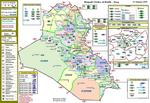
Iraqi and Coalition forces Order of Battle as of February 28, 2009. |
The March 2009 updates to the Iraqi Security Forces Order of Battle are now available at the ISF OOB homepage.
The significant changes to the Order of Battle that occurred in February are summarized below.
Iraqi Arms Purchases.
The effects of the budget crunch on Iraqi weapons purchases remain to be determined. Iraq’s Ministry of Defense and Ministry of Interior have differing budget problems and priorities. Also, there is the possibility the government of Iraq may issue a supplemental appropriation from its cash reserves to pay for equipment. Current funding levels need to be increased or Iraq will have to stretch out many programs.
Despite reports that M1A1 tanks were not to be delivered until 2010 or 2011, Iraq took delivery of its first four M1A1s in February. These four tanks and 18 more being delivered in March will be used to train 13 companies (11 tank crews each company), at 45 days of training each. The first 140 of the M1A1 tanks are scheduled to complete delivery to Iraq by August 2010. The 7th and 11th Iraqi Army Divisions, followed by the 14th and 3rd Iraqi Army Divisions, will probably be the first to receive the M1A1s. By the end of 2009, two of the four Iraqi tank battalions that these 140 tanks represent are to be formed.
Iraqi Army Force Developments.
Multi-National Security Transition Command-Iraq has updated its Web site and it includes the 2009 Iraqi Army Force Generation Plan. This plan envisions:
– The completion of the last 4 Location Commands;
– The fielding of 20 81mm Mortar Platoons and 10 120mm Artillery Batteries;
– The fielding of 2 Tank Battalions;
– The fielding of key enable capabilities;
– 12 Service Regiments;
– 6 Engineering Regiments;
– 1 MP Company;
– 1 Fuel Transport Company;
– 13 Signal Tactical Operations Centers (TOCs);
– 13 Low Level Voice Interceptor and Light Motor Recon Platoons.
In the case of the mortars, this listing required some amplification explaining the non-standard designations. The six-tube 81mm mortar batteries are being called “platoons” to differentiate them from the nine-tube 120mm mortar half-battalions.
In February, there were repeated references to the “Quick Intervention Corps (QIC).” The Iraqi Army has planned to form four corps by 2012. Four divisions have been previously identified as part of the Quick Reaction Forces. Those divisions are the 1st, 4th, 7th, and 9th Divisions. This could be the first reference to the organization of an Iraqi Army corps.
The Iraqi Army is receiving 81mm and 120mm mortars in June 2009. To prepare for the mortars, a new Iraqi Army Artillery School has been established at Besmaya Combat Training Center. This school’s Light Artillery Wing is established for mortar training. The formation of a “Light Artillery Wing” suggests there is a “Heavy Artillery Wing” planned for howitzer training. The only Iraqi Army brigade identified as already receiving 120mm mortar training is the 38th Brigade of the 10th Division.
Special Forces training is reported in two divisions of the Iraqi Army. Elements of 8th Iraqi Army Division have been photographed wearing a “Iraqi Special Forces” patch. Elements of US Special Forces have been previously reported training brigades of the 8th Division. US Marine Corps Force Reconnaissance elements have been training elements of 1st Battalion, 1st Brigade, of the 1st Iraqi Army Division at Ramadi.
A new battalion has been reported in the 5th Division. The 4-18/5 Battalion was reported operating in Diyala province.
The composition of Iraqi Army’s route-clearance teams has been reported. “Each Iraqi route clearance team consists of 3 M1151 (up armored HMMWV) and one Badger route clearance vehicle with Ferret Arm.”
In Taji, the Regional Training Center finally received barracks facilities for its students. Prior to this, the students had been residing in tents.
Recognized Divisions.
Some of the reporting on the number of Iraqi Army Divisions is confusing. Part of the problem is that there are differing counts of recognized divisions in the Iraqi Army. The US force generation sections are recognizing only 13 divisions (1st through 12th and 14th). The operations sections are recognizing 14 divisions (1st through 12th and 14th plus 17th). The Iraqi Ministry of Defense claimed 16 divisions in June 2008, it now acknowledges only 14 divisions. There are actually 16 Iraqi Army divisions manned or partially manned.
The 1st through 12th and 14th Iraqi Army Divisions are recognized by all parties. The 17th Division is partially formed and has three brigades operational. The 17th Division was formed without US support and continues to be built without US support. The 15th and 16th Divisions are reported to be fully recruited against, but not commissioned. These divisions are basically two Kurdish Divisions and are totally self-sufficient. Iraqi Ministry of Defense personnel are currently denying that these are slated to be Iraqi Army Divisions.
The fact that the IA held those division numbers (15th and 16th) open for their formation indicates somebody at high level in the Ministry of Defense approved the deal to transfer these two Kurdish divisions and designate them 15th and 16th Divisions. The 15th Division was to have been commissioned in August 2008.
What has probably happened is that falling oil prices along with the resulting Iraqi budget crunch has created a political dispute and delay. Iraqi Ministry of Defense personnel may have been told to stonewall this subject to all inquires, while the parliament sorts out what is authorized and funded, and what is cut from the budget this year. Two months into fiscal year 2009 and the Iraqi Parliament was still debating the 2009 budget because of the unexpectedly low oil revenue. The budget finally passed on March 5. Details of the cuts are not fully apparent yet.
Iraqi Navy. Air Force, and ISOF.
The Iraqi Navy is expanding its diving force. The Iraqi Navy Diving Squadron has been receiving Riged Hull Inflatable Boat training at Basrah. This is the first report of this squadron’s existence.
Despite reports to the contrary, the Iraqi Air Force’s 2nd Squadron is still based at Taji, still flies Hueys, and has been getting Night Vision Training. The 2nd Squadron completed NVD training Feb. 8. The 12th (Rotary) Training Squadron is in Kirkuk operating Jet Ranger helicopters.
The first Lasta-95 trainer completed its first flight test in Serbia. Iraq still expects to receive 20 of these aircraft.
Base surveys for the expanding Iraqi Air force continued in February. Taqaddum Air Base was surveyed for use as a training and logistics base. A location at Tikrit was also reviewed for a possible new air base. Taqaddum is near the 1st Iraqi Army Division’s headquarters base, and Tikrit is the location of the 4th Iraqi Army Division’s headquarters.
|
|
|
Iraqi Special Operations Forces as of January 2009. |
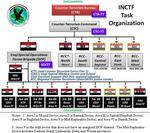
Multi-National Security Transition Command-Iraq has updated its Iraqi Special Operations Force page. The graphic to the right indicates that the 5th Battalion is now designated as reconnaissance. The last 9010 Quarterly Report to Congress listed the 5th Battalion as assigned to training.
Iraqi Ministry of Interior Forces.
Training of the Iraqi National Police continues. On Feb. 12, 533 members of 1-6/2 INP Battalion graduated from Phase III Carabinarie training. The next class to go through this training will be two battalions (900). An additional Iraqi National Police Academy has been identified at Amarah.
New emergency police battalions and their components continue to be identified. Six emergency battalions and an Emergency Response (SWAT) Unit were added to the order of battle in February: The Habbenayah SWAT Unit, Baaj Emergency Battalion, 5th and 6th Emergency Battalions in the Fallujah Brigade, plus the 4th, 5th, and 6th Emergency Battalions in the Dhi Qar Brigade.
The Oil Police Northern Regional Training Academy in Kirkuk is now training 200 cadets per class. Each class goes through an eight-week course.