|
|
|
Iraqi and Coalition forces Order of Battle as of August 31, 2008. |
The September 2008 updates to the Iraqi Security Forces Order of Battle are now available at the ISF OOB homepage. The significant changes to the Order of Battle that occurred in August are summarized below.
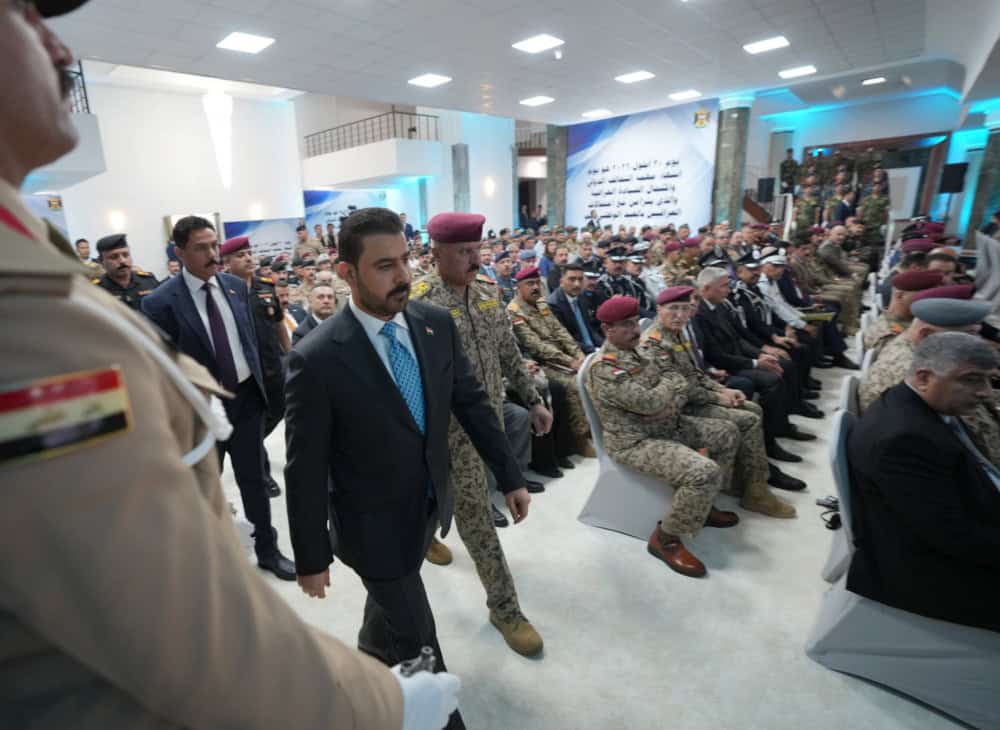
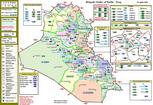
Provincial Iraqi Control. On Sept. 1, the delayed Anbar Provincial Iraqi Control ceremony was held. This is the 11th of 18 provinces to transfer to Iraqi control. Wassit and Babil provinces have been nominated for transition and are expected to transfer before the end of the year.
|
|
|
Iraqi Provincial Control. From AFP. |

Also of note, the US 3rd Brigade, 101st Airborne Division is systematically turning over southern Baghdad Province to the Iraqi Army’s 17th Commando Division while the US 1st Brigade, 4th Infantry Division is turning over the Rasheed District of southeast Baghdad. These are prepatory actions to turning over Baghdad.
ISF Weapons and Support Purchases. Colonel Lawrence G. Avery, Jr., Deputy Director and Air Force Program Chief, Security Assistance Office, Multinational Security Transition Command-Iraq, asked whether the announced LAV purchases might be to replace the earlier BTR-3E1 planned purchase, stated:
“As an update, the BTR-3E1 FMS [Foreign Material Sales] case was cancelled by the GOI [Government of Iraq]. There were requirements changes and resulting price differences that made the program un-executable. We believe the GOI may still pursue BTR-3E1s or a similar capability, but they have not asked for our help. It is not really the same requirement as the one for the LAV, although one could argue the same purpose on the battlefield. The BTR-3E1s was a part of initial Force Generation of the Iraqi Security Forces to fight and win the Counter-Insurgency fight. The LAV case is a part of Force Modernization, building a future force for the strategic defense of Iraq. In addition to the LAVs, Force Modernization includes M1A1 tanks, Mortar Systems, Armed Scout Helicopters, and C-130J medium airlift aircraft.”
This means there is still a funded unfilled requirement for an additional eight new battalions equipped with a BTR-3E1/LAV type vehicle for internal security. The options include equipping the Iraqi Army 1st (Quick Reaction Force) Division, independent Iraqi Army battalions and/or brigades, or three additional National Police Mechanized brigades. No matter which option they are intended for, another order for LAVs to replace the cancelled BTR-3E1s and fill this requirement is probable.
Iraqi Army (IA) Force Development. In November 2007, the planned sequence of forming support elements was briefed. At that time maintenance units were the priority, followed by engineers, explosive ordnance disposal (EOD), medical, intelligence, food service, armorers, etc. As of August, 10 of 12 divisional motor-transport regiments and nine of 14 location commands are operational. The remaining are to be operational by spring.
Maintenance training continues and the 1st National Ammunition Depot Support Battalion graduated unit set fielding on Aug. 20. Route clearance training is occurring across the Iraqi Security Forces, which indicates logistics/maintenance support training is far enough along tt shift emphasis to engineer/EOD and medical. Medical has only 160 of 800 physician billets filled at this time. While the emphasis has shifted, combat formations continue to be organized.
“Created from the 25th Iraqi Army Brigade, the 17th IA Div. officially stood up in mid-July when Maj. Gen. Ali Jassim Muhammad Hassen Al Frejee was promoted to his current rank. Al Frejee and his unit will continue to transition into a lead security element in the Southwest Baghdad area now under the authority of 3rd Brigade Combat Team, 101st Airborne Division (Air Assault).”
The 17th Division is in the process of fully equipping its motor-transport regiment and engineers. “Furthermore, Ali [Cmdr 17th Div] would like to establish reserve components ready to support missions when in need, as well as an extra battalion of commanders. This will require approval from the Ministry of Defense.” This is the first mention of a proposal to form reserve components in the Iraqi Army and also indicates the 17th Division’s fourth maneuver brigade is pending approval. The assimilation of two Kurdish divisions is also progressing.
Defense Ministry spokesman Mohammed al-Askari confirmed the Peshmerga would be integrated into a Defense Ministry division and based in Kurdistan from August 25. “The 34th Peshmerga Brigade will leave Diyala to join the 15th mountain division within Kurdistan.”
This is the first report identifying a component of the Iraqi Army’s new 15th Mountain Division and indicates it is to be the Sulmaniyah-based division. The new 16th Mountain Division would therefore be the Arbil/Dohuk based division. There has also been the first operational reports of the 3-46/12 Battalion (former 11th Strategic Infrastructure Battalion) north of Taji and the new 3-29/7 Light Infantry Battalion southeast of Rutbah.
Iraqi National Police (INP). The National Police continues to improve and add forces to its command.
• On Aug. 28, the 1-1/1 INP Battalion graduated Phase III Carabinarie training and the program is to increase to training two battalions at a time starting in October. A total of 11 to 13 battalions are to be trained by the Carabinarie and in turn train their respective brigades.
• Two more Emergency Response Brigades (ERB) have transferred to “National” ERBs. The Sharqat ERB in northern Salahadin and the Baqubah ERB in Diyala are now under national command. This indicates that they are transferring two ERBs a month.
• The Ministry of Interior plans to form its first helicopter squadron in Baghdad. The type of helicopters under review for purchase indicates a special operations squadron configuration. Combined with the Baghdad-based INP Emergency Response Unit, this could indicate the planned formation of an INP Special Operations Brigade.
|
|
|
Iraqi Ministry of Interior Regions and Brigade distribution. |

The Ministry of Interior has also announced the formation of a regional court system. The system will have regional courts located in Irbil, Mosul, Baghdad, Hilla and Basra.
• Region 1 court will be based in Irbil, and serve the Irbil, Sulaymaniyah, and Dahuk areas.
• Region 2 court will be headquartered in Mosul, and will serve Ninawa, Kirkuk, and Salah ad-Din.
• Baghdad will be the headquarters for Region 3, and will be responsible for cases from, Baghdad, Diyala, Wasit, and al-Anbar provinces.
• Region 4 court will be at Hilla with responsibility for cases from al-Qadisiyah, Babil, Karbala, and Najaf.
• Region 5 court will be headquartered in Basrah and will serve Basrah, Maysan, Dhi Qar, and al-Muthanna Provinces.”
This is probably an interim organization and subject to change since Region 3 has an inordinately large percentage of the Iraqi population and land area. Region 3 will probably lose Anbar, Diyala, and Wassit to adjacent regions when they are fully formed and operational. It does indicate the division of INP forces into the same five regions (corps) composed of two or three divisions in each region for a total of 11 INP divisions. Of note, Region 1 is the de facto Kurdish Corps.
Speculation on Iraqi Wartime Mobilization. Previous predictions of planned Iraqi Mobilized forces indicated 36 divisions. Further information indicates a currently planned force of more than 38 Iraqi Security Forces divisions in nine corps. This does not include a future organized reserve force, since it is not formed or forming at this time. The breakdown is:
• One Iraqi Special Operations Force Division (currently expanding to two brigades, probably planned to be five). The ISOF and the Iraqi Army’s 17th Commando Division would probably be army and/or corps reserve in wartime.
• Four Iraqi Army corps and 21 Iraqi Army divisions. This includes the announced planned four corps, the 16 existing/forming or transferring divisions, three additional Kurdish divisions to transfer in the future, and two other new divisions in southern Iraq. The two additional divisions in the south are indicated by the split in 8th Iraqi Army Division’s headquarters (Diwaniyah) from their logistics (Numaniyah) and the location of two logistics support commands (existing/forming) in 10th Iraqi Army Division’s area (Nasariyah and Maysan). While there has been discussion of reserve forces, no plan for them is apparent above the division level at this time.
• Five planned Ministry of Interior Regions (Corps) with at least 11 planned total National Police divisions and five existing Department of Border Enforcement Regions (divisions). These 16 plus Ministry of Interior divisions would fill the role of motorized infantry divisions under total mobilization.