After over six weeks of heavy fighting in and around the Mahdi Army stronghold Sadr City, where Mahdi Army forces took lopsided casualties in the fighting, the government and the Sadrist political bloc have signed an agreement to end the fighting. The agreement will allow for the Iraqi military to operate freely inside Sadr City while the Mahdi Army must halt its fighting.
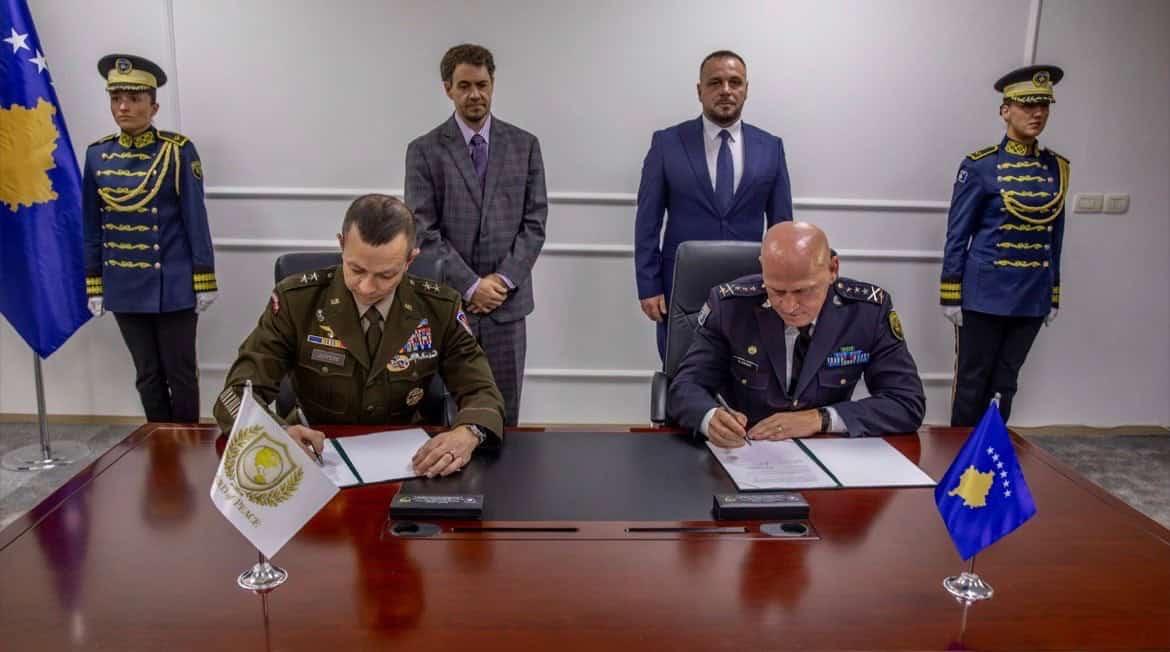
The negotiations, which took place over the course of the last several days, culminated in the signing of a 14-point agreement. Both Iraqi government spokesman Ali al Dabbagh and Sadrist spokesman Sheikh Salih al Ubaydi confirmed an agreement was reached.
The full details of the agreement are not public. According to several press reports, the Mahdi Army has made major concessions to the Iraqi government, including allowing the Army to enter Sadr City. There is no agreement for the Mahdi Army to fully disarm, as Prime Minister Nouri al Maliki has insisted since the conflict began on March 25.
The major points of the agreement, based on press reports, are as follows:
• The Iraqi government and the Mahdi Army would observe a four-day cease-fire.
• At the end of the cease-fire, Iraqi forces would be allowed to enter Sadr City and conduct arrests if warrants have been issued, or if the Mahdi Army is in possession of medium or heavy weapons (rocket-propelled grenades, rockets, mortars).
• The Mahdi Army and the Sadrist bloc must recognize the Iraqi government has control over the security situation and has the authority to move security forces to impose the law.
• The Mahdi Army would end all attacks, including mortar and rockets strikes against the International Zone.
• The Mahdi Army must clear Sadr City of roadside bombs.
• The Mahdi Army must close all “illegal courthouses.”
• The Iraqi government would reopen the entrances to Sadr City.
• The Iraqi government would provide humanitarian aid to the residents of Sadr City.
The Sadrist said the US military would not be allowed to operate inside Sadr City; yet there is no confirmation of this from the Iraqi government or the US military. “The Iraqi forces, not the American forces, can come into Sadr City and search for weapons,” Baha al Araji, a Sadrist legislator said. “We don’t have big weapons, and we want this to stop.”
The Iraqi government insists that internal pressure forced the Sadrist movement to the negotiating table. “It is not the government who pressured the Sadrists into entering this agreement,” said Ali al Adeeb, a leading member of the Dawa party. “It is the pressure from the people inside Sadr City and from their own people that will make them act more responsibly.”
There is no word on the status of the concrete barrier that is being built that will partition the southern third of Sadr City from the northern neighborhood. In an inquiry to Multinational Division Baghdad, the US command that is working with the Iraqi military to build the barrier in Sadr City, does not expect the construction will stop as the Mahdi Army has not obeyed Sadr’s past calls to cease the fighting.
“Seeing as how the Special Groups never listened to [Sadr] to begin with, I don’t see how things will change,” Lieutenant Colonel Steven Stover, the chief Public Affairs Officer for Multinational Division Baghdad, told The Long War Journal.
Multinational Division Baghdad is continuing with the building of the Sadr City barrier. “We’re not stopping,” Stover said. “The barrier emplacement is ongoing and about 80 percent complete.”
The Mahdi Army has taken heavy casualties in Sadr City and the surrounding neighborhoods since the fighting began on March 25. A total of 562 Mahdi Army fighters have been confirmed killed in and around Sadr City since March 25, according to numbers compiled by The Long War Journal. Multinational Division Baghdad recently began to announce that US Special Operations Forces are openly operating on the ground in support of the building of the barrier. The Iraqi government has also pressured the Mahdi Army in Basrah, where 70 percent of the city is now reported as cleared, and the wider South.
Background on the recent fighting in with the Mahdi Army
Mahdi Army forces openly took up arms against the government after the Iraqi government started the assault on Basrah on March 25 to clear the city of the Mahdi Army and other Iranian-backed Shia militias. Sadr called for his forces to leave the streets on March 30 just as Iraqi Army and police reinforcements began to arrive in Basrah. Sadr later admitted he ordered his followers within the Army and police to abandon their posts and join the fighting against the government.
In Baghdad alone, US and Iraqi forces killed 173 Mahdi Army fighters during the six days of fighting from March 25 up until Sadr declared a cease-fire. The fighting has not abated in Sadr City and other Mahdi Army-dominated neighborhoods in northern and eastern Baghdad. A total of 520 Mahdi Army fighters have been confirmed killed in and around Sadr City since March 25.
Sadr and his political movement have become increasingly isolated since the fighting began in Basrah, Baghdad, and the South. The Iraqi government, with the support of the political parties, said the Sadrist political movement would not be able to participate in upcoming provincial elections if it failed to disband the Mahdi Army. On April 13, the cabinet approved legislation that prevents political parties with militias from contesting provincial elections this year. The bill is now in parliament for approval. Grand Ayatollah Ali al Sistani, the top Shiite cleric in Iraq, said the Mahdi Army was not above the law and should be disarmed. Sadr has refused to disband the Mahdi Army.
On April 20, Sadr threatened to conduct a third uprising, but later backed down from his threat, claiming it was directed only at US forces. The Maliki government has stood firm and said operations would continue until the Mahdi Army and other militias disarm and disband. On May 1, the Iraqi government sent a delegation to confront Iran on its involvement with the insurgency, but Sadr, who is currently in Iran, refused to meet with the Iraqi government representatives.