Al Qaeda in Iraq under pressure in Balad, Anbar
A document seized by US forces in Balad and a communiqué from al Qaeda in Iraq's leader intercepted by US intelligence paint a bleak picture of the terror group's ability to conduct operations in former strongholds. Al Qaeda in Iraq is threatened by the rise of the Awakening movements spreading throughout Iraq and is forced to change its tactics.
Al Qaeda takes a hit in Balad
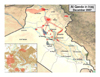
US forces captured a diary of a regional al Qaeda in Iraq commander during a raid on a safe house in Balad in early November. The diary was written by Abu Tariq, the emir, or leader, of the Al Layin and Al Mashahdah Sector, a region near the city of Balad in northern Salahadin province. Tariq's diary meticulously documents the terror group's decline, the desertion of its fighters, and logistical problems incurred in the wake of the surge. The diary is also an intelligence coup for US forces, as Tariq names current members of the groups and the companies and individuals used in al Qaeda's support network in the region.
"There were almost 600 fighters in our sector before the Tribes changed course 360 degrees under the influence of the so-called Islamic Army (Deserter of Jihad) and other known believer groups," Tariq opened his diary. "Many of our known fighters quit and some of them joined the deserters ... and as a result of that the number of fighters dropped down to 20 or less."
Tariq organized his nearly 600 troops into five "battalions." The first and second battalions, the two largest formations with 200 and 300 fighters respectively, were dissolved after leaders and members deserted to join the Awakening. The third battalion, comprised of 60 fighters, are considered loyal, but their "activities have been frozen due to their present conditions plus their families' conditions."
The fourth battalion, called the Battalion of al Ahwal, was comprised of "scoundrels, Sectarians, non-believers" whose leader fled to Syria, only to return and join "the traitors." The rest of the Ahwal battalion broke up. The fifth battalion also dissolved after its leaders defected and some members fled to Diyala province.
Tariq refers to the Awakening movement as "the cancer that grew on the body of the al Jihad Movement." He explicitly credits the rise of the Sahawa, or Awakening movement, with the demise of his organization. He notes the Awakening movement in northern Salahadin severely restricted al Qaeda in Iraq's ability to operate and depleted the organization's ranks. The tribes and insurgent groups such as the Islamic Army of Iraq, which were rolled into al Qaeda's Islamic State of Iraq, defected en masse.
The diary notes that while al Qaeda in Iraq's operations have been limited, the group will continue to target the Awakening movements. "We must not have mercy on those traitors until they come back to the right side - The Islamic State of Iraq side - or get eliminated," Tariq said.
Al Qaeda in Iraq forced to change tactics
The information Tariq's diary nearly mirrors the information contained in al Qaeda documents and a communiqué from al Qaeda in Iraq's leader, Abu Ayyub al Masri. Al Qaeda's brutality and attempt to impose a Taliban-like regime in Anbar and throughout Iraq has backfired. This has forced al Qaeda to stop reprisal attacks against Sunni tribal leaders and civilians. Instead, al Masri is refocusing al Qaeda cells, telling them to target Iraqi infrastructure, as well as US, Iraqi security forces, and the Awakening movements.
"Dedicate yourself to fighting the true enemy only, in order to avoid opening up new fronts against the Sunni Arabs," al Masri said in Jan. 13 communiqué, The Washington Post reported. "Do not close the door of repentance in the face of those Sunnis who turned against us. ... Strike hard at the enemies and intensify your operations against the occupiers. ... Cut off their communications by blowing up the towers and the land telephone exchanges and destroy the bridges and the important highways which they use. Do not interfere in social issues such as head covering, the satellite and other social affairs which are against our religion until further notice. ... Do take care not to kill Sunni civilians that did not sympathize with the apostates such as tribesmen."
The Washington Post interviewed two al Qaeda leaders in Anbar province, both of whom confirmed al Qaeda's problems in Anbar and beyond. "We do not deny the difficulties we are facing right now," Riyadh al Ogaidi, an emir in Karmah, a city between Baghdad and Fallujah, told The Washington Post. "The Americans have not defeated us, but the turnaround of the Sunnis against us had made us lose a lot and suffer very painfully. We made many mistakes over the past year."
The Karmah emir claimed al Qaeda in Iraq has suffered nearly a 75 percent reduction in forces over the past year. "Ogaidi said the total number of al-Qaeda in Iraq members across the country has plummeted from about 12,000 in June 2007 to about 3,500 today," The Washington Post reported. The US military said it killed more than 2,400 al Qaeda leaders and fighters and captured more than 8,800 during 2007. In late 2006, al Masri claimed al Qaeda had 12,000 fighters under arms and another 10,000 in training.
Al Qaeda in Iraq "is now reaching out to disaffected Sunni tribal leaders in a bid to win back their support, even as it attacks Sunnis working closely with the Americans," The Washington Post reported, based on an interview with Abdullah Hussein Lehebi, an emir from the Amiriyah, south of Fallujah. "In exchange, we would not target them again and would respect the authority of the tribal leaders," he said.
Al Qaeda hits infrastructure in Mosul
As al Qaeda in Iraq has encountered setbacks from ongoing offensives in Baghdad, Anbar, and Diyala provinces, it has attempted to regroup in Ninewa province as well as in southeastern Kirkuk and northern Salahadin. Al Qaeda maintains one of its last logistical supply lines from the Syrian border to Mosul in this region. The Iraqi government and Multinational Forces Iraq are moving additional forces to the region in an effort to block al Qaeda's efforts to re-establish a haven in the northern regions.
Last week, evidence of al Qaeda's strategy to target infrastructure was seen in Mosul. Al Qaeda in Iraq targeted eight cell phone towers in Mosul, Voices of Iraq reported on Feb. 7. At least 12 communications towers were hit, according to a US military officer serving in Mosul who wishes to remain anonymous.
"Over the course of two days they attacked six (towers), and then six more, setting the generators on fire to disable the towers," the officer told The Long War Journal. "Interesting since they rely on the cell towers as much as the IA [Iraqi Army] does for C2 [command and control]."
Today, al Qaeda detonated a bomb planted in a fuel truck near the Mosul power plant, KUNA reported. The attack knocked the 400-megawatt Mosul power plant offline, shutting down electricity to much of northern Iraq The bomb also killed four Iraqi soldiers.
Down, but not out
While the seized documents and al Masri's order to change tactics show al Qaeda is facing a difficult tactical and strategic situation, the organization is by no means defeated. US forces are still actively fighting al Qaeda in southern Baghdad province in the Arab Jabour region, in northern Diyala province, and in the Ninewa-Salahadin-Kirkuk region. Al Qaeda's attacks in Iraq have decreased drastically, but the terror group possesses enough capacity to conduct at least one mass-casualty suicide attack per month. January ended with twin bombings targeting two popular markets in Baghdad. The attacks were carried out by two mentally disabled women.
The leadership of Al Qaeda in Iraq and its puppet Islamic State remain on the loose, and more than 3,500 of its fighters remain unaccounted for. Ongoing offensives in Arab Jabour, Diyala, and Ninewa seek to further erode al Qaeda's capabilities, and force the group to shift from an insurgency that holds ground to a grouping of disparate terror cells. US, Iraqi, and Coalition forces seek to counter this threat by continuing the daily, relentless raids targeting al Qaeda's leadership and its network of IED, media, finance, weapons, and training cells.


READER COMMENTS: "Al Qaeda in Iraq under pressure in Balad, Anbar"
Posted by Cannoneer No. 4 at February 10, 2008 4:22 PM ET:
Cut & pastable diary
http://cannoneerno4.wordpress.com/2008/02/09/daily-diary-of-an-al-qaeda-sector-leader/
Posted by M_Ray at February 10, 2008 5:25 PM ET:
I love that the guy states the groups turned around 360 degrees.
Posted by Anonn at February 10, 2008 7:27 PM ET:
Speaking of Balad...
It seems that every day surgeniks come out with a new item about how a particular part of Iraq is all happy magic ponies, and on that day a bomb hits that exact spot. It would be funny if there weren't real people dying due to the failed surge.
Posted by Bill Roggio at February 10, 2008 8:02 PM ET:
First, no one around here claims Iraqi is all "happy magic ponies." If you would check back to the end of December, I was warning folks about the poor security situation in Miqdadiyah in Diyala before the established media reported it. And you should check out all of the "happy magic ponies" stories written about Pakistan and Afghanistan around here too.
The US military has been clear that these documents do not mean al Qaeda is defeated in Iraq, in fact they took great pains to state the opposite. If you would stop for a second, you might realize al Qaeda likely hit in Balad to offset the news of the captured document. But these are just the type of attacks that have turned the people against al Qaeda. Its not a good place to be in, and al Qaeda knows it, but they are forced into attacks such as this.
Posted by Hamidreza at February 10, 2008 8:22 PM ET:
Looks like the postcolonial Left is gloating about these car-bomb and mentally-retarded attacks, and wish more of it would happen, so that they can go back to the days where they proclaimed the invasion has failed.
Is there any doubts that the Left secretly supports al-Qaeda and wishes a genocide of Iraqis so that it can blame the failure on the US and the West?
Posted by Neo at February 10, 2008 8:44 PM ET:
I think some people are reading a little too much into the diary. It is the diary of one leader who once had command of around six hundred men in the northeast section of Anbar province. His group was gradually whittled away and pushed farther north toward Balad. It is not an assessment for all of Anbar province, Western Bagdad, or Southern Saladin province. Other groups are in adjacent areas and areas overlap. No one has maintained that the Balad area is anything near to secure. Insurgents continue to infiltrate into the area from the Samarra area to the north.
There is a great deal of special forces activity in the Balad area, but unlike Diyala province here is no securing force that covers the entire area between lake Thar Thar and the west bank Tigris river. The area is too large. In the southern portion north of Taji there is a securing force which extends up the west bank of the Tigris but they don't extend up to Balad or west toward Thar Thar. Awakening groups have been very active in the area this fall but have not secured the area to the degree Anbar is secured. The area around Samarra is critical as it commands roads accessing this area from the north. Control Samarra and this area will come under control.
A rather lame reference to the area being "all happy magic ponies" is a blatant mischaracterization of what is being said here. I suggest actually reading the material and comments, very slowly if it helps your comprehension any. Or perhaps you are rather more satisfied to pretend you speak for both sides on this.
Anyway, I just talked to the straw man and he wants his Happy Magic Ponies back.
Posted by AQI Losses at February 10, 2008 9:02 PM ET:
AQI is definitely on the ropes and we must keep them there, hopefully delivering the knock out blow in the not so distant future. One thing I have learned, is not to underestimate AQI's resiliency
Also, Feb 6th MNF held a briefing detailing the latest successes against AQI leadership.
http://www.mnf-iraq.com/index.php?option=com_content&task=view&id=16863&Itemid=131
--------
"During the month of January, Iraqi and Coalition Forces killed or captured a total of 35 senior al-Qaeda Iraq terrorists. These 35 include four emirs who directed al-Qaeda Iraq's operations, three cell leaders, six who led vehicle bomb and road-side bomb networks, six who led media and propaganda operations, three foreign terrorist facilitators, and fourteen financial, weapons and communications facilitators.
(Slide: JANUARY ROLL-UP)
This slide shows ten of the most significant of the thirty-five killed or captured al-Qaeda Iraq for the month of January.
Yasin Sabah Salih Jubayyir was the Security Emir covering most of Northern Iraq. He was a recruiter, foreign fighter and weapons facilitator. He was captured on December 13th in Mosul.
Barhan Hammud 'Awad Hammad was a foreign terrorist facilitator in the Bayji area. He was picked up during an operation on December 11th near Tikrit.
Salman Hammadi Salman ran financing in the Arab Jabour area. He was captured on December 22nd near Baghdad.
Ahmad Sami Shawkat 'Abd-al-Hamid ran a vehicle bomb network and foreign terrorists facilitator in Baghdad. He was captured on January 12th in Baghdad.
Fawzi Karim Nasir is another vehicle bomb network leader in the Baghdad area and was captured on January 10th.
Najim 'Abdalla Hasan Salih was the Security Emir of Mosul and was captured there on December 13th.
Hazim Najm Salih Hamad was a weapons facilitator and ran communications for al Qaeda near Samarra where he was captured on January 5th.
Abu Mustafa was killed on December 4th in Khan Bani Sa'd. He was the Media Emir for Diyala Province.
Ahmad Karim Salman Rashid was detained 9 January in Mahmudiyah where he carried out vehicle bomb attacks.
And lastly Mu'taz 'Ali Salih was the Military Emir of Arab Jabour involved in terrorist operations south of Baghdad. He was captured 15 December in Baghdad."
--------
Bill, I noticed one typo. It was late 2006, not 2007, when al-Masri announced he had 12,000 fighters with 10,000 more in the pipeline.
Posted by Solo at February 11, 2008 8:08 AM ET:
The surge is a failure....for al Qaeda. Their power bases are falling one after another. Their leaders, and followers, are being captured or killed daily. People all over Iraq have turned against them. The only way the surge could fail for us is if the troops were pulled out
Posted by Rhyno327/lrsd at February 11, 2008 9:47 AM ET:
Do not count them out yet. They are like a cornered, wounded animal, and that is dangerous. It will take a couple good body blows, and a good knockout blow to really cripple them. Wat is really going on in Mosul? Is it a "Fallujah" like situation shaping up? This could be part of the decisive battle the US needs. Cutting off the Syrian border is a must. I do not know and its a little foggy as to wat the situation in Mosul is. It sounds like thier holed up, nowhere to go. If so, gather the forces needed, and crush them. Chase them all the way to Syria, and into Syria if need be. Lets try and end this organization.
Posted by Blackhawk at February 11, 2008 10:51 AM ET:
I'd be very careful of decisive battles right at this time. I'm sure Al Qaeda would love a Fallujah type situation. 40 years ago the US won a huge decisive battle during TET-68, just before Presidential elections the media blowback gave the NVA a decisive victory instead, Vietnamization, congress cutting off funds for the war, all that blood and treasure for nothing. I believe a slow military squeeze along with keeping our promises to the Iraqi people will succeed in the end. We don't need to be loved by the Iraqi's, just respected.
'Blackhawk'
RVN 66-68
Posted by MattR at February 11, 2008 10:54 AM ET:
Do insurgencies just collapse one day, or do they just keep dropping off? As long as there are angry idiots there will be someone wanting to blow something up (not to mention the Iranians). The final blow to the insurgency will be from reducing the unemployment to the point where a good job pays better than making IEDs. I'm sure this will take years. I just hope we have the desire to finish the job.
Posted by David m at February 11, 2008 12:57 PM ET:
The Thunder Run has linked to this post in the - Web Reconnaissance for 02/11/2008 A short recon of what's out there that might draw your attention, updated throughout the day...so check back often.
Posted by Neo at February 11, 2008 2:57 PM ET:
It will take years to completely get rid of Al Qaeda in Iraq. There are four things to look forward to in the next year though.
1. Getting rid of all of the major insurgent enclaves. By this I mean places where AQI can set up long term and depend on significant aid and sympathy from the populous. At that point AQI will be operating underground. They still will be able to set up temporarily in safe houses and move from place to place but won't be able to sustain cells long term in any given area. This may happen as early as this summer.
2. At some point it will become glaringly obvious that Iraqi forces are in the lead with US forces playing a supporting role. This is already true to an extent but not everywhere. By this fall it may be much more obvious.
3. The surge will end and troop levels will be at pre-surge levels by early summer. There will be a pause and assessment to see whether it is feasible to go down from 10 to 8 divisions.
4. Deployments going from 15 to 12 months. I see this as a little more problematic. The Army might be better off building a little flexibility into this. It might be better to prepare the soldiers for 15 month deployments but start cutting the deployments short as opportunity arises.
I realize I am getting a little ahead of events, but an extra concern going into the next year will be Iraqi municipal elections, the April/June fighting season, the Ramadan fighting season, and finally the next general elections and formation of the next government thereafter. During this time period it might be easier to build in flexibility by keeping the 15 month deployments but ending deployments early as circumstances warrant. They could build in periods where larger numbers of troops are periodically available by doubling up incoming and outgoing troops. You don't want to build in a situation where you are always short of troops regardless of circumstance on the ground. They can also avoid the disappointment of extending 12 month deployments if something comes up.
Posted by MikeE at February 13, 2008 11:39 PM ET:
Further evidence of the success of the surge came out today when Iraqs parliament passed legislation for the 2008 Budget, a law on Provincial Powers, and an Amnesty law.
http://www.mnf-iraq.com/index.php?option=com_content&task=view&id=17050&Itemid=128
Only the day before Nancy Pelosi claimed the surge had failed becaust the Iraqis had only taken baby steps, talk about poor timing!
For me the amazing thing is that in 08 we are watching the democratic process in Iraq, in 03 it was still a dictatorship.
Posted by DJ Elliott at February 14, 2008 1:35 AM ET:
Even more so.
The passing of the budget with the deal with the KRG intact means two KRG Divisions transfer to the IA. They will need some equipping and follow up training but, that puts two more Divisions in the IA this year.
It is looking like 16 IA Divisions (minus FA) filled out by the end of the year. Not including ISOF. 65 Brigades.
FA starts forming in 2009.
Posted by Rhyno327/lrsd at February 16, 2008 10:56 AM ET:
I don't think one can compare wat happened during Tet to this. These radicals may make a last stand here, and that is GOOD news. It means you have a sizable enemy force that you can bring all ur arms to bear. Surround Mosul, then take it apart, in sections, block by block. Divide it, and push them into a "kill zone". Please correct me if iam wrong, but isn't Mosul the 1st AD's AO? Along with the IA, they should crush the enemy. Is there any other US Brigades up there? Marines? If someone knows please post it. Its time to bring the hammer down.