|
|
|
Pakistan, Afghanistan, and the tribal areas. Map from PBS’ Frontline. Click to view. |
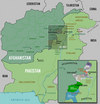
The Taliban have captured a second paramilitary fort in the tribal agency of South Waziristan, but this time the fort was taken without a fight. Pakistani paramilitary troops from the Frontier Corps deserted the Saklatoi outpost on the Afghan border after the Taliban threatened to attack. About 40 paramilitary soldiers fled the post without a fight.
The surrender of the Saklatoi outpost comes just one day after the Taliban launched a conventional military attack on a fort in Sararogha in South Waziristan. The Taliban overran the fort after breaching a wall with explosives during a nighttime assault. Reports put the number of Taliban forces used in the attack between 400 and 1,000. Taliban spokesman Maulvi Omar said Baitullah Mehsud personally led the attack.
At Sararogha, the military failed to provide helicopter or air support for the beleaguered soldiers. Some artillery support was provided after soldiers called for support after the fort was breached. “The forts were well-stocked and soldiers had been told to fight to the last man, the last bullet,” and unnamed official told Daily Times. “The soldiers did put up a good fight in a seemingly hopeless situation.”
The government claimed the Taliban lost between 40 and 50 fighters in the attack. Seven Pakistani paramilitary troops were killed, 20 escaped, and 15 missing.
The Taliban disputes these claims. Omar said 16 soldiers were killed and 24 captured during the one-sided battle. He claimed only two Taliban fighters were killed during the assault. Sources told Dawn and Daily Times that eight of the Shia soldiers were “slaughtered” by having their throats slit. The Taliban seized weapons, ammunition, and other supplies from the fort, and are said to have abandoned the outpost.
|
|
|
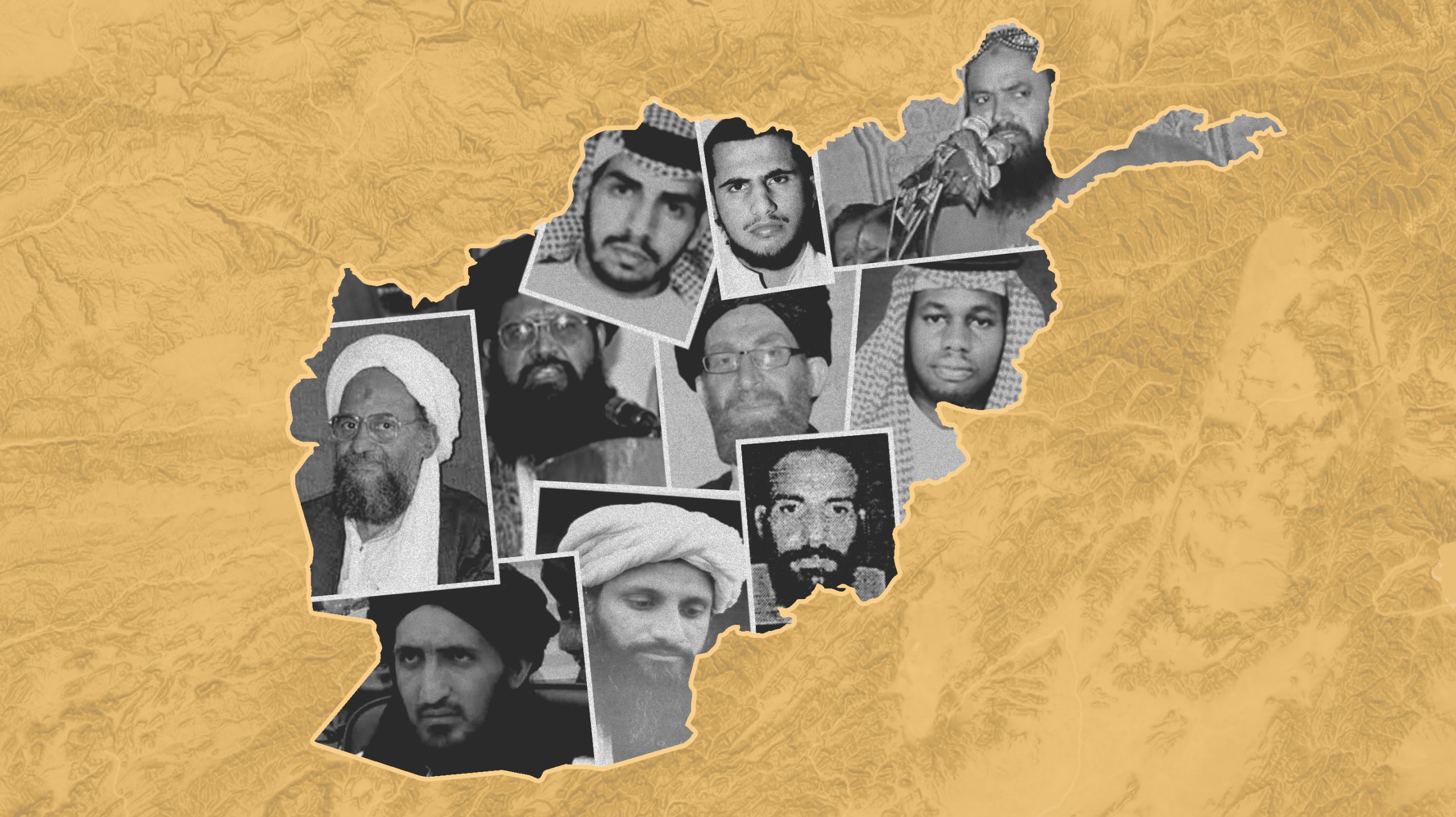
Presentation on the Taliban leadership in Pakistan and Afghanistan. Baitullah Mehsud pictured. Click to view. |

Over 200,000 Taliban and allied groups are said to be under arms in the tribal areas and the wider Northwest Frontier Province. Baitullah, who now commands the newly created Tehrik-i-Taliban Pakistan, or Movement of the Taliban in Pakistan, personally commands 30,000 Taliban fighters.
The Taliban and al Qaeda operate 29 training camps in North and South Waziristan alone. More camps are said to be operational in Bajaur, Mohmand, Tank, Peshawar, and other tribal agencies and settled districts of the Northwest Frontier Province. Taliban, al Qaeda and allied movements such as Tehrik-e-Nifaz-e-Shariat-e-Mohammadi (TNSM), the Islamic Movement of Uzbekistan, Jaish-e-Mohammed, Lashkar-e-Taiba (which is now Jamaat-ud-Dawa), Lashkar-i-Jhangvi, and a host of domestic Pakistani terror groups are pushing their fighters through the training camps.
The Taliban has organized under military lines, a US military intelligence officer familiar with the situation in northwestern Pakistan informed The Long War Journal. The Taliban is known to have formed units analogous to battalion and brigade formations, and may be organized at the divisional and corps level. The Taliban military organization has a clear-cut command structure with established ranks.
Al Qaeda is also believed to have reformed the notorious 055 Brigade, the military officer stated. The 055 Brigade is the al Qaeda military unit that was dismantled during Operation Enduring Freedom in Afghanistan in 2001 and 2002. Other al Qaeda military formations are said to have been formed.
The attack on the Sararogha fort, the capture of a company of Pakistani troops in South Waziristan in September 2007, and the Taliban opposition to a Pakistani military incursion in South Waziristan highlight the Taliban’s ability to stand up to the Pakistani military in a conventional fight. The rise of the Taliban in the Northwest Frontier Province and the tribal areas during 2006 and 2007 and the subsequent peace deals in North and South Waziristan, Mohmand, and Swat have given the Taliban and al Qaeda the time and space to organize along military lines and stand toe-to-toe with the Pakistani military. Coupled with the intense suicide campaign that has been ongoing since late 2006 and the strikes focusing on secure military bases housing nuclear weapons, the Taliban and al Qaeda are vying for control of the Pakistani state.
See The Fall of Northwestern Pakistan: An Online History for more information on the rise of the Taliban and al Qaeda in the Northwest Frontier Province and beyond.