|
|
|
Map of Swat. Click map to view. |
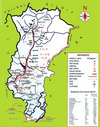
The Pakistani Army is pressing its offensive against Maulana Fazlullah’s Taliban forces in the settled district of Swat and Shangla after Fazlullah’s fighters took over the two districts by force over the past several weeks. The strikes in Swat and Shangla happen to coincide with US Deputy Secretary of State John Negroponte’s diplomatic visit to Pakistan.
After four days of fighting upwards of 146 Taliban, Pakistani troops, and civilian have been reported killed and over 100 wounded. “The killed included 31 militants and 11 others in district Swat, while 38 militants and more than 35 others were gunned down in district Shangla,” The Nation reported. “Militants spokesman Sirajuddin claimed that they had killed almost 25 personnel of security forces,” after the Taliban targeted a military convoy.
Sirajuddin confirmed the Pakistani Army killed Commander Matiullah, a senior officer in Fazlullah’s command, in an artillery strike. “His Second-in-Command Muhammad Ali was missing feared dead,” the Pakistani military stated.
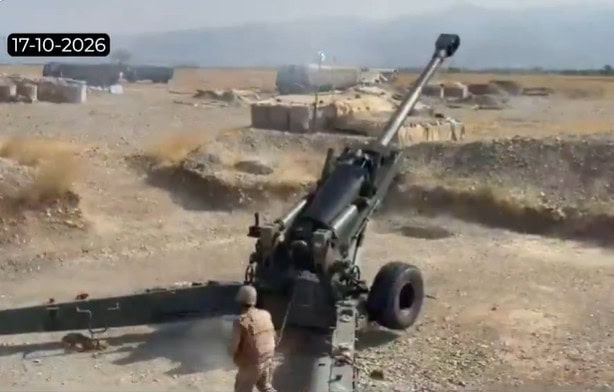
Fighting has been reported in “the mountainous areas of Yagorai, Dolat Kalay, Shalmano, Tander, Shahtoot, Mian Kalay, Pirabad and Bailay Baba areas,” after the Pakistani Army targeted Taliban hideouts. The military appears to be relying on attack helicopters and artillery to root out the Taliban. The News reported Pakistani Cobra helicopter gunships struck Taliban positions in Sar Senai, Kabal, Hazara, Koza Banda, Dherai Kanju, and Mam Dehrai areas. Two Taliban bunkers were reported to have been destroyed, but no casualties were reported.
Curfews have been put in place in Swat and neighboring Malakand district as the Pakistani military is continuing deployments into the region. The Taliban have been reported to be patrolling the streets in some regions of Swat and Shangla. The Taliban also appear to own the night in Swat. “Nonetheless, the militants, who had announced the imposition of Islamic Shariah in the district of Swat continued their armed patrolling at night in various areas of the volatile region,” The Nation reported.
|
|
|
Map of the northern regions of the NWFP, including Swat. |
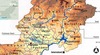
The Musharraf government has been embarrassed by the armed Taliban takeovers of the settled districts of Swat and Shangla. These Taliban offensives occurred just as Musharraf overturned the constitution under the guise of fighting terrorism.
The Pakistani military offensives in Swat and Shangla also were timed just as US Deputy Secretary of State John Negroponte is conducting a diplomatic visit to Pakistan. Negroponte will voice the US government’s displeasure with Musharraf subverting the democratic process, arresting the political opposition, and the failure to address the rise of the Taliban in the Northwest Frontier Province.
Pakistan has a history of making arrests and conducting strikes and offensives on Taliban and al Qaeda sites when the political situation suits it. The February 2007 arrest of Mullah Obaidullah, the senior Taliban leader released this week, occurred as the US and Britain were pressuring Pakistan to take meaningful action against the Taliban and al Qaeda camps, leaders and operatives inside its borders. At the time, President Bush, Vice President Cheney, and CIA Director Kappes made public and private statements that Pakistan’s situation in the western and southern regions could no longer be tolerated.
Last year’s strike on al Qaeda’s Black Guard training camp in Danda Saidgai occurred just as President Bush visited Pakistan and less than a week after the bombing of the Karachi Consulate that killed a US diplomat.
Also, last year’s strike on the Chingai madrassa in Bajaur agency occurred as Britain’s Prince Charles, the future King of England, was visiting Pakistan. The NATO commander in Afghanistan, General James Jones, had just visited Pakistan and stated “the movements [of Taliban and al Qaeda] across the border have increased since the signing of agreements on the other side of the border,” referring to the Waziristan Accord.
The Pakistani government arrests and strikes have been short lived. The government signed over Bajaur and North Waziristan, along with Swat and Mohmand, to the Taliban after numerous airstrikes on al Qaeda and Taliban camps. The government released over 2,500 al Qaeda and Taliban operatives as part of the terms of the North Waziristan Accords. Obaidullah was recently released along with 24 other senior Taliban operatives in exchange for Pakistani troops captured in South Waziristan.
The military may make short-term gains in Swat and Shangla, but the question that cannot be answered is if the Taliban is driven to the shadows, will the government secure the region and fight the sure-to-be-launched Taliban insurgency?
Recent history indicates the government will not fight the long-term battles required to secure the districts. In the past, the government and military have sued for peace at any cost directly with the Taliban. Musharraf’s overturning of the constitution has complicated his ability to fight the required long-term insurgency, as he must also focus on his political enemies in the capital and major cities, and he lacks a broad mandate to put down the Taliban uprising.
The Taliban has secure territory in neighboring Bajaur agency, and the two districts abut districts with a strong Taliban influence. The Taliban has been persistent in fighting the military and government in Bajaur, North and South Waziristan, Mohmand, Tank, and Bannu, as well as in most of the districts and agencies throughout the Northwest Frontier Province.