
|
|
|
Pakistan’s Northwest Frontier Province and Federally Administered Tribal Areas |

Attack occurs days after Taliban commander Baitullah Mehsud vows to retaliate with suicide bombers
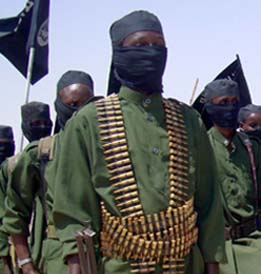
The Pakistani government continues to lose control over the tribal regions bordering Afghanistan. The Taliban and al Qaeda have attacked a Pakistani military convoy with suicide car bomb near Mir Ali in North Waziristan. Four Pakistani soldiers and a woman were killed and twenty soldiers were wounded after the suicide bomber rammed the military convoy at the Khajori checkpoint, just east of Mir Ali, a Taliban stronghold.
The attack occurred just one week after the Pakistani government struck a Taliban and al Qaeda training camp in the Zamazola region in South Waziristan. Baitullah Mehsud, the most powerful Taliban commander in South Waziristan, promised retaliation for the Pakistani strike on Zamazola. “They launch airstrikes on us and we respond with suicide attack,” said Baitullah,
Just days ago, in an interview with the Daily Times Baitullah promised to ramp up attacks in Afghanistan. “This year’s spring offensive will be fought harder than before as we want to build on last year’s successes,” he said. Baitullah operates openly in South Waziristan, outside of the writ of government law.
The Taliban denied involvement in the suicide strike, reports Dawn, issuing statements “from the security office of the Taliban, North Waziristan.”
Militants in the North Waziristan promptly denounced the incident and claimed they were not involved in the attack. A statement issued from the security office of the Taliban, North Waziristan, said: “We (Taliban) have no hand in the bomb attack and we want to keep the peace agreement intact and the government should also act upon the deal”. Local Taliban leaders, Hafiz Gul Bahadur and Mufti Saddiq Noor, immediately called a Shura meeting in Miramshah to discuss the situation. MNA Maulvi Nek Zaman also joined the session later, the statement said.
Taliban offices opened immediately after the signing of the Waziristan Accord in September of 2006.
Just before the suicide attack, Northwest Frontier Province Governor Jan Aurakzai pleaded to keep the Waziristan Accord intact. “This is the last chance for ensuring a peaceful atmosphere in the area and any harm caused to it either intentionally or unintentionally would surely be a big disaster,” said Aurakzai.
Support for maintaining the Waziristan Accord also came from Maulana Fazlur Rehman, the leader of the Muttahida Mujlis Amal, the dominant pro Taliban political party in the NWFP. Rehman admits he participated in the agreement that ceded control of North Waziristan to the Taliban. “I played a key role in making the agreement possible… and I will play a key role in sustaining it.” Rehman, along with Mullah Omar, al Qaeda Shura members Abu Hammam al-Saudi, Abu Nasir and Yahya Abu Lais, Shaikh Khalid Habib al Shami, the commander of al Qaeda’s Brigade 055, and a host of others supported the creation of the Waziristan Accord as it provides for an al Qaeda and Taliban safe haven on the Afghan border.
See The Fall of Waziristan: An Online History for more information.

7 Comments
Trackbacked on The Thunder Run – Web Reconnaissance for 01/23/2007
Bill, do you think this will mark the end of the agreement that is keeping the Pakistani army out of these areas?
That’s a big Tribal Area.
E.T.,
It is difficult to say, but I think not. The Musharraf government has done everything possible to ignore and downplay the repeated violations of the agreement. They’ve said the Taliban do not run the region, and the Taliban and tribal leaders openly admit to administering the tribal areas. It will take much more than this to force them to act.
If you want the GoP to do something about the Tribal area then stop giving them F16/AMARAAM/TOW/HARPOON’s plus assorted stuff painted green and deploy the 101st Airborne along with couple of MEF’s to Islamabad.
Short of this we will loose in Afganistan and AQ will be back to were it was prior to 2001 which is that it is being given space & time to plan its next move.
If a man was born and educated as a youth in the mid 70’s in the area now called NWFP, how likely is it that they are sympathetic to T/AQ? Someone please comment.
ACER,
I would say that the probablity of someone in NWFP favouring T/AQ would be over 90%.
Firstly if the person was illterate then he or she is in the orbit of the local tribal chief or the mullah and constantly told that 72 virgins wait for them if they die in a jihad fighting the ‘kaffir’ or unbeliver and that T/AQ are islamic fighters who uphold the honour of the islamic world. This mixture of religion / honour / tribal loyalty / political ideology and a total absence of any development work by what either of us would call a STATE means that people do genuinely support T/AQ.
Secondly if they are literate then they have been through a educational system designed by Gen Zia ul-Haq, former CinC of the Pakistani Army & former President of Pakistan. The intention of his ‘reforms’ was to produce ‘islamic warriors’ who would fight the kaffir all over the world.
In either case we have made the problem worse by not forcing the current Government of Pakistan to ‘contain’ the threat that its predecessor created.
If it had been upto me then I personally would have treated the whole islamic world the same way we treated the soviets and contained them by a mixture of military force & political ideology during the cold war.
In the case of Pakistan I would have put it under total ‘quarantine’ and not allowed anyone in or out of the country till such time as its government sorted its own people out.