
|
|
|
NWFP/FATA. Click map to view. |

The Taliban problem has not gone away, and al Qaeda continues to plot against the West from within Pakistan
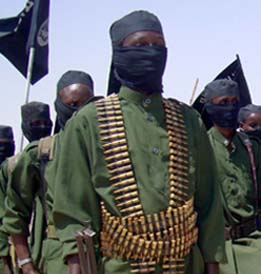
The Pakistani government has finally admitted it has a Taliban and al Qaeda problem, but refuses to take the needed action to confront the terrorist groups. Zeenews.com reported late in December that while the United States “demanded military operations in North and South Waziristan against suspected al Qaeda and Taliban militants,” the Pakistani government “will hold another round of peace talks with tribal elders and ulema in Waziristan.” The demands came after the United States government finally admitted “the Taliban have been able to use these areas for sanctuary and for command and control and for regrouping and supply.”
The thin vernier of Pakistani control of Waziristan has come off some time ago. After the Taliban killed a government official in Miramshah, North Waziristan in late December, the tribal leaders openly admitted to meeting with the “militants” and warning them not to conduct further attacks. The Taliban named a new leader in South Waziristan – Maulvi Muhammad Nazir – and the news of Nazir’s promotion was the instant topic of debate in the tribal agency.
Western Pakistan remains a launchpad for Taliban attacks. The Taliban recently launched a 200 man sized raiding party into Khost province, Afghanistan to attack Afghan police outposts. The battle was described by Afghan forces as “heavy.” On New Years Eve, the Taliban launched a 20 rocket barrage attack into Paktika province from Pakistan, Afghanistan. Khost and Paktika border North and South Waziristan. The Taliban recently burned a UNICEF school for child refugees along Afghan-Pakistan border.
|
|
|
North & South Waziristan, and Khost and Paktika provinces in Afghanistan. Click map to view. |

Inside Pakistan, the Taliban are exanding their base of support outside of Waziristan and the tribal agencies. Tehreek Nifaz-e-Shariat-e-Mohammadi (or TNSM), also known as the Pakistani Taliban, have threated to target Pakistani and Western leaders inside Pakistan, and also attack NATO and Afghan forces in Afghanistan. TNSM ran the Chingai, Bajaur madrassa that doubled as a Taliban and al Qaeda training camp and was hit by an airstrike before a peace accord could be signed with the Taliban.
Mufti Khalid Shah, a Taliban cleric, issued a fatwa that “terms all employees of NGOs as agents of Jews and Christians… stresses that there is no need to ask permission to kill and that everyone should declare jihad… [and] adds that the time has come to use weapons of mass destruction against his enemies.”
Girls schools just outside Peshawar, the provincial capital of the Northwest Frontier Province, are under siege and being shut down by Taliban attacks and threats. “Over the past two months, at least two schools in the area have been bombed… According to a spokesman at the Peshawar office of the Human Rights Commission of Pakistan (HRCP): ‘There have also been notices affixed on the gates of schools, asking people to stay away. The situation is very bad…’ Parents, pupils, teachers, school heads and bus drivers bringing children to school have also been threatened and warned to stay away. In addition, militant extremists have also telephoned local school authorities to demand that female students wear the burqa,” reports The Daily Times.
The Taliban and al Qaeda continue to plot against the Pakistani government and the West from their bases in the tribal areas. “Laskhar-e-Jhangvi, Al Qaeda and the Abdullah Mehsud-led [Taliban] group of Afghanistan” have conspired in several plots, and the attack on the US Consulate in Karachi in the spring of 2006 have been traced back to Waziristan (see out post on al Qaeda’s Black Guard.) Newsweek recently documented al Qaeda’s training of Western Muslims along the Pak-Afghan border for attacks inside the West. The “Adam Yahiye Gadahn, the notorious fugitive “American Al Qaeda,” was with the brothers in Mir Ali [North Waziristan],” and that “a ‘substantial’ fraction of [the 1,600 people Britain’s MI-5 have been tracking] have connections to Pakistan.”
|
|
|
Mullah Omar, the leader of the Taliban, backed the Waziristan Accord. |

The Telegraph provides further damning evidence of Pakistan’s release of terrorists from its custody. Over 80 Taliban, al Qaeda and Pakistani jihadis [or AQAM – al Qaeda and Allied Movements] have been released from prison. Among them are Sohail Akhtar (aka Mustafa), one of the USS Cole plotters, and one of Daniel Pearl’s murderers:
[Mustafa is] the operational commander of the outlawed Harkat-ul-Jihad al-Islami group. He has been blamed for a campaign that included a suicide attack in Karachi in which 11 French engineers died, the suicide attack on the US consulate, and the failed attempt on the president’s life. Intelligence officers say Mustafa – who was initially sentenced to death before a court overturned the verdict – is also believed to have travelled to Iraq to establish contact between al Qaeda and terrorists there. His interrogators described him as “a terrorist genius”.
One official said: “He was the one who cobbled together all the jihadis, working under various organisations, by coining the slogan, ‘The ways should be different but the goal should be one’.” Officials said they had intercepted jihadist manuals which Mustafa wrote while in the prison, in which he had set out precise instructions on how to carry out attacks and maintain security.
Other militants released by the courts include Fazal Karim, who is believed to have been present at the killing of the American journalist Daniel Pearl, and Qari Mohammed Anwar (also known as Abu Darada). Anwar was arrested at an al Qaeda safe house in Karachi along with Khalid al-Atash – who is wanted by the FBI in connection with the USS Cole bombings off Yemen – and Ammar al-Balochi, who was allegedly involved earlier this year in a plot to attack Heathrow airport.
|
|
|
Mullah Dadullah on a tape aired by Al Jazeera. |

In September of 2006, we noted Mustafa among others were released from Pakistani jails as part of the Waziristan Accord.
Also in mid-December, Afghan authorities arrested Khair Mohammed, an Afghan Army general, and a Pakistani intelligence agent for plotting suicide attacks in Kabul and the surrounding regions. According to our intelligence source, the Pakistani agent, Sayed Akbar, is a colonel in the Inter-Services Intelligence (ISI). The BBC said “Mr. Akbar was in charge of relations between the ISI and al Qaeda leaders,” and admitted to “escorting Osama Bin Laden last year from Nuristan to Chitral.” Afghan officials recently arrested another Pakistani providing the know-how and recruits for suicide bomb attacks in Paktika.
Taliban leader Mullah Omar and military commander Mullah Dadullah have recently said the Taliban attacks in Afghanistan will only increase over 2007. With western Pakistan serving as a Taliban and al Qaeda sanctuary, they may be right. NATO forces will continue to pile up high numbers of Taliban fighters, but the Taliban attacks will serve to sap the will of the Afghan people and international aide donors, and the much needed reconstruction projects will lapse. Pakistan must be forced to deal with the Taliban and al Qaeda bases head on in the tribal areas and Quetta.
See The Fall of Waziristan: An Online History for more information.

8 Comments
I’m no expert here but Pakistan seems more a geographic region with a placard at the UN than a genuine nation. It does have nuclear bombs though!
Musharaff and most of the army are Punjabi but these border areas are mostly Pashtun.
For a fascinating and disturbing look at the Pashtuns and their ‘code’ I recommend those interested in seeing what we are up against to read this recent story in the Economist.
http://www.economist.com/world/displaystory.cfm?story_id=8345531
These people are like the Flintstones! A page right out of prehistory! Saudi Wahabism is, to them, a progressive modern ideology and that they are coming under its influence terrifying for the future of this region!
So what is the solution? Does the US government not care about this? Do we no longer have any leverage over Pakistan at all?
This development alone proves that we are losing the War on Terror.
A suitcase nuke in a US city is a virtual certainty at this point.
This cloud may have a silver lining:
When “Taliban-types” take political control of an area, they seem to begin to wear out their welcome with the locals almost immediately. After a year or two of it they seem to have very little genuine support left.
Then a disciplined external force has many fewer obstacles to kicking them out.
I wouldn’t be too surprised to find that at some level Musharraf et al, are working this dynamic.
.
I don’t suppose we can import the Ethiopian army…
This is a good summary of the state of affairs in the countryside, although I would like more attention paid to the large sums of private Saudi money that are pouring into these madrassas.
And what about the Pakistani cities? The trend there is every bit as worrying.
Keep in mind that the largest disseminator of advanced nuclear weapon design technology to rogue states lives in luxury in a large Pakistani city and is currently called “a national hero” by Pakistani President Musharraf.
We need to take a stand. To paraphrase President Bush, you are either for the export of critical designs of nuclear weapons to rogue states or you are against it.
There is no middle ground.
Not only does Musharraf refuse FBI access to this crazed WMD designer to ask him about what he actually forked over to the Iranians and to the Saudis, Musharraf censors all the key questions that we try to ask of A.Q. Khan through third parties.
Why do we put up with this?
Perhaps the Saudis know.
Matt
Details on Pashtun representation in the Pakistani Army and how this influenced Musharraf’s decision to make a truce in Waziristan:
http://jamestown.org/terrorism/news/article.php?articleid=2370188
President Bush said this would be a long war and many experts warned it may be a generational war.
The Ethiopian training and military backing is a good example of how to fight this long war.
Our media, the Europeans media and to many political entities and many people of the west do not understand or are not willing to devote large sacrifices to such areas.
Training, Educating, Ethics in Civil and Military Leadership of Afghani population is critical.
This takes decades. Building relationships with opposition parties and leaders. Getting rid of corrupt influences takes a generation if not more.
It is either that or the West must come to terms with WWII like warfare.
Pakistan’s Continuing Slide
Courtesy of The Fourth Rail:
The Taliban problem has not gone away, and al-Qaeda continues to plot against the West from within Pakistan
The Pakistani government has finally admitted it has a Taliban and al-Qaeda problem, but refuses to take the nee…