-
New group claims recent attacks in Iraq
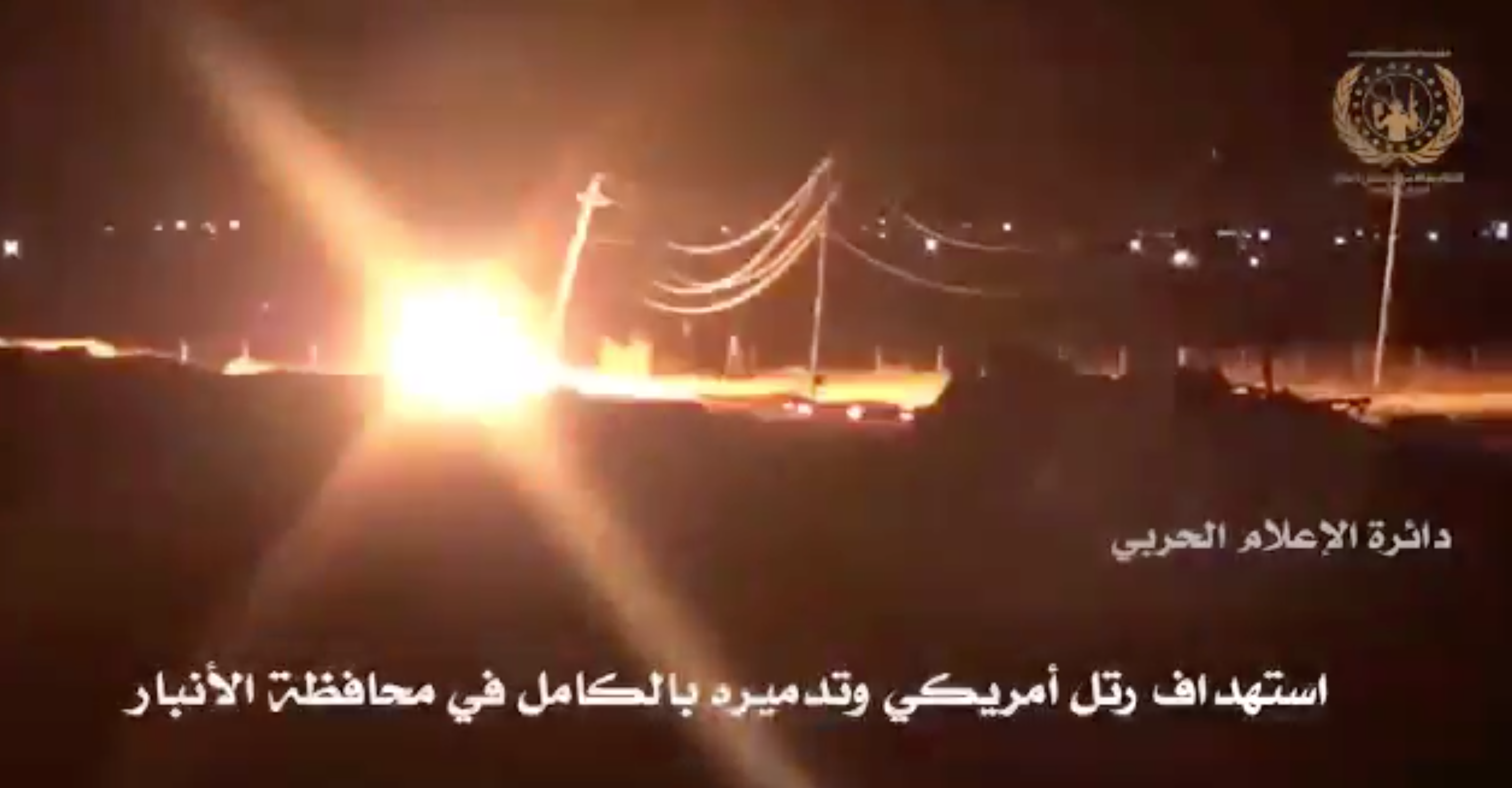
A newly formed and likely front group belonging to the Islamic Resistance in Iraq claims responsibility for recent attacks in the country
-
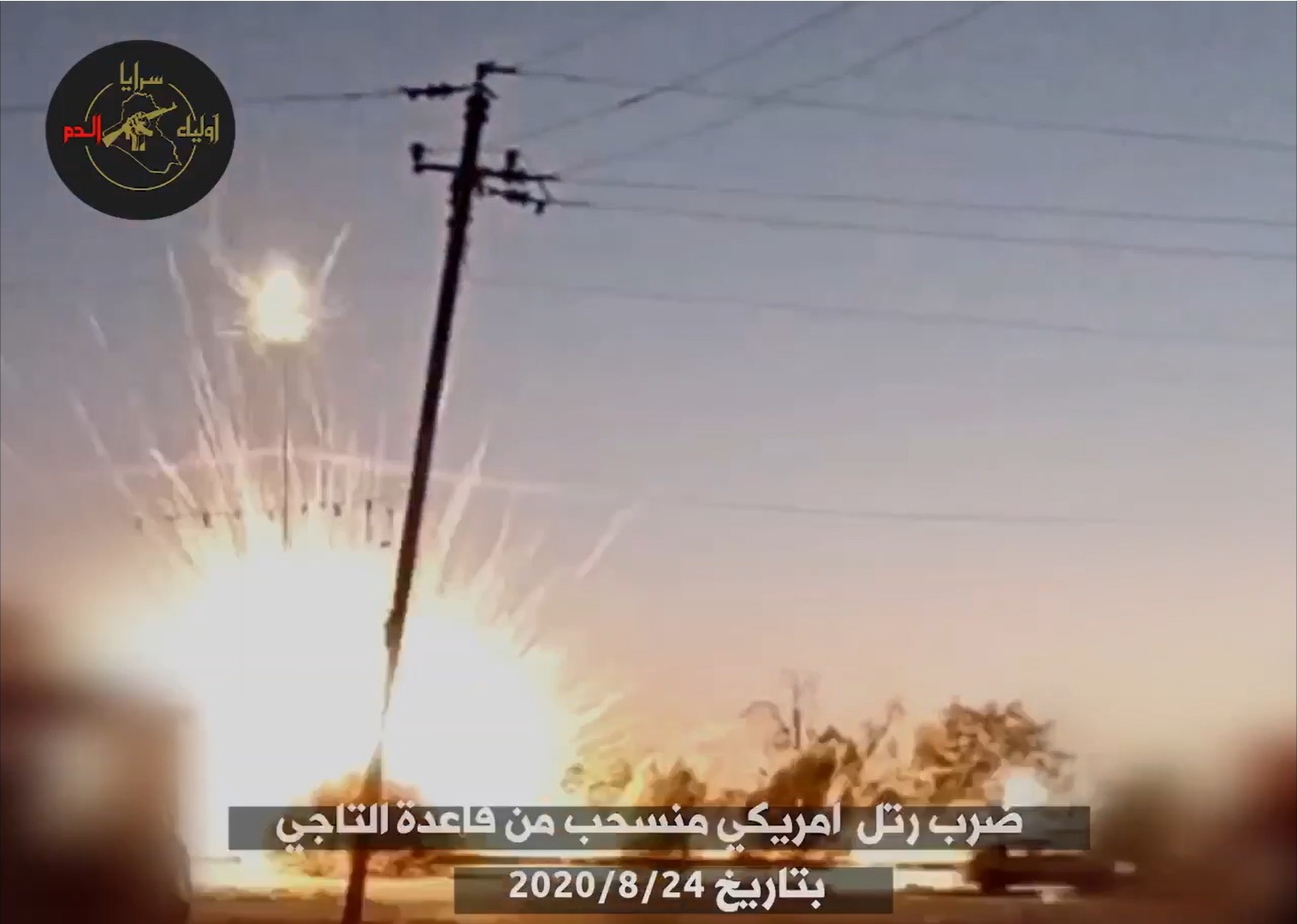
Iranian-backed front group claims to target American supply convoy in Iraq
People of the Cave, a newly formed outfit, has claimed various bombings on American supply convoys across Iraq. However, it is unclear how many of these claims are accurate.
-
Explosions damage site at Iranian missile complex and nuclear facility
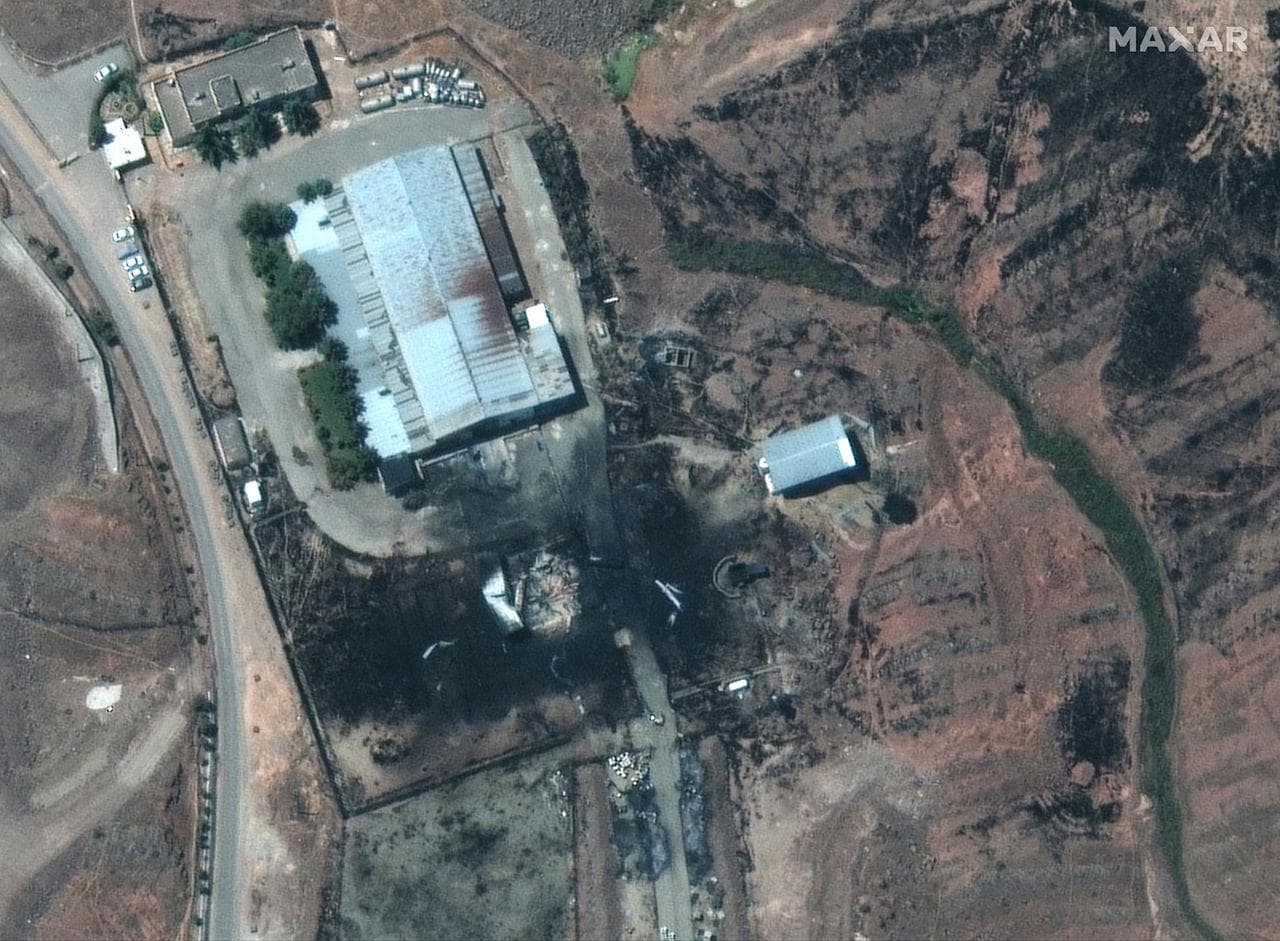
A series of explosions at a missile and nuclear facility in Iran may point toward the involvement of a state actor.
-
Israel attacks pro-Iranian positions with airstrikes in Syria
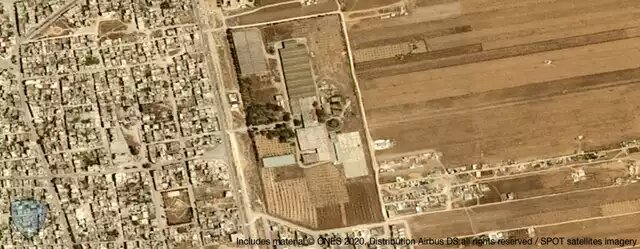
Syrian Arab Army and Iranian-backed militia sites reportedly struck by Israel during the morning hours of June 24.
-
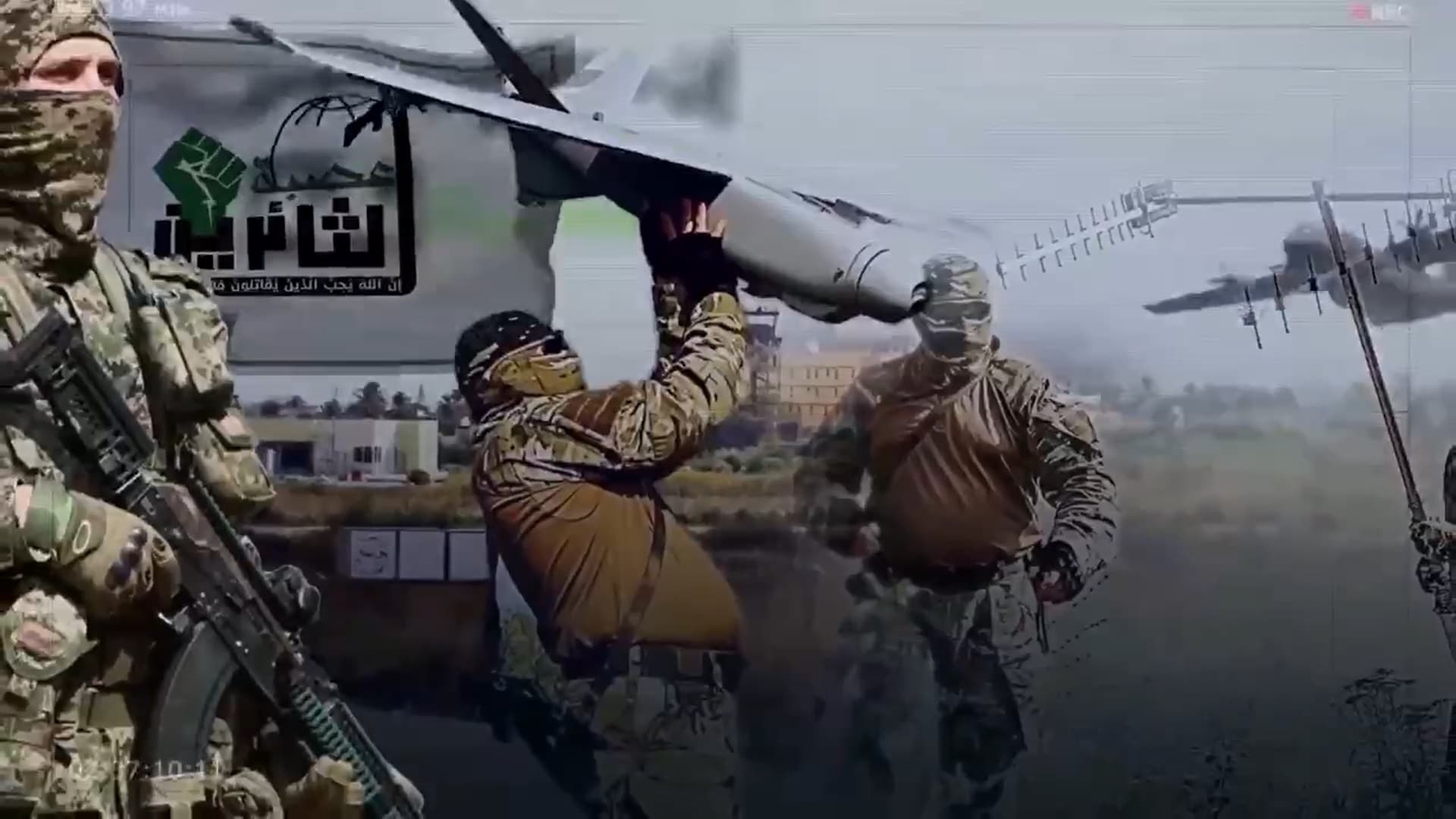
Iranian proxy in Iraq targets US bases
The Iranian proxy group League of the Revolutionaries has reemerged to claim further rocket barrages on US bases in Iraq.
-
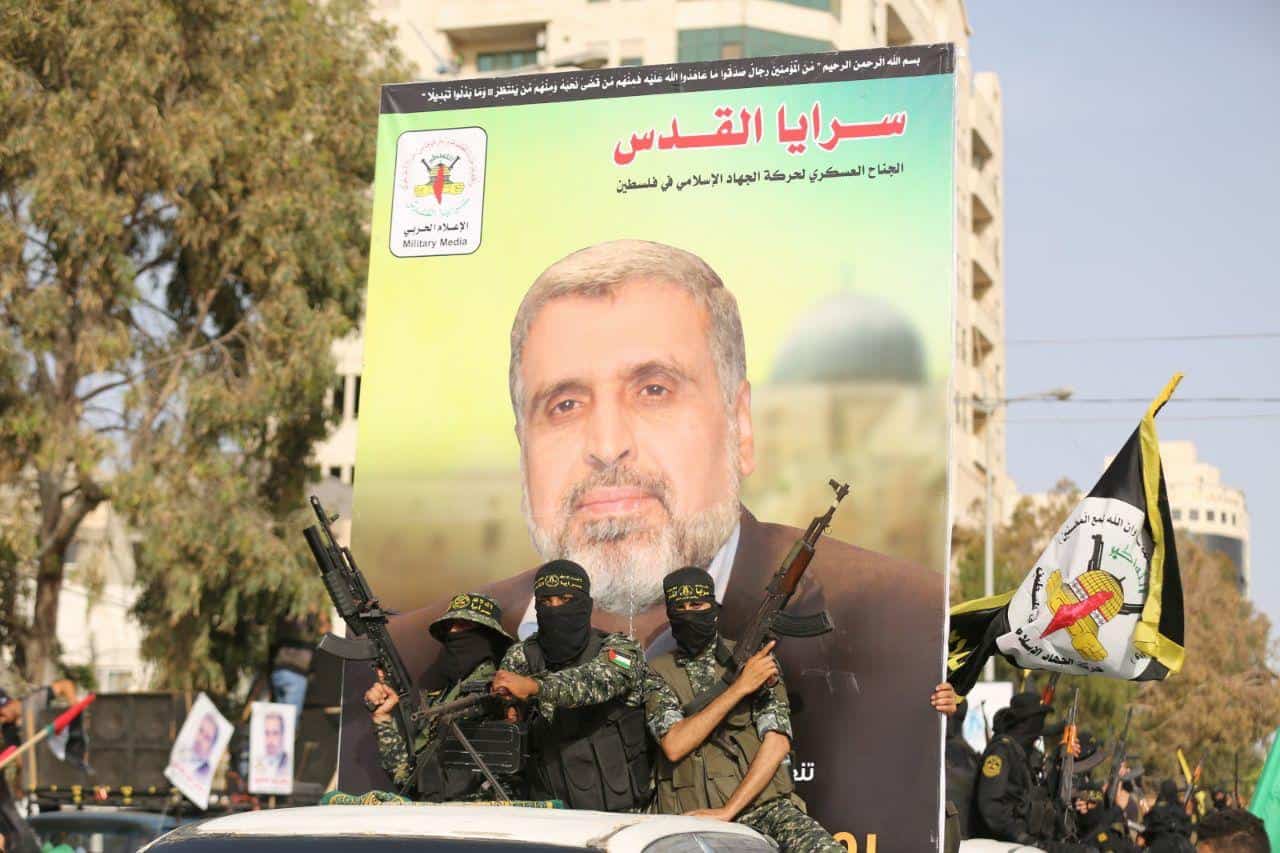
Axis of Resistance mourns the death of Palestinian Islamic Jihad leader Ramadan Shalah
Palestinian Islamic Jihad attempts to move forward after the passing of its longest serving Secretary-General, Ramadan Shalah.
-
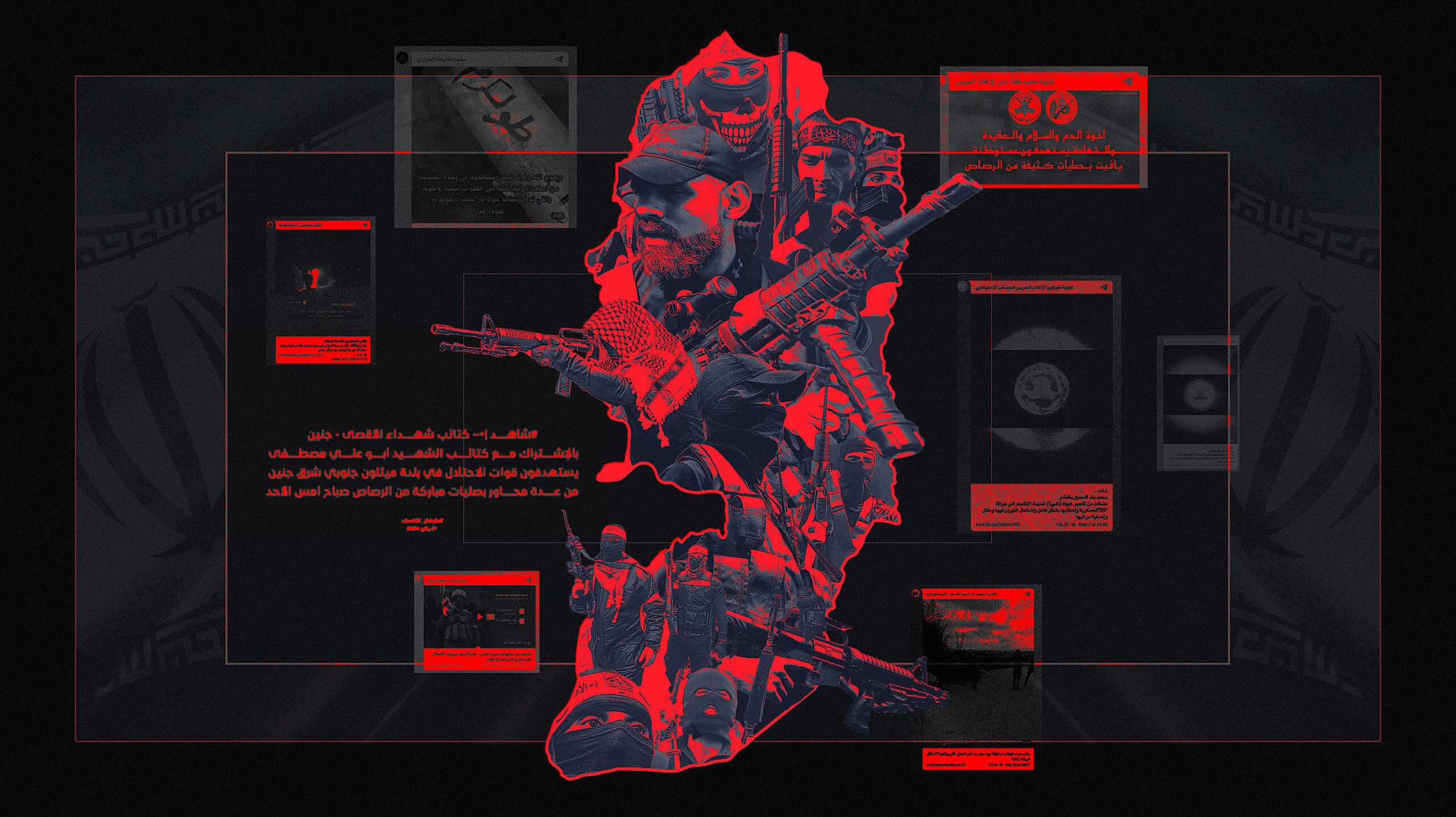
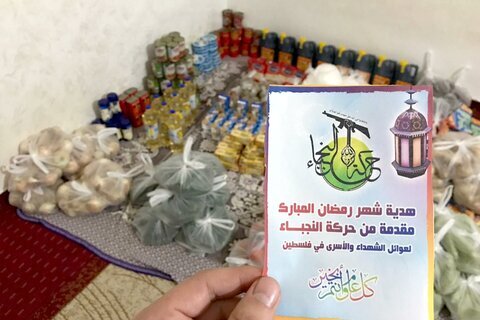
Iranian-backed organizations establish a foothold in the Gaza Strip
Iranian-affiliated organizations and an Iraqi Shia paramilitary group using charitable contributions to garner influence in the Gaza Strip.
-
Analysis: Iran’s propaganda game inside Iraq
Several groups have recently emerged inside Iraq that have claimed strikes against US troops. However, they all appear to be part of a calculated propaganda campaign propagated by Iran and its allies against the United States inside Iraq.

-
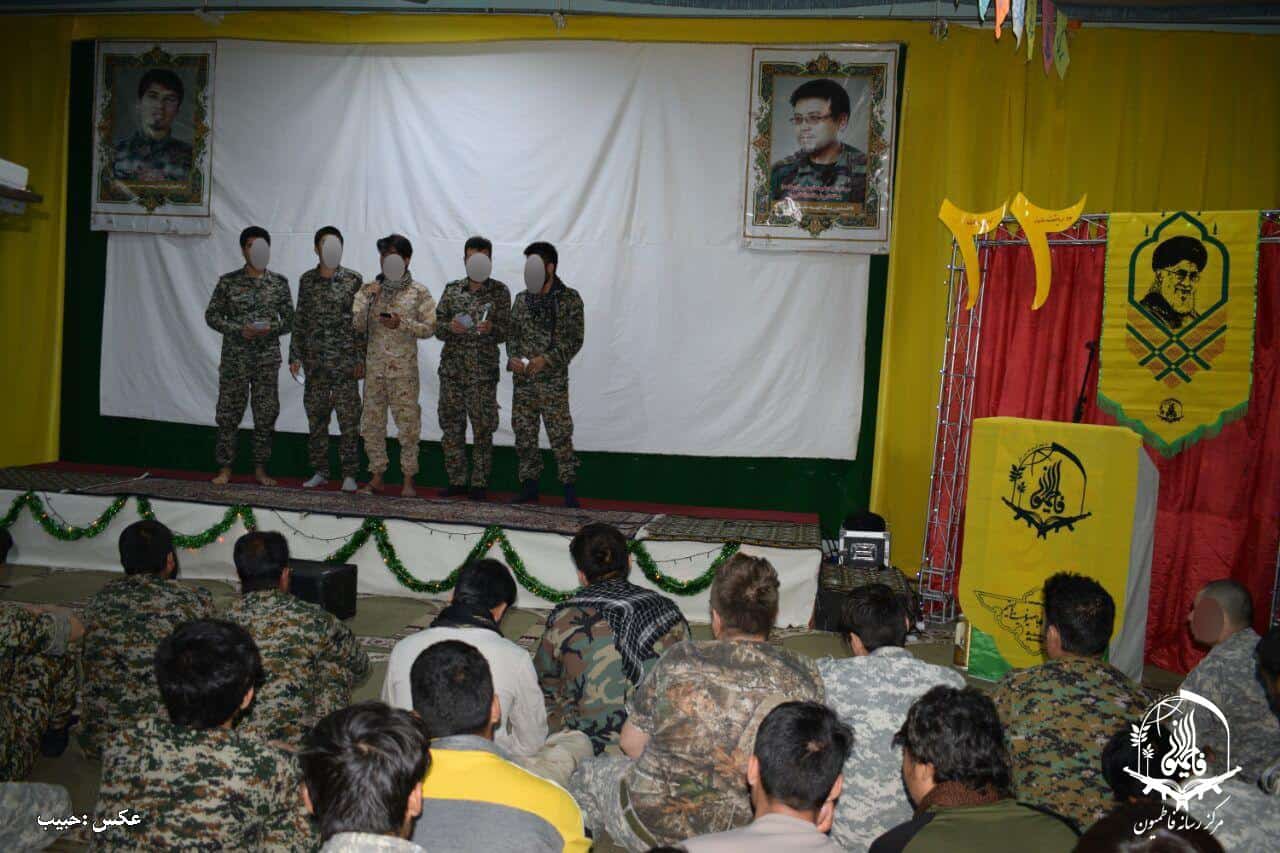
Iranian-founded Afghan Shia militia celebrates 7th anniversary in Aleppo
Since its founding in 2013, the Iranian-led Afghan Shia militia has been at the forefront of most major battles in the defense of the Assad regime.
-
Collecting and analyzing Shiite militia attacks against the U.S. presence in Iraq
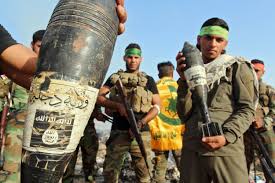
There have been at least 43 attacks using rockets and/or mortars on U.S. positions in Iraq by Iranian-backed Shiite militias. These attacks shed light on Iranian and allied-Shiite militia intentions and strategy.
-
Israel steps up military campaign against Iran’s military entrenchment in Syria
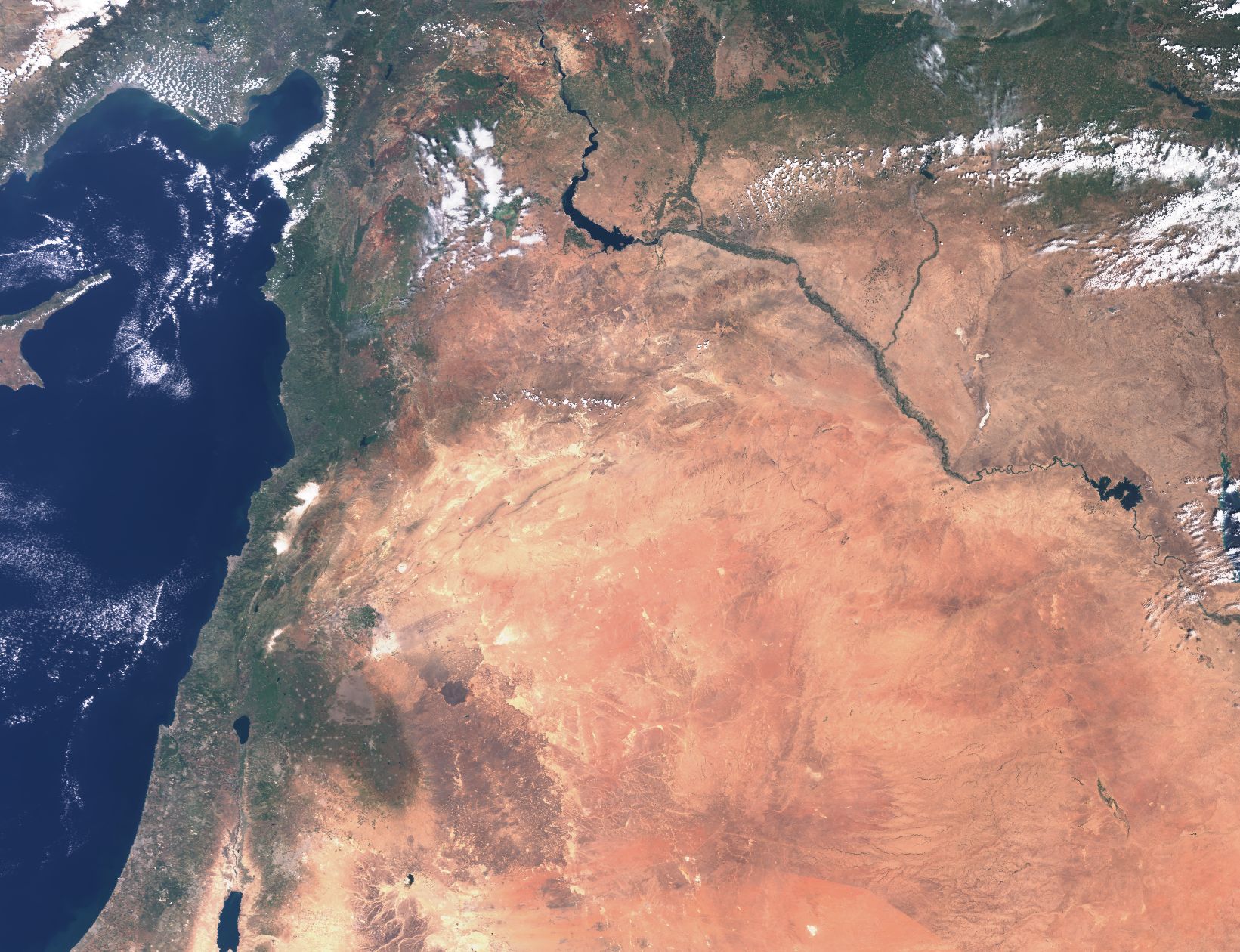
Iran continues its support for its proxy militias in Syria, as the Israeli military attempts to counter it.
-
Generation Jihad: Ep. 6 – Hezbollah’s Main Man in Iraq
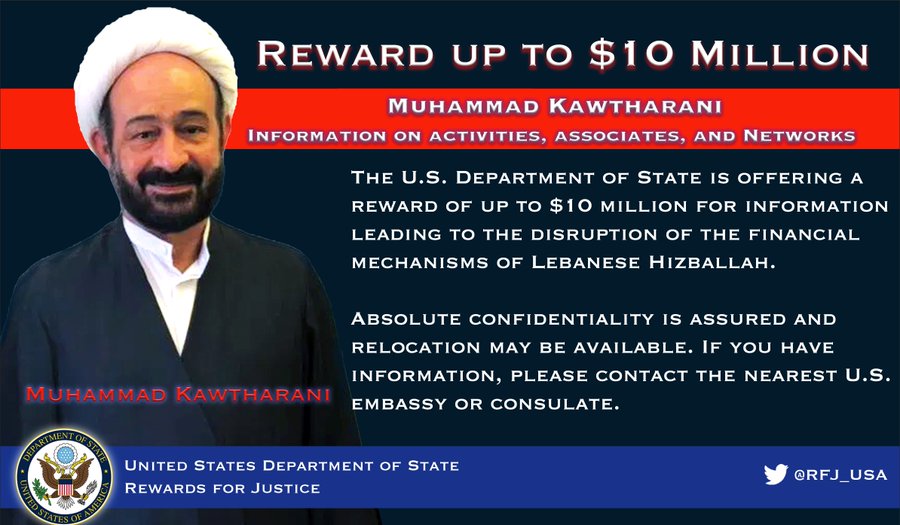
Hosts Bill Roggio and Tom Joscelyn discuss Hezbollah’s influence in Iraq and the State Department’s decision to offer a $10 million reward for information concerning the group’s main man in the country.

-
U.S. offers $10 million reward for Hezbollah’s commander in Iraq
Hezbollah operates closely in Iraq alongside Iran’s Islamic Revolutionary Guards Corps to prop up and support Shia militias hostile to the U.S. and the West. Muhammad Kawtharani has played a key role in Hezbollah’s operations.
-
Iranian proxy in Iraq threatens US-led coalition air base
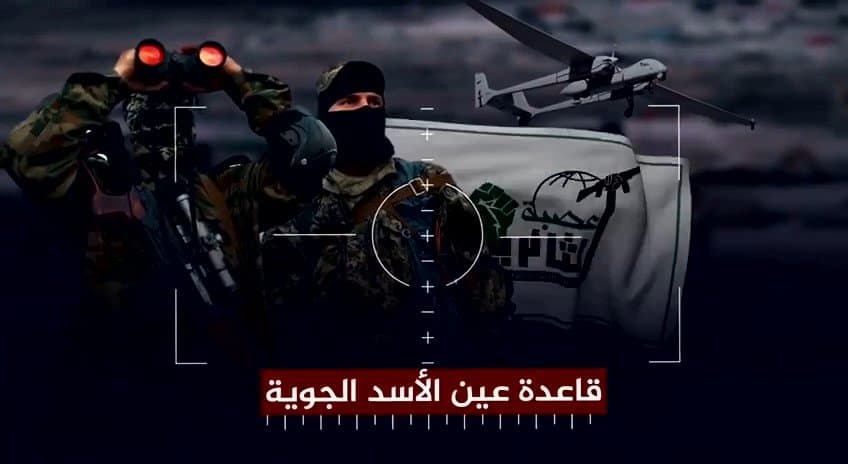
The Iranian proxy group continues its surveillance of US troops in Iraq.
-
Iranian-backed group in Bahrain celebrates anniversary of deadly bombing
The group celebrates a March 2014 bombing which killed two Bahraini and one Emirati policemen.

-
League of the Revolutionaries threatens U.S. Embassy in Iraq
Throughout its statements, the front group has made threatening the U.S. embassy one of its main talking points.
-
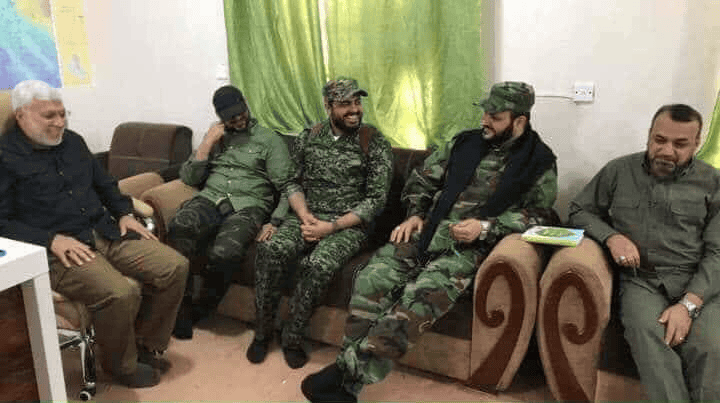
State designates Iran-backed League of the Righteous as Foreign Terrorist Organization
Additionally, the group’s leader, Qais al Khazali, and his brother, Laith al Khazali, have been listed as Specially Designated Global Terrorists. Both Qais and Laith were in U.S. custody up until the withdrawal from Iraq in December 2011.
-
New ‘League of the Revolutionaries’ warns U.S. troops in Iraq
A spokesman of the group warns US troops in Iraq, while also threatening Israel in a speech that alludes to Hezbollah’s leader Hassan Nasrallah.
-
Purported new Iraqi Shia group claims attacks on Camp Taji
The group is likely a front for other Iranian proxies inside Iraq.
-
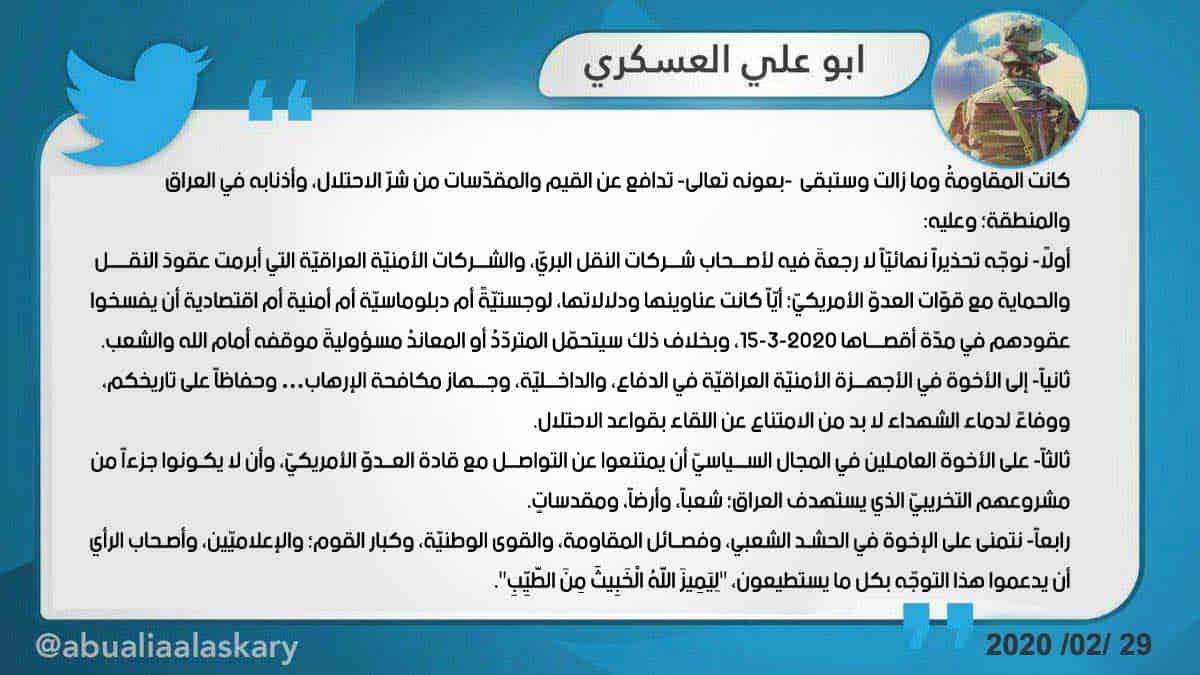
Hezbollah Brigades official warns Iraqis of working with American troops
The security official of Iran’s proxy group Kata’ib Hezbollah (Hezbollah Brigades) gives Iraqi contractors until March 15 to stop working with US troops.
-
IRGC trained militias suffer losses in northwest Syria
Iranian-backed militias are taking part in the battle for northwestern Syria.

-
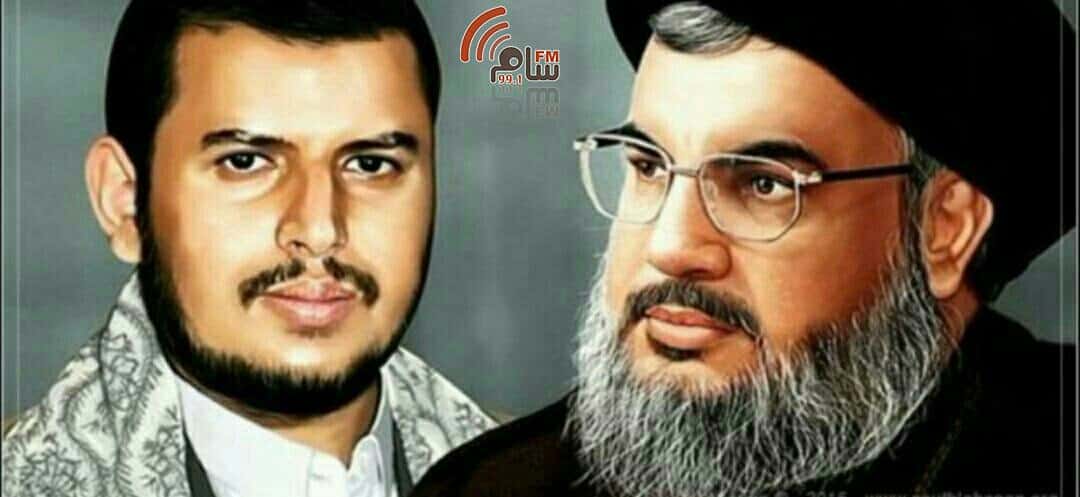
Saudi-led coalition in Yemen reports killing Lebanese Hezbollah operatives near Sana’a
Over the last two weeks, the Saudi-led coalition and its allies have reported killing several members of Lebanese Hezbollah and the Iranian Revolutionary Guard Corps in Yemen.
-
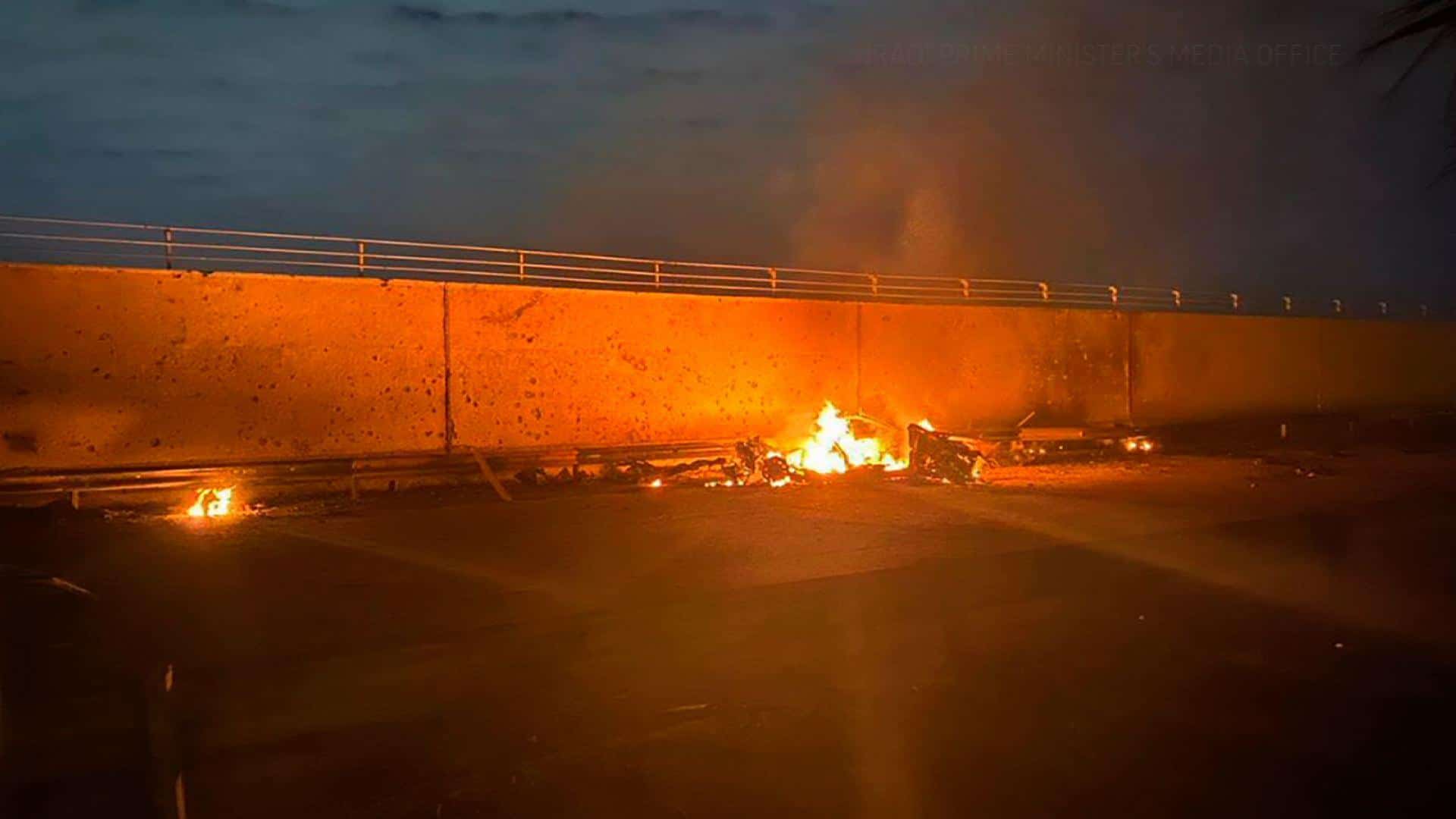
Air strike that targeted Soleimani and Muhandis also killed key aides
The killing of Qassem Soleimani and Abu Mahdi al-Muhandis last week reportedly claimed the lives of eight lesser-known colleagues as well. The death of these aides indicates that those who serve designated terrorists may suffer the same fate as their superiors.
-
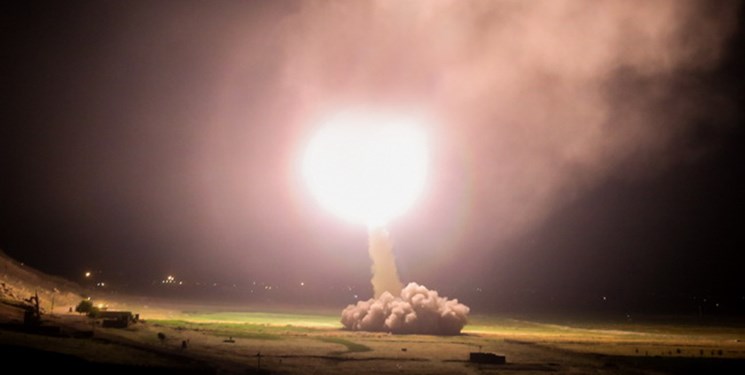
Iran launches ‘ballistic missiles’ at U.S. bases in Iraq
The U.S. Department of Defense confirmed the attack was “launched from Iran” and that it “targeted at least two Iraqi military bases hosting U.S. military & coalition personnel at Al-Assad & Irbil.” No casualties have been reported.
-
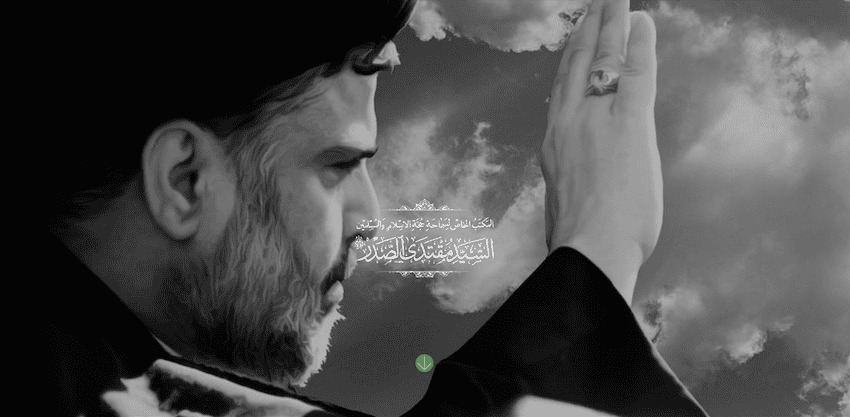
Muqtada al Sadr reactivates Mahdi Army, Promised Day Brigade
Muqtada al Sadr has reactivated two of his longstanding militia forces in Iraq in response to the U.S. killing Qods Force commander Qassem Soleimani.
-
Iranian-backed Bahraini militias eulogize Soleimani, Muhandis
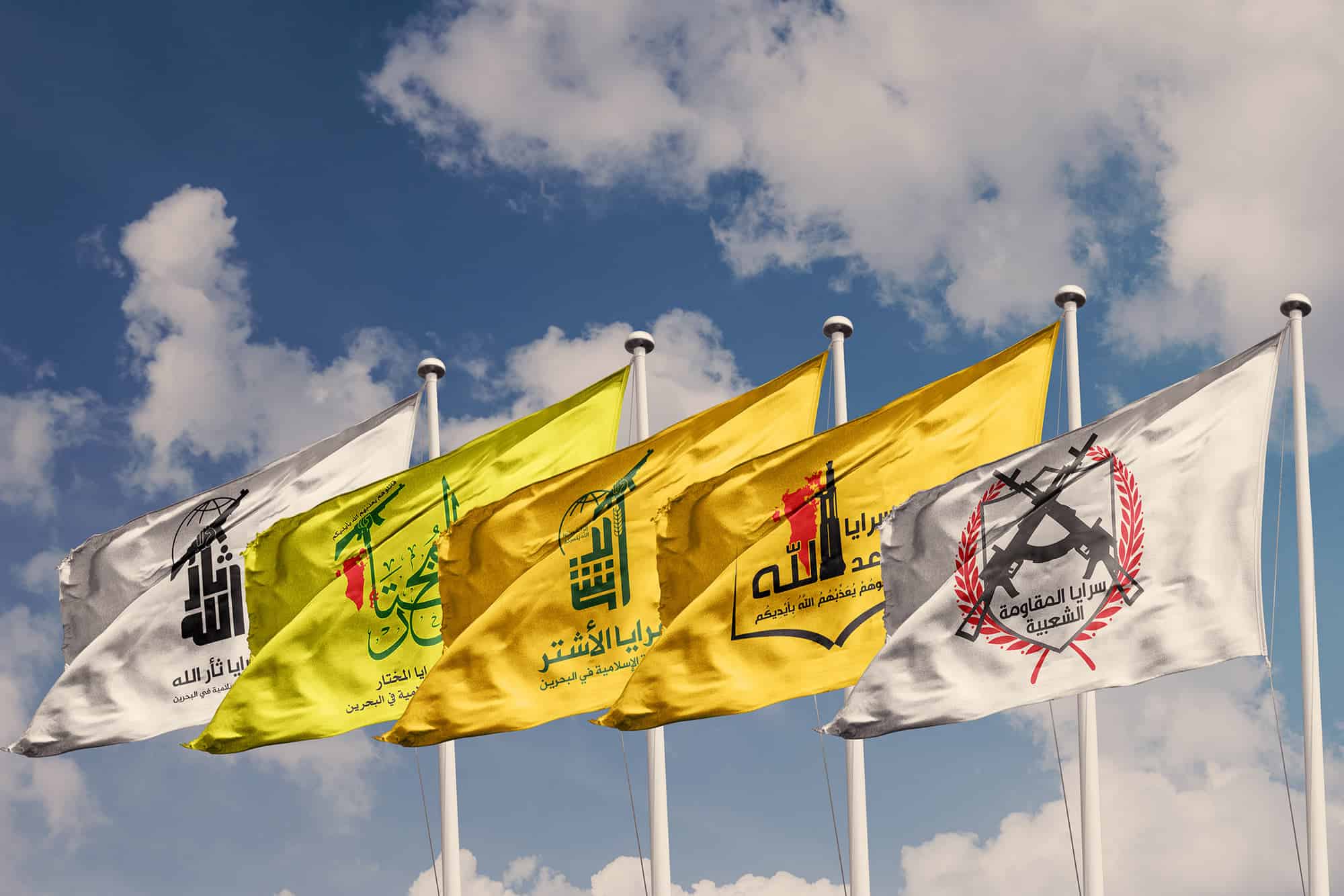
The rare joint statement both eulogizes Qassem Soleimani and Abu Mahdi al Muhandis and offers vague threats of retaliation in Bahrain.
-
Qods Force commander Soleimani’s carelessness put him in the U.S. military’s crosshairs
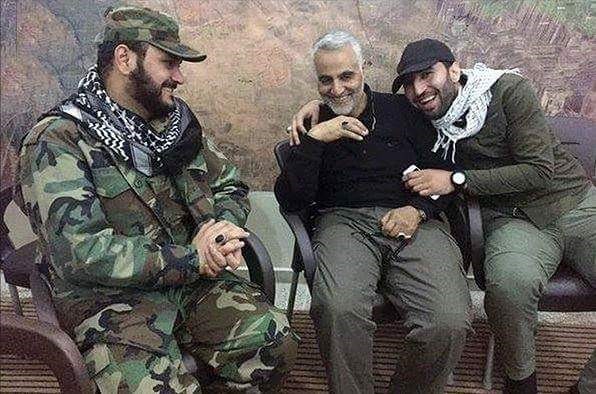
Qods Force commander Qassem Soleimani became “complacent” while traveling to and from Iraq, and did not believe the U.S. would target him, U.S. military officials told FDD’s Long War Journal. The military was able to reliably track his movements at times.
-
U.S. kills Iran’s Qods Force commander and Iraq’s deputy PMF leader in strike in Baghdad
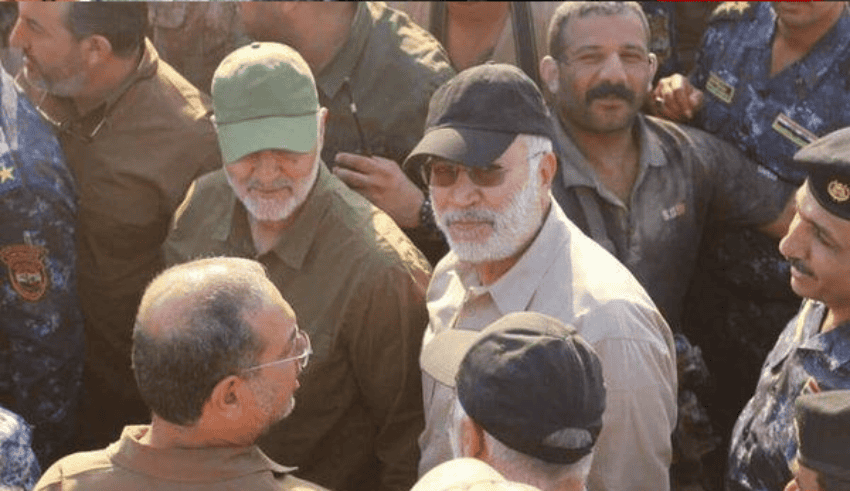
Qods Force commander Qassem Soliemani and Popular Mobilization Forces deputy Abu Mahdi al Muhandis were terror and insurgency masterminds who were revered in Iran, Iraq, Syria, and beyond for their support of the Iranian-backed Shia militias and terrorist groups that have destabilized several countries in the Middle East.
-
U.S. offers $15 million for information on IRGC and commander behind Karbala attack
Abdul Reza Shahlai is one of Qods Forces’ most dangerous commanders.

-
Saudi oil facilities set ablaze by Houthi drone strikes
The confirmed drone strike campaign so far from Houthi-controlled territory in Yemen represents another worrying development in the region.