-
Hamas-affiliated ‘agitators’ foment violence at aid site, 20 Palestinians dead: GHF
The Gaza Humanitarian Foundation (GHF) said that Hamas affiliates are behind a deadly crowd crush at an aid distribution site in Khan Younis on July 16. Twenty Palestinians died in the incident, including one person who was stabbed to death. In a related incident at the site, an American medic belonging to the GHF was wounded by a Hamas affiliate.

-
Terrorists attempt to abduct IDF soldier in Gaza
For the first time in the war, the Israeli military acknowledged that Hamas attempted to abduct an Israeli soldier. The incident follows Hamas speculating that “additional prisoners will fall into our hands” in a statement two days before the attack.

-
2 Americans wounded in attack on Gaza aid site
Two terrorists attacked a Gaza Humanitarian Foundation (GHF) aid site in Khan Younis on July 5, wounding two American veterans who work for the non-profit. The attack follows threats by Hamas and its affiliates against the GHF due to its links to Israel and the United States.

-
Hamas gives opposition militia leader 10 days to surrender
Hamas’s Revolutionary Court issued an order for the leader of the Popular Forces militia, Yasser Abu Shabab, to turn himself in. Shabab leads a Gaza militia that opposes Hamas’s rule and has received support from Israel.

-
Israeli military focuses on next steps in Gaza campaign, reorganizes aid access
The Israel Defense Forces (IDF) is working to revise civilian access routes to humanitarian aid sites in Gaza, where the US-backed Gaza Humanitarian Foundation has distributed more than 51 million meals since it began operations on May 26. The four aid distribution sites in Gaza have faced challenges amid reports of clashes between the IDF and Gazans and other incidents. The IDF is now “installing directional and warning signs, opening additional access routes, establishing barriers and checkpoints to regulate vehicle movement.” The changes come amid reports of efforts to begin a new round of possible ceasefire talks and limited IDF…

-
Hamas places bounty on aid workers: GHF
The Gaza Humanitarian Foundation (GHF) stated that Hamas placed a bounty on its personnel, offering rewards to those who kill or injure members of the nonprofit organization. This development adds to the growing list of threats and acts of violence committed by Hamas and its affiliates against the GHF.

-
Hamas unit reportedly murders Palestinian, battles victim’s relatives at hospital
The Arrow Unit, a security force created by Hamas, has carried out beatings and executions against Palestinians who have allegedly committed a crime. However, growing reports and social media posts indicate that the group may have other motives besides acting as law enforcement.

-
Israel eliminates a key link between Hamas and Iran
Israel killed a key Islamic Revolutionary Guard Corps-Qods Force (IRGC-QF) official who coordinated between Iran, Hamas, and other members of the Iran-led Axis of Resistance. The elimination is among the most notable high-ranking Iranian military officials killed in the current war.

-
IDF asserts control over areas of Gaza, returns hostage bodies
More than 1,200 sites of terrorist infrastructure were dismantled in Khirbat Ikhzaa near the Israeli border, the Israeli military said. In addition, the IDF found the bodies of three hostages in Gaza between June 7 and June 12. In roughly two weeks of operations, the new Gaza Humanitarian Foundation has distributed 19 million meals, the group said on June 12.

-
Hamas kills at least 8 aid workers, GHF reports; source claims Hamas trying to disrupt aid distribution
The Gaza Humanitarian Foundation stated that Hamas killed at least eight of its aid workers in an ambush yesterday. The incident follows threats by Hamas “against any entity or individual that collaborates or coordinates with the enemy’s schemes” and claims by sources on the ground that Hamas Arrow Unit members have attempted to disrupt aid distribution.

-
Taliban emir decries ‘Zionist assaults and acts of oppression’ in Gaza
Taliban Emir Mullah Haibatullah Akhundzada expressed his support for “the oppressed people of Palestine” while denouncing “Zionist assaults and acts of oppression.” In the past, the Taliban has praised Hamas’s fight against Israel and celebrated its brutal October 7, 2023 assault on the country.

-
Analysis: Who will replace Muhammad Sinwar as the leader of Hamas in Gaza?
Following the elimination of Hamas’s Gaza chief, Muhammad Sinwar, the Islamist group will have to choose a new leader to head the organization in the territory. However, Israel’s eliminations of Hamas leaders will make it difficult to find a suitable successor.

-
Israel recovers bodies of two hostages, new militia force grows in southern Gaza
Israel recovered the bodies of two hostages from Gaza, the Israel Defense Forces said on June 5. Judith Weinstein Haggai and her husband, Gad Haggai, are American and Israeli citizens who Hamas killed on October 7, 2023. A new US-backed humanitarian initiative, the Gaza Humanitarian Foundation, continues to deliver food to Gazans. Israeli media revealed on June 5 that Israel has armed non-Hamas militias in Gaza. Five IDF divisions continue to expand operations against Hamas.

-
Analysis: Hamas likely strikes rival Palestinian armed group amid mounting internal pressure
Hamas claimed that it attacked an undercover Israeli force in Gaza. However, it is more likely that the target of the Islamist group’s attack was a rival Palestinian group that has challenged its authority.

-
New humanitarian aid initiative begins in southern Gaza as combat continues
A humanitarian initiative in Gaza began to deliver aid on May 27 as combat continued in northern Gaza and Khan Younis. The Israel Defense Forces (IDF) said two of four initial aid sites started operating. The US-backed initiative is being run by the Gaza Humanitarian Foundation in cooperation with the Israeli government and the IDF.

-
IDF begins new operation in Gaza amid humanitarian aid shifts
On May 18, the Israel Defense Forces (IDF) began a ground offensive in Gaza that’s part of Operation Gideon’s Chariots. The Israeli Air Force carried out 670 strikes to prepare the way for the push. At the same time, the first humanitarian aid entered Gaza since March 2, when Israel cut off assistance to the area. A new US-led initiative aims to provide aid to parts of Gaza with the support of private security contractors.

-
Hamas releases US hostage Edan Alexander, IDF continues operations in Gaza
On May 12, Hamas released Edan Alexander, one of 59 hostages still held in Gaza and the last living American hostage. The release came as US President Donald Trump headed to the Middle East for meetings in Saudi Arabia, the IDF is gearing up for an expanded offensive in Gaza, and US Ambassador to Israel Mike Huckabee announced a new US-led humanitarian aid initiative for the territory.

-
Israel prepares plan for expanded Gaza offensive
On May 4, Israel’s Security Cabinet approved a new military offensive and plan for operations in Gaza. The multi-stage plan envisions the Israel Defense Forces taking control of Gaza, clearing it of Hamas, and remaining in portions of the territory long-term while the civilian population is evacuated to southern Gaza.

-
IDF has hit 1,800 targets in Gaza since new operations began on March 18
The Israeli military has struck more than 1,800 targets since renewing operations in Gaza on March 18, 2025. “We are continuing with the operational pressure and tightening the ring around Hamas as needed, and if we see no progress in the return of the hostages, we will expand our activities,” Israel Defense Forces (IDF) Chief of Staff Eyal Zamir said on April 24.

-
Syria detains two members of Palestinian Islamic Jihad
Security forces of the new Syrian transitional government in Damascus detained two Palestinian Islamic Jihad (PIJ) members, according to various media reports. The two arrested PIJ members are Khaled Khaled, who is in charge of the group’s operations in Syria, and Yasser al Zafari, who is described as heading PIJ’s organizational committee. Saraya al Quds, the military wing of PIJ, called for the men to be released.

-
IDF suffers first casualties since start of new Gaza offensive
One IDF soldier was killed and three soldiers wounded in northern Gaza, the IDF said on April 19. Israeli forces in northern and southern Gaza continue to dismantle terrorist infrastructure, and Hamas rejected an Israeli proposal for a hostage deal and demanded an end to the war. Israeli Prime Minister Benjamin Netanyahu said that Israel would not “surrender” to Hamas as part of a new hostage deal.

-
IDF slowly moves forward to consolidate control in southern Gaza
The Israel Defense Forces (IDF) continued establishing operational control of southern Gaza, sending more forces, including infantry and armor, into the territory during the first week and a half of April. The IDF announced that it eliminated the commander of Hamas’s Sheijaiya Battalion on April 10. Israeli media reported that only 25 percent of Hamas tunnels have been destroyed, and the group’s battalions continue to operate in Khan Younis and Rafah.

-
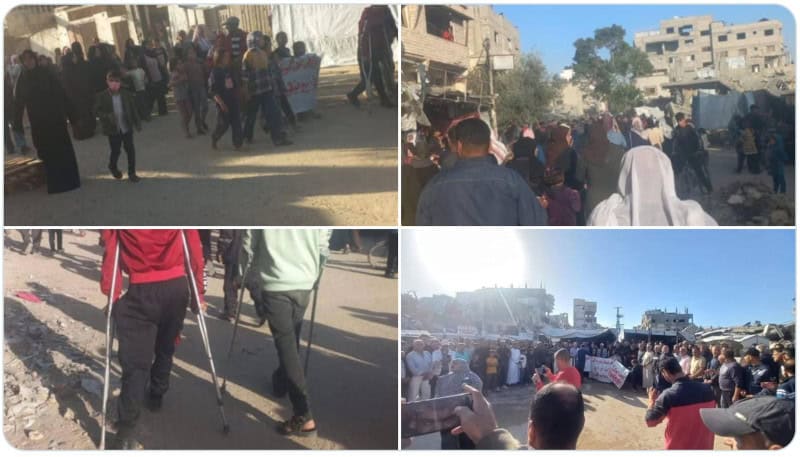
Palestinians protest against Hamas and the war in Gaza
In a rare show of dissent, some Palestinians have protested Hamas’s rule in the Gaza Strip despite the dangers of publicly criticizing the terrorist group. While the demonstrations and other signs of dissent are notable, it’s unclear if they will mark a significant change in the territory’s political situation.
-
Israel takes over new area dubbed ‘Morag Corridor’ in Gaza
On April 2, Israeli Prime Minister Benjamin Netanyahu said Israel was shifting gears in Gaza and taking over more areas. “We are also doing something else: We are seizing the Morag Corridor. This will be […] an additional Philadelphi Corridor,” Netanyahu said. The Morag Corridor separates Khan Younis from Rafah in southern Gaza. The IDF also called on Gazans to evacuate Rafah in south Gaza and Shejaiya in northern Gaza.

-
Israel strikes Hamas vehicles, political leaders in Gaza
The Israel Defense Forces (IDF) carried out strikes targeting more than 100 pickup trucks used by terrorist groups in Gaza. The IDF continued to extend operations in northern Gaza’s Beit Hanoun and Tel al Sultan in southern Gaza. Elements of four IDF divisions are now active in the new operation, which began on March 18.

-
Gaza doctor widely quoted by major media outlets has deep Hamas ties
Open-source information indicates that media figure Dr. Fadel Naim, widely quoted by prominent international news outlets on casualties and the impacts of the war in Gaza, has close familial ties to Hamas, including being the brother of longtime Hamas leader Basem Naim.

-
Israel steps up ground ops in Gaza, threatens Hamas it will take more areas
The Israeli Defense Forces (IDF) have expanded ground operations in Gaza after launching a new operation on March 18. Operation Strength and Sword initially included airstrikes targeting Hamas officials, but the operations expanded on March 19 to limited ground maneuvers that have seized areas in southern, central, and northern Gaza. The IDF says the effort is designed to pressure Hamas to release the 59 hostages still held by the group.

-
Israel launches ‘extensive strikes’ against Palestinian terrorist groups in Gaza
After negotiations to extend the first phase of a ceasefire deadlocked, Israel conducted airstrikes against terrorist groups in the Gaza Strip. Hamas, Palestinian Islamic Jihad, and the Popular Resistance Committees acknowledged the deaths of several leaders.

-
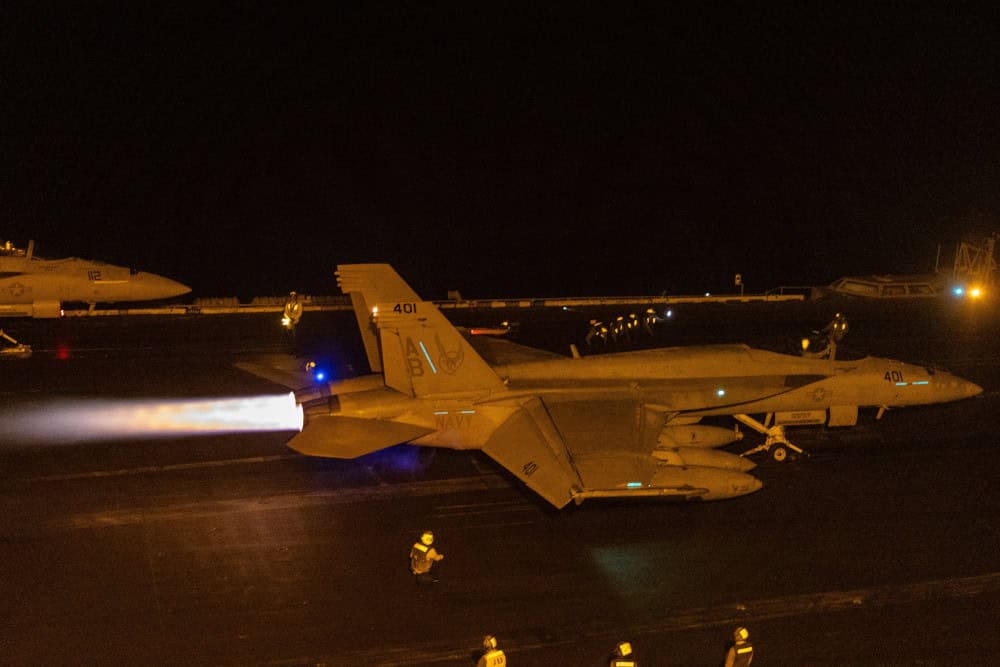
US military launches large-scale operation against Houthis in Yemen
The strikes against the Houthis, who have targeted international shipping in the Red Sea and Gulf of Aden, are the first military actions taken against the Iranian-backed militia by the Trump administration since it took office. The US re-added the Iranian-backed militia to its list of Foreign Terrorist Organizations 10 days ago.
-
Gaza ceasefire faces new hurdles as Hamas releases bodies of slain hostages, only 3 of 4 identified
On February 20, Hamas released four caskets ostensibly carrying the remains of four Israeli hostages to the Red Cross, but one contained the body of a Palestinian woman. Israel has condemned this as a violation of the ceasefire that began in January. Separately, the IDF redeployed an experienced division that served in Gaza and carried out airstrikes against Hezbollah on the Syria-Lebanon border.