-
Analysis: 2 US cases provide unique window into Iran’s global terror network
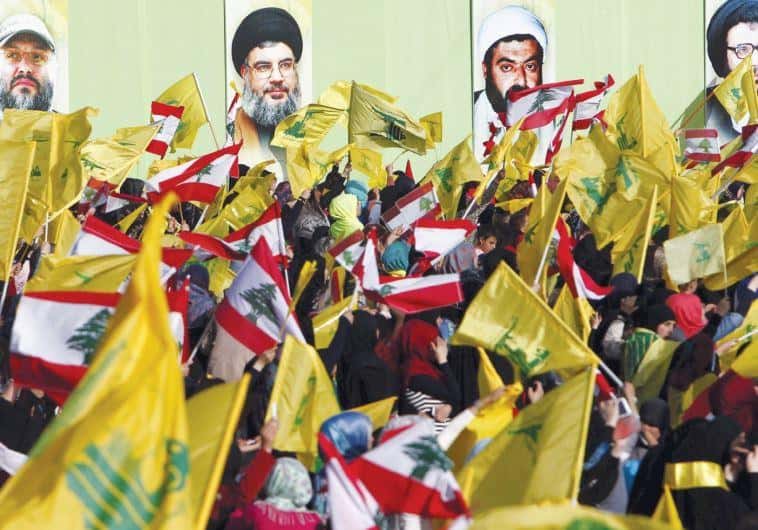
Earlier this month, the Department of Justice announced that two men, Ali Kourani and Samer El Debek, had been arrested and charged with carrying out various missions on behalf of Hizballah’s Islamic Jihad Organization. The IJO serves as Hizballah’s external operations wing, carrying out clandestine missions on behalf of Iran around the world. The complaints allege that Kourani and El Debek were both members of the IJO, which is ultimately controlled by Hizballah leader Hassan Nasrallah, who in turn reports “directly” to Iranian Supreme Leader Ali Khamenei.
-
Al Qaeda in the Arabian Peninsula
Bulgaria to extradite Frenchman linked to Paris attacks
-
Bulgaria
Bulgarian police acting on European arrest warrants detained French citizen Fritz-Joly Joachin, who is of Haitian origin, as he was trying to cross over into Turkey from Bulgaria. Joachin reportedly had contacts with Cherif Kouachi, one of the twin brothers suspected in last week’s terrorist attack in Paris, shortly before leaving France for Turkey. A Muslim convert, Joachin was allegedly trying to take his three-year-old son to join a jihadist community in Syria. France has requested Joachin’s extradition.
-
Bulgaria
Authorities raided over 40 homes in Pazardzhik, Plovdiv, Smolyan, Haskovo, and Asenovgrad, in a crackdown on suspected Islamist militants and arrested prayer leader Ahmed Mussa at a Pazardzhik mosque. Mussa and six others were charged with membership in a radical Islamist group and propagating war; authorities allege that the suspects tried to recruit fighters for the Islamic State. A later report said only Mussa remains in detention.
-
Bulgaria
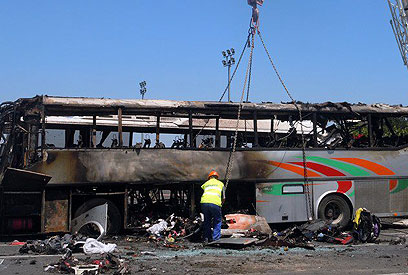
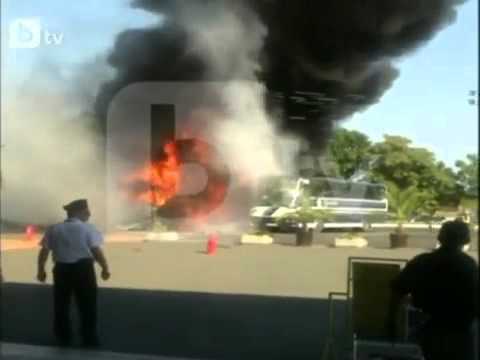
Bulgarian authorities identified the bomber in the 2012 Burqas attack as Mohamad Hassan El-Husseini, 25, who held dual Lebanese-French citizenship. His two accomplices in the attack, Meliad Farah, 32, a.k.a. Hussein Hussein, an Australian citizen, and Hassan al-Hajj Hassan, 25, a Canadian citizen, remain at large and will be tried in absentia. The attack on a tourist bus at a Black Sea resort killed five Israelis as well as the bomber, and wounded over 30 people.
-
Bulgaria
Interior Minister Yovchev said he is certain that Hezbollah was responsible for the Burgas terrorist attack that killed five Israelis in 2012. Bulgarian media claimed that the Burgas suicide bomber was born in Algeria and had trained in south Lebanon camps, and that two of his accomplices, Meliad Farah and al-Hajj Hassan, were of Lebanese origin.
-
Bulgaria
120 detained for attacking Bulgarian mosque
-
Bulgaria
Bulgaria plans to try two alleged members of Hezbollah in absentia for last year’s bombing in Burgas that killed five Israelis. The suspects, Australian citizen Meliad Farah, a.k.a. Hussein Hussein, and Canadian citizen Hassan El Hajj Hassan, are both Lebanese but have not lived in Lebanon for some time. Bulgarian authorities are seeking the extradition of two suspects in the case from unnamed countries.
-
Bulgaria
Father of Canadian wanted for Bulgarian terror attack defends ‘good’ son’s innocence
-
FBI seeking information on Burgas terror suspects
The FBI announced today that it was seeking information related to two men, Meliad Farah and Hassan el Hajj Hassan, who are wanted in connection with the Burgas terror attack in July 2012.

-
Bulgaria
Suspect in Burgas bombing flew to Lebanon before blast: report
-
Is one of the Burgas terror suspects actively using Facebook?
While authorities search for Hezbollah operatives Meliad Farah and Hassan el Hajj Hassan, who are wanted in connection with the July 2012 Burgas terror attack, Farah may be actively using Facebook as recently as today.

-
Bulgaria
Bulgarian media reported that the two suspected Hezbollah operatives identified by authorities on July 25 had received about $100,000 in money transfers from Hezbollah. The money, which helped finance the Burgas attack, reportedly went into their bank accounts in Canada and Australia.
-
Names of Hezbollah terrorists linked to Burgas attack released
Bulgarian authorities today revealed the names and photos of two Hezbollah operatives believed to have been part of the Burgas terror attack last July. The two men are thought to be living in southern Lebanon.
-
Burgas bomb reportedly tied to Nazareth and Thailand terror plots
Israeli media reports suggest that the bomb used by Hezbollah in the Burgas terror attack matches the materials discovered by Israeli and Thai authorities in other terror plots in 2012.

-
Bulgaria
EU Terrorist Group Designation to Have Little Impact on Hezbollah
-
EU adds Hezbollah’s military wing to terror list
European Union foreign ministers today reached a unanimous decision to designate the military wing of Hezbollah as a terrorist organization. In the past, the terror group has denied that Hezbollah has separate political and military wings.
-
1 year after Burgas: What do we know?
One year after the Burgas terror attack that killed five Israelis and one Bulgarian national, much is known about the Hezbollah attack, but a few questions remain.
-
Bulgaria
One Year On, Bulgaria Still Hunts for Anti-Israeli Bus Bomber
-
Bulgaria
Bulgaria: Leads in Terror Act Probe Point at Hezbollah
-
Bulgaria
Bulgaria’s New Interior Backs Version of Hezbollah Role in Burgas Terror Attack
-
Lebanon-based printer at center of Burgas probe
In a recent working group discussion among EU states, Bulgaria revealed that the printer used to print the fake licenses used by terrorists in the July 2012 Burgas attack belonged to a member of Hezbollah.

-
Bulgaria
Bulgaria wants faster foreign help in bus bomb investigation
-
Bulgaria
Burgas Terror Act Reenactment Deemed 99% Success
-
Bulgaria
How Hezbollah Trained an Operative to Spy on Israeli Tourists
-
Bulgaria
Iranian agent with Canadian passport arrested in Bulgaria
-
Bulgaria
France ready to blacklist armed wing of Hezbollah
-
Bulgaria
Bulgaria Bus Attack: Berlin Wants Hezbollah On EU Terrorist Group List
-
Bulgaria
Former Vice-PM and Interior Minister Tsvetan Tsvetanov has been given special protection since March 4 due to a “threat on his life.” Tsvetanov had announced on Feb. 5 that Hezbollah was involved in the 2012 Burgas suicide attack that killed six people.
-
Bulgaria
Marin Raikov, the new interim prime minister, said Bulgaria would not initiate a request to impose EU sanctions on Hezbollah, but would “present the objective facts and circumstances and let our European partners decide.” In February, Bulgaria said that Hezbollah was behind the July 2012 attack in Burgas. Bulgaria’s center-right government was replaced on March 13 by the interim technocrat administration. The Bulgarian opposition has criticized Bulgarian attempts to blacklist Hezbollah.