-
Jihadi History: Al-Qaeda’s failed mobilization efforts in Central African Republic
In early 2014, as Muslim civilians were being massacred in Central African Republic as part of a cycle of violence between Muslim and Christian militias, al-Qaeda went on a full-court press in an attempt to foster any jihadist movement to take up arms in the country. These attempts, however, largely fell on deaf ears. As such, this offers a unique glimpse into when, and potentially how, jihadist mobilization attempts fail.

-
How a US citizen became a key player in the Islamic State’s rivalry with al Qaeda
The eighth edition of the Islamic State’s Rumiyah magazine features a cover story on Ahmad Abousamra, who was added to the FBI’s Most Wanted Terrorist List in 2013. Abousamra was the “chief editor” of Dabiq, the Islamic State’s English-language magazine, and also one of al Qaeda’s fiercest rhetorical opponents. He described al Qaeda’s leaders and pro-al Qaeda ideologues as the “Jews of Jihad.”

-
US confirms death of high-profile Tunisian Islamic State assassin
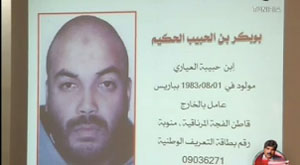
The Defense Department has confirmed that Boubaker al-Hakim, a French-Tunisian Islamic State leader, was killed in Raqqa, Syria on Nov. 26. Al-Hakim had ties to Ansar al Sharia Tunisia, an al Qaeda-affiliated group, before defecting to the Islamic State’s cause. He admittedly assassinated one Tunisian politician in 2013 and knew the assailants responsible for a second slaying.

-
Benghazi suspect killed in Mosul, Pentagon says
The Pentagon said today that Ali Awni al Harzi, the first suspect publicly identified in the September 11, 2012 terrorist attack in Benghazi, Libya, was killed in a US airstrike in Mosul, Iraq. Al Harzi and his brother have been working for the Islamic State as facilitators.

-
AQIM battalion takes credit for killing 4 Tunisian security officers
Al Qaeda in the Islamic Maghreb’s (AQIM) Uqba bin Nafi Battalion has claimed credit for an attack that killed four members of Tunisia’s National Guard. The group remains loyal to AQIM despite some claims that it had defected to Abu Bakr al Baghdadi’s Islamic State.

-
Tunisian jihadist group posts pictures of spoils, claims attacks on Tunisian military
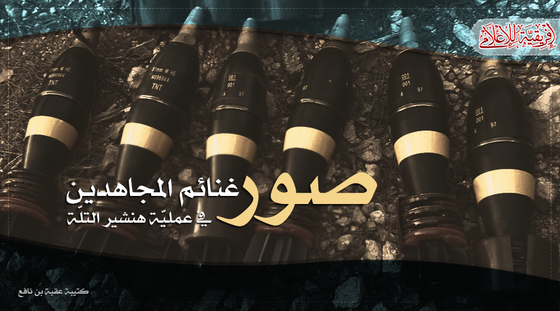
The Tunisian Uqba Ibn Nafi Battalion, which is linked to Ansar al Sharia Tunisia and al Qaeda in the Islamic Maghreb, released pictures on Twitter showing weapons taken after clashes with the Tunisian military. The group also claimed two recent attacks in the North African country.
-
6 Guantanamo detainees transferred to Uruguay were part of al Qaeda’s network, files allege
Intelligence cited in leaked Joint Task Force Guantanamo (JTF-GTMO) threat assessments link the six recently transferred Guantanamo detainees to Abu Zubaydah and al Qaeda.

-
Al Qaeda in the Islamic Maghreb calls for reconciliation between jihadist groups
Al Qaeda in the Islamic Maghreb has issued a statement praising the Islamic State of Iraq and the Sham’s (ISIS) gains in Iraq and calling for reconciliation between jihadist groups in Syria. The statement was authored prior to the ISIS declaring that it ruled over a caliphate and rebranding itself the “Islamic State.”
/assets/images/featured-image-default.jpg)
-
Ansar al Sharia Tunisia leader says gains in Iraq should be cause for jihadist reconciliation
Abu Iyad al Tunisi, the head of Ansar al Sharia Tunisia, has released a statement calling for jihadists in the Levant to reconcile based on recent events in Iraq.

-
Abu Qatada provides jihadists with ideological guidance from a Jordanian prison
Prior to 9/11, Abu Qatada inspired numerous al Qaeda operatives. Now imprisoned in Jordan, he is providing ideological guidance to jihadists in Syria and North Africa.

-
Social Media Jihad: Abu Qatada’s letter to Ansar al Sharia Tunisia
Ansar al Sharia Tunisia regularly promotes Abu Qatada’s advice and guidance on its Twitter feed.

-
Social Media Jihad: Ansar al Sharia Tunisia leader says Muslim youth ‘haunt’ West
Seifallah Ben Hassine (a.k.a. Abu Iyad al Tunisi) has released a short statement saying that the Muslim youth “haunt” the US and the West.

-
ISIS suicide assault team strikes government complex in Samarra
A Tunisian known as Abu Anas al Tunisi was a member of the three-man suicide assault team that targeted a government complex in Samarra.

-
Ansar al Sharia Tunisia deputy leader reportedly in Syria
Kamel Zarrouk is said to have joined the Islamic State of Iraq and the Sham after fleeing security forces in Tunisia.

-
Social Media Jihad: Ayman al Zawahiri addresses infighting in Syria
Ayman al Zawahiri’s message concerning the infighting in Syria has been picked up by various jihadist websites, including a Facebook page operated by Ansar al Sharia Tunisia.

-
Senate report: Terrorists ‘affiliated’ with multiple al Qaeda groups involved in Benghazi attack
A newly released report by the Senate Intelligence Committee notes that terrorists “affiliated” with al Qaeda in the Islamic Maghreb (AQIM), al Qaeda in the Arabian Peninsula (AQAP), the Muhammad Jamal Network, and Ansar al Sharia took part in the Sept. 11, 2012 terrorist attack in Benghazi, Libya.
-
State Department designates 3 Ansar al Sharia organizations, leaders
The State Department has designated three Ansar al Sharia organizations. Two of them were involved in the Sept. 11, 2012 attack in Benghazi, Libya and the third was involved in the Sept. 14, 2012 assault on the US Embassy in Tunis, Tunisia. The State Department says Ansar al Sharia Tunisia is “tied” to al Qaeda’s affiliates, including al Qaeda in the Islamic Maghreb.

-
Ex-Guantanamo detainee remains suspect in Benghazi attack
More than one year after the Sept. 11, 2012 terrorist attack in Benghazi, Libya, a former Guantanamo detainee remains a key suspect.

-
Ansar al Sharia Tunisia denies emir was captured by US forces in Libya
Press reports from North Africa indicated that Seifallah ben Hassine (a.k.a. Abu Iyad al Tunisi) was captured by US and Libyan forces, but the Tunisian terror group and the US have denied the rumors.
-
Ansar al Sharia battles security forces in Benghazi
For the past few days, Ansar al Sharia has been battling Libyan security forces in the city of Benghazi. More than one year after the Sept. 11, 2012 terrorist attack on the US mission, the al Qaeda-linked Ansar al Sharia remains a potent force.
-
Al Qaeda and the threat in North Africa
Testimony to the Senate Foreign Relations Committee on al Qaeda’s network in Africa and the threat it poses to the US
-
Social Media Jihad: AQIM praises Hakeemullah Mehsud
Al Qaeda in the Islamic Maghreb has joined other jihadist groups in releasing a statement praising Hakeemullah Mehsud, the Pakistani Taliban commander killed earlier this month. Ansar al Sharia Tunisia posted the message on one of its official Facebook pages.

-
Tunisian government blames Ansar al Sharia for suicide attacks
The Tunisian government blamed Ansar al Sharia for a failed suicide bombing and an additional planned suicide attack last week.
-
Suicide bomber strikes in Tunisia
A suicide bomber blew himself up in the coastal city of Sousse earlier today. According to Tunisian officials, the bombing was part of a planned wave of attacks. No group has claimed the attack, but it comes after weeks of escalating violence between Ansar al Sharia and the Tunisian government.
-
Ansar al Sharia responds to Tunisian government
In a new statement, Ansar al Sharia claims it is organizationally independent, but confirms its “loyalty” to al Qaeda. The Tunisian government claimed last week that the group is closely linked to al Qaeda in the Islamic Maghreb.
-
Tunisian government: Ansar al Sharia is a terrorist organization
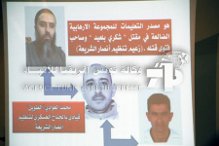
The Tunisian government has labeled Ansar al Sharia a terrorist organization. The group’s leaders, including Seifallah ben Hassine, have longstanding ties to al Qaeda and terrorism. Ben Hassine has been identified as the “mastermind” of the Sept. 14, 2012 attack on the US Embassy in Tunis.
-
US closes diplomatic facilities in response to al Qaeda threat
The State Department said 21 US embassies and consulates will be closed on Sunday, Aug. 4, in response to a suspected threat from an al Qaeda affiliate. No specific details about the threat have been provided. Al Qaeda-linked jihadists assaulted multiple diplomatic facilities in September 2012.
-
Social Media Jihad: More mourning for AQAP’s deputy
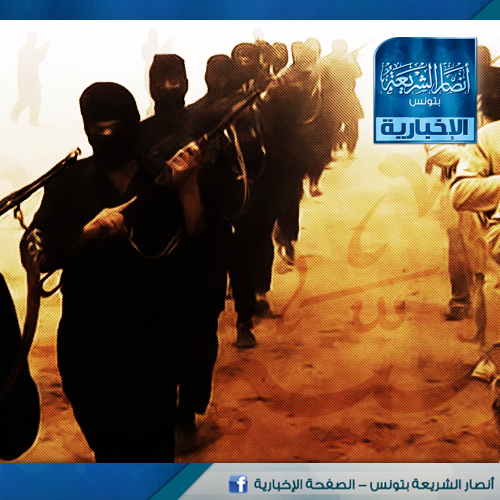
The Islamic State of Iraq and the Levant (ISIL) has issued a statement mourning the death of al Qaeda in the Arabian Peninsula’s deputy leader, Said al Shihri. The statement quickly made the rounds on jihadist social media sites.
-
Social Media Jihad: Ansar al Sharia Tunisia denies involvement in assassinations
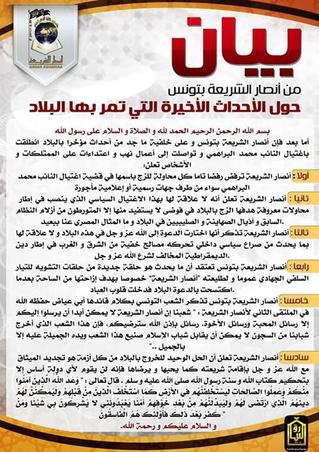
In a statement released on its Facebook page and Twitter feed, Ansar al Sharia Tunisia denied any involvement in two high-profile assassinations this year. One day earlier, Tunisia’s interior minister accused Ansar al Sharia members and a longtime jihadist of being involved.
-
Tunisian government alleges longtime jihadist involved in assassinations
Tunisian officials have accused a longtime jihadist, who fought in Iraq, of being involved in two high-profile assassinations. The Tunisian government also alleged that some of the perpetrators “belong to Ansar al Sharia.”