-
US Treasury continues to target AQAP’s financial network
The US Treasury Department announced the designations of two “key facilitators” for Al Qaeda in the Arabian Peninsula (AQAP) today. A charity that is really a “front organization” for AQAP and has collected funds from Gulf businessmen was also designated. Treasury has systematically targeted AQAP’s support network throughout the year and today’s announcement is part of a series of related moves.

-
US military kills 5 AQAP fighters in central Yemen
There have been at least 31 airstrikes against AQAP in Yemen in 2016, according to data compiled by The Long War Journal.

-
US airstrikes kill 8 al Qaeda operatives in central Yemen
The military said it is attempting to deny al Qaeda in the Arabian Peninsula “a haven” in Yemen. The group still controls rural areas in the south.

-
US strikes three radar sites in Houthi-controlled part of Yemen
The US military launched missile strikes on three radar sites in a Houthi-controlled area of Yemen. The strikes came in response to two attacks on the USS Mason earlier this week. The Houthis’ insurgency in Yemen is backed by Iran and has greatly complicated US counterterrorism efforts.

-
US steps up attacks against AQAP
The US has targeted AQAP’s network in Yemen at least four times in September, and 28 times so far this year, according to data compiled by The Long War Journal.
-
2 AQAP leaders reported killed in latest US strikes in Yemen
CENTCOM announced the two strikes in Yemen, and noted that al Qaeda remains “a significant threat.” Press reports indicate that a “regional commander” known as Abdallah al Sanaani and a local commander known as Abu Khaled al Sanaani were among the AQAP operatives killed.
-
Estimated number of Guantanamo recidivists continues to rise
The Office of the Director of National Intelligence (ODNI) released its most recent statistics on Guantanamo recidivism this week. 208 former detainees are either confirmed or suspected of rejoining the jihad. 188 of them were transferred or released during the Bush administration and the remaining 20 by the Obama administration. The estimated number of recidivists has steadily climbed since 2008, when the government first provided statistics on this topic.

-
Fifteen years after the 9/11 attacks, al Qaeda fights on
Fifteen years after 9/11, Al Qaeda remains a threat to the West despite not carrying out a large-scale attack in years. The group is waging insurgencies in several countries and is far larger than it was on 9/11.

-
US military kills 13 AQAP fighters in latest strikes in Yemen
All three strikes took place in the province of Shabwa, where AQAP remains entrenched despite an offensive spearheaded by the United Arab Emirates to dislodge the group from southern Yemen.
-
Hamza bin Laden calls for regime change in Saudi Arabia
Hamza bin Laden, Osama’s son, criticizes Saudi Arabia’s intervention in Yemen in a newly released audio message. Hamza claims that the Saudi campaign has aided Houthi rebels by interfering in Al Qaeda in the Arabian Peninsula’s war against them. He calls on Muslims to overthrow the Saudi government.

-
US targeted AQAP operatives in 4 airstrikes in July
The US military justified the strikes by noting that AQAP remains a “significant threat” to the United States and its allies.
-
AQAP details ‘special forces’ training camp
The Hamza al Zinjibari training camp, which is named after a former senior leader of AQAP, is an extension of various historical al Qaeda training camps in Afghanistan according to the group.

-
US government releases data on ‘counterterrorism strikes outside areas of active hostilities’
ODNI released some information on counterterrorism raids as part of an effort to provide more transparency on these operations. US intelligence claims that between 2,372 to 2,581 combatants and between 64 to 116 civilians were killed in 473 strikes in areas outside of Afghanistan, Iraq, and Syria since President Obama took office.
-
Taliban suicide bombers target police cadets, first responders in Kabul attack
At least 27 people are reported to have been killed in the twin bombings. The second suicide bomber targeted emergency personnel as they rendered aid to the victims of the first blast.

-
US military announces 3 new airstrikes in Yemen
“We remain committed to defeating AQAP and denying it safe haven regardless of its location,” CENTCOM said while announcing three previously undisclosed drone strikes.

-
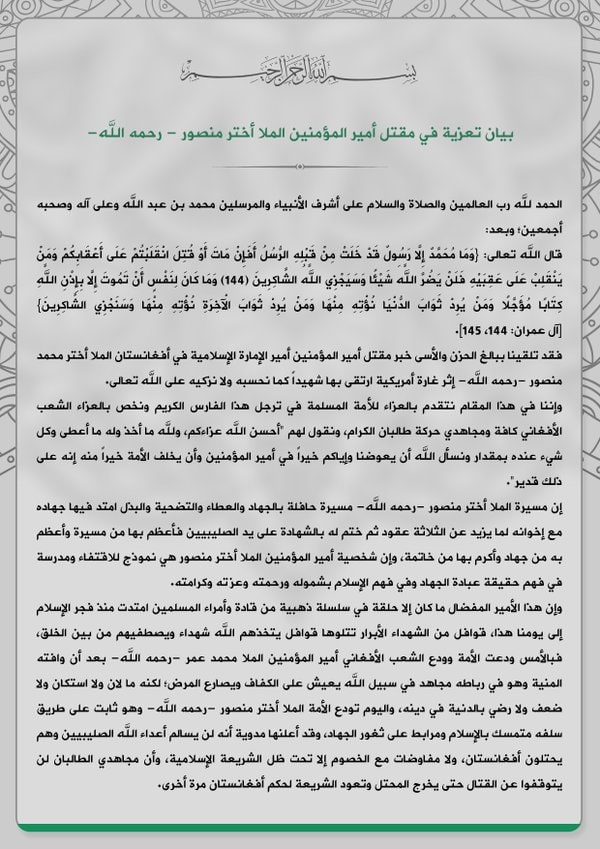
Al Qaeda branches eulogize Taliban leader Mullah Mansour
Al Qaeda in the Arabian Peninsula, Al Qaeda in the Islamic Maghreb and Al Nusrah Front have jointly issued a eulogy for Mullah Mansour, the Taliban’s chief leader. Mansour was killed in an American drone strike on May 21.
-
Ex-Guantanamo detainee discusses his life with Osama bin Laden
The latest edition of Al Qaeda in the Arabian Peninsula’s (AQAP) Inspire magazine includes an interview with ex-Guantanamo detainee Ibrahim al Qosi, as well as an article authored by Qosi. The former lieutenant to Osama bin Laden discusses al Qaeda’s formative years leading up to the 9/11 attacks.
-
AQAP says it withdrew from Mukalla to protect residents
Al Qaeda in the Arabian Peninsula (AQAP) has published a statement explaining the reasons for its withdrawal from Mukalla, a port city in Yemen that the jihadists ruled for one year. AQAP’s statement illustrates the organization’s strategy for building and preserving popular support in the region.

-
AQAP says it wanted to debate the Islamic State
The Hidayah Establishment for Media Production released an anti-Islamic State video on Apr. 8 in which a witness claims that the Islamic State has refused to publicly debate. The video includes an image of a letter purportedly written by Nasir al Wuhayshi, who was AQAP’s emir until his demise in June 2015. A follow up statement on Apr. 10 contained similar allegations against Abu Bakr al Baghdadi’s organization.

-
US intensifies air campaign against al Qaeda in Yemen
The US launched six drone and airstrikes against al Qaeda in the Arabian Peninsula during the Month of March, equaling the total of the previous five months. The intensified airstrikes coincided with the strengthening of AQAP’s hold on southern Yemen.
-
US military strikes AQAP training camp in Yemen
While the US military said that the strike will deny AQAP “safe haven,” the air campaign waged by the US against the jihadist group since 2009 has done little to halt its advance.
-
Al Qaeda in the Arabian Peninsula hosts large rally in Mukallah
Al Ather “news” agency, which publishes propaganda for Al Qaeda in the Arabian Peninsula and its front, Ansar al Sharia, has released a series of photos showing a large rally in the city of Mukallah. AQAP captured Mukallah in early April 2015.

-
Osama Bin Laden’s Files: AQAP emir foreshadowed 2011 takeover of southern Yemen
In a letter written sometime in 2010 to al Qaeda’s leadership, AQAP emir Nasir al Wuhayshi detailed the areas in Yemen where the group had significant influence. AQAP took control of many of these areas in a 2011 offensive.

-
Another town in southern Yemen reportedly falls to AQAP
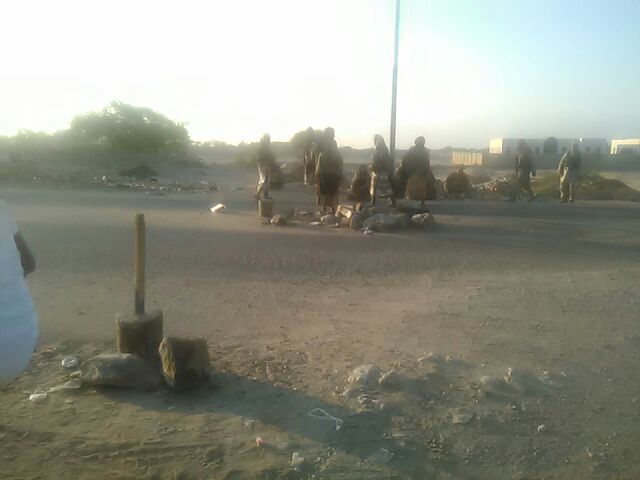
AQAP reportedly seized the southern Yemeni town of Ahwar earlier today. Press reports indicated that Ahwar was under the jihadists’ control earlier this month, but it appears operations were still ongoing at the time. The fog of war often makes it difficult to determined which towns and villages are truly in al Qaeda’s possession, but AQAP has begun to advertise its implementation of sharia law and provision of social services throughout southern Yemen.
-
Al Qaeda seizes more territory in southern Yemen
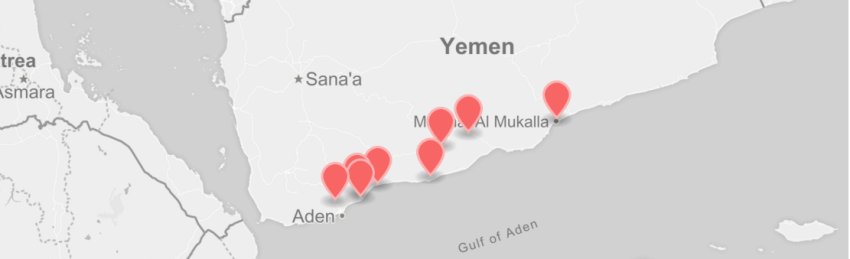
Al Qaeda in the Arabian Peninsula expanded the territory under its sphere of influence after capturing five towns in southern Yemen over the past two weeks.
-
AQAP publishes insider’s account of 9/11 plot
AQAP has published a two-part interview with Nasir al Wuhayshi, who was killed in a US drone strike in June 2015. The interview is a transcript of Wuhayshi’s account of the 9/11 plot. Wuhayshi was Osama bin Laden’s aide-de-camp prior to the hijackings.

-
AQAP confirms military commander killed in US airstrike
Jalal Bala’idi, a prominent AQAP field commander khow is also known as Hamza al Zinjibari, “was killed in a Crusader strike that targeted him while he was amongst the sons of his tribe in Abyan province,” the jihadist organization confirmed.

-
Senior AQAP commander reportedly killed in US drone strike in Yemen
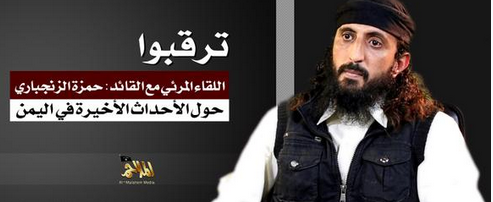
According to jihadists on social media and press reports, a prominent AQAP commander named Jalal Bala’idi was killed in a US drone strike launched last night. Bala’idi’s death has not been confirmed. He has led AQAP’s forces in a number of key battles and once claimed that his group has trained “thousands” of Sunnis. In December, Bala’idi was seen congratulating his fighters after they overran the town of Jaar.
-
AQAP provides social services, implements sharia while advancing in southern Yemen
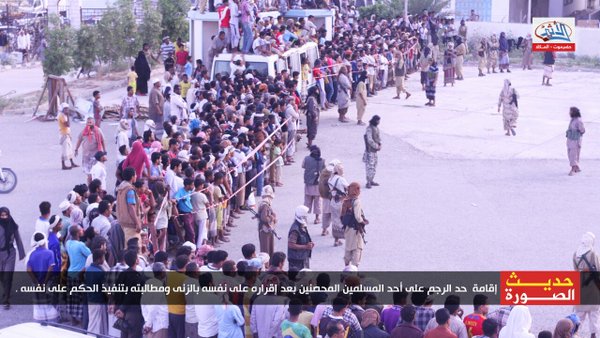
AQAP has taken control of Azzan, a town in Yemen’s southeastern Shabwa province. The jihadists have captured significant territory in southern Yemen since early 2015. AQAP’s front group, Ansar al Sharia, has launched a new social media campaign to promote its governance efforts, implementation of sharia law and provision of services in the areas under the jihadists’ control.
-
Pakistan again puts Jaish-e-Mohammed leader under ‘protective custody’
Masood Azhar, the Jaish-e-Mohammed emir, has been placed under house arrest and in protective custody at least three other times in the past.