As the Trump Administration touts an ostensible peace agreement between the Democratic Republic of the Congo (DRC) and Rwanda, another deadly, albeit less-talked-about conflict is also raging in eastern Congo. Since January 2025, the Islamic State Central Africa Province (ISCAP), colloquially known as the Allied Democratic Forces (ADF), has killed at least 967 civilians in various massacres, with most, if not all, of the victims being Christian villagers.
Most of these massacres have been perpetrated in Congo’s North Kivu Province, specifically in its Lubero territory. This locale is not particularly far from the conflict between the DRC and the M23 Movement that the Trump Administration is trying to stop.
The largest of these massacres came in September, when ISCAP murdered at least 90 people in two locations in eastern Congo. In both cases, the Islamic State made clear that the explicit targets of the attacks were Christian civilians. This ideological framing against Congolese Christians has consistently grown in the last few years.
In the larger of the two incidents that day, ISCAP militants brutally slaughtered at least 72 people, including 26 at a funeral wake, in the village of Ntoyo in North Kivu Province’s Lubero territory. This number is likely a low estimate, as some local officials stated that the death toll was as high as 102, while others reported that at least 100 others were believed to be abducted by the group. Various vehicles and houses were also burned down by the militants.
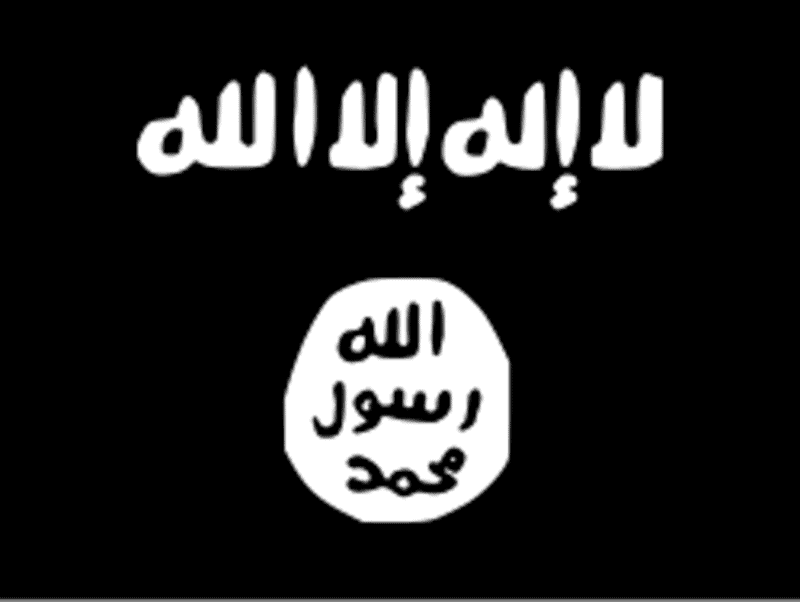
The Islamic State was relatively quick to claim the massacre, stating the following day that its men “killed upwards of 100 Christians.” The communique also noted that ISCAP’s fighters burned dozens of houses and vehicles, confirming local reports.
Given the locality, the Ntoyo massacre was likely carried out by Abuwakas, an especially radical and violent ISCAP commander of Arab Tanzanian descent. His highly mobile camp is particularly known for its wanton violence against locals, having been responsible for most of the violence in the northern Lubero territory over the last year.
The second incident, occurring in Fotobu, northwest of the city of Oicha in North Kivu’s Beni territory, left another 18 civilians dead after they were abducted from their fields. In the Islamic State’s official claim of responsibility for that massacre, it again framed the attack as against local Christians.
It is possible, though unconfirmed, that the massacre near Oicha was carried out by field commanders belonging to Mzee Mayor’s forces. Mzee Mayor, a veteran Ugandan ISCAP commander, and his mobile units have been responsible for most of the violence in Ituri and north of Beni town over the last few years. Though Mzee Mayor also operates a physical camp, he often deploys mobile units for months-long operations.
Attacks by both ISCAP commanders have continued in their respective areas of responsibility, particularly within Abuwakas’. Since September, his mobile camp has been responsible for the deaths of at least another 138 civilians. This total includes three massacres in October that resulted in 45 dead civilians and two massacres in November that killed 54. The militants perpetrated dozens of smaller attacks during the same period, killing another 56 civilians.
Retaliation over military operations
Even prior to September’s large massacre in Ntoyo, ISCAP was committing relatively smaller mass murders in the same areas, again perpetrated by Abuwakas’ and Mzee Mayor’s camps.
For instance, on July 8, ISCAP murdered at least 70 people in Beu-Manyama in Beni territory. Later that month, on July 27, another 40 civilians were killed inside a church in the town of Komanda in Congo’s Ituri Province. And on August 13, ISCAP killed an additional 44 people in the area of Melia in North Kivu’s Lubero territory.
These summer massacres were likely a retaliation for a joint Congolese-Ugandan military operation in early July against ISCAP’s main camp, which houses most of its senior leadership and is referred to as “Madina” by the group. Retaliatory massacres against civilians are a longstanding tactic used by ISCAP when it seeks to redirect military forces to alleviate pressure against it. These attacks are usually carried out by smaller, more agile mobile groups that are sent out from ISCAP’s semi-permanent jungle camps. It is this mobility that affords the jihadist group one major center of gravity to its operations, which has undoubtedly helped both its longevity and lethality.
Framing against Christians
ISCAP operates in eastern Congo, where estimates indicate that 95 percent of the population is Christian. As such, the degree to which ISCAP targets civilians explicitly for their Christian faith or simply because that is who populates the area in which it operates has long been debated.
Since the group joined the Islamic State in 2017, it has become increasingly clear from both the Islamic State’s official media and through ISCAP’s unofficial media that ISCAP is explicitly targeting Christians over their faith. This paradigm is particularly pronounced in more recent years, as older, more historical ISCAP members were killed, and younger commanders, who are often more religiously extreme, such as Abuwakas, have risen in the group’s ranks.
ISCAP defectors have told Bridgeway Foundation personnel that since Abuwakas joined the organization in 2017, he has explicitly made it clear that the group can and should target Christians and loot their property. The group has followed this direction.
For instance, in June 2021, on the same day that ISCAP performed its first-ever suicide bombing, an improvised explosive device (IED) planted by the group detonated in a Catholic church in Beni town. In addition, the group’s deadliest bombing to date killed 17 worshippers attending a Sunday service at a Pentecostal church in the border town of Kasindi on January 15, 2023.
By late 2022, in its claims of responsibility, the Islamic State began framing ISCAP’s attacks on trade vehicles as part of an “economic war” against Christians, ideologically meant to harm what it sees as a Christian-funded war against it. Around the same time, the Islamic State, in its weekly Al Naba newsletter, first began imploring Congolese Christians to pay the jizya, a tax on non-Muslims, in order to be spared from ISCAP’s violence.
In the fall of 2024, the Islamic State began highlighting ISCAP’s dawah [proselytizing] attempts in local Congolese communities. Prior to this, ISCAP’s so-called dawah efforts involved forcibly abducting people and asking them to convert to Islam under threat of death. The group’s abductees are frequently executed in Congo’s vast jungles for refusing to convert to Islam, attempting to escape, or other perceived infractions.
Until its recent emphasis on dawah, outreach to civilians in nearby communities had been limited to a short-lived effort in 2021 to utilize inter-ethnic tensions to recruit members from amongst the marginalized Congolese Hutu minority.
However, in September 2024, the Islamic State’s Al Naba newsletter showed one of ISCAP’s ideologues leading a prayer with a group of men whom the publication said the group had captured and subsequently converted to Islam through preaching and dawah. The Islamic State also stated that it released the men “with a message to take into their respective villages about accepting Islam, to sanctify their blood and protect them, as the mujahideen are much more keen to guide the people than to kill them.” Though this new approach contained elements of the group’s more violent, historical form of dawah, it was nevertheless inching closer to more mainstream jihadist practices.
By June 2025, ISCAP, again via Al Naba, highlighted another dawah campaign in various local villages of Ituri Province. However, this time, the group mentioned giving three choices to Christians during its preaching: conversion to Islam, paying the jizya, or death. Again, the Islamic State framed this preaching campaign in positive terms, with Al Naba noting that “the mujahideen are more keen to save people than they are to kill them.” The newsletter added that “the mujahideen […] are indeed more keen to preach to the people and clarify the Haqq [absolute truth of Islam/God] to them whenever it is possible.”
Since then, the jihadist group has periodically highlighted this proverbial carrot approach to civilians. Locals and ISCAP defectors who spoke to Bridgeway Foundation personnel confirm that the group has systematically gathered farmers in certain areas to register and tax their access to fields, while also requiring their attendance at lectures about Islam.
This more conciliatory approach in certain locations has marked a significant shift in its modus operandi. Notably, these efforts have thus far been limited to the Mambasa and Irumu territories in Congo’s Ituri Province, while Abuwakas—responsible for the majority of the group’s massacres in Lubero territory—has not implemented the new strategy.
Following the Congolese-Ugandan military raid on ISCAP’s main camp of Madina in early July 2025 and the jihadist group’s subsequent massacres of civilians, ISCAP’s rhetoric has become more hostile. For example, an editorial in the August issue of Al Naba indirectly referenced the massacres and clarified the threat against Christians:
If the Christians of Africa want to feel safe and escape the cycle of killing, then they must know that our true Islam provides them the freedom to choose between three options. First, is Islam. They can become our brothers, and what we owe them, they will also owe us. Second, is paying Jizya. Humiliated and subdued, they can protect their blood and be safe in their villages. If they refuse to join Islam or pay Jizya, then the third choice is to die and suffer more displacement, which they have already suffered from for many years.”
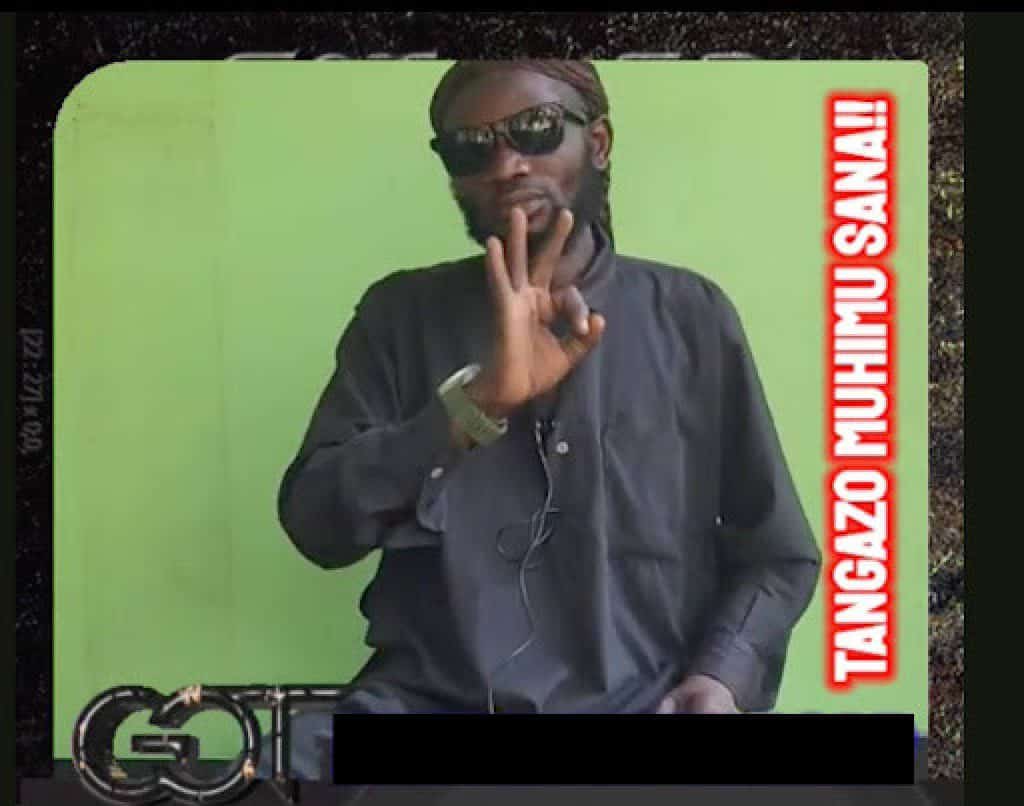
These “options” were repeated almost verbatim in a series of videos published by ISCAP on YouTube and TikTok just days later. In these releases, one of ISCAP’s Congolese ideologues, Zakaria Banza Souleymane, better known as Bonge La Chuma, outlined the options in Swahili, Lingala, and French (the main languages in eastern Congo), warning that the violence against local Christians will not stop until they accept one of the three “choices.”
Given the use of three languages and the group’s choice of a Congolese presenter, the videos were meant to expand the warning to a Congolese audience. The ISCAP likely hopes to justify its massacres by outlining an ideological conflict with local Christians. In both its actions and words, the jihadist group has increasingly characterized its violence against civilians along sectarian lines, utilizing the Islamic State’s ideological and methodological frameworks against non-Muslims. Nevertheless, given Congo’s demographics, ISCAP’s victims will always predominantly be Christian. To be clear, however, the group has also periodically killed Muslims in both Congo and Uganda who have preached against its activities.
ISCAP’s new approach puts it more in line with the Islamic State’s wider activities, such as in Nigeria and Mozambique, where there are also large populations of Christians in or near jihadist areas of control or presence. The Islamic State has routinely made clear that it seeks to either violently eradicate or convert such populations to Islam. ISCAP is now repeating this mantra in Congo.