Egyptian security forces killed two suspected members of the Harakat Sawaid Misr (HASM) militant group in a shootout on the outskirts of Giza on Sunday, according to the country’s Interior Ministry. Members of the National Security Agency’s Hostage Rescue Force raided the suspected militants’ hideout only days after the group issued new threats against the Egyptian state.
Founded in 2016, Harakat Sawad Misr (“Arms of Egypt Movement”) is a militant group linked to the now-banned Muslim Brotherhood. Egyptian authorities accuse HASM of functioning as the Brotherhood’s armed wing, responsible for a wave of attacks targeting police, judges, and infrastructure between 2016 and 2018. The group was listed as a Specially Designated Global Terrorist (SDGT) entity by the United States in 2018 and later designated as a Foreign Terrorist Organization (FTO) in 2021.
In a statement, the Egyptian Interior Ministry said that the suspects opened fire as police approached a suspected hideout in the densely populated neighborhood of Bolaq el Dakrour, prompting an exchange that left both gunmen and one bystander dead, and one police officer wounded.
Egyptian authorities identified the two slain gunmen as HASM members Ahmed Abdel-Rezek and Ihab Abdel-Latif.
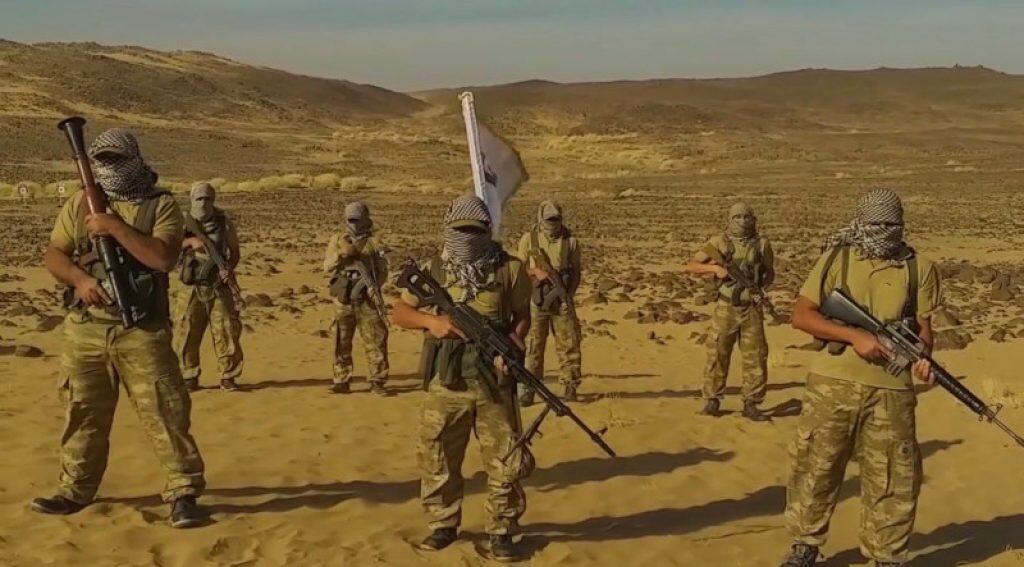
The clash comes as the US-designated terrorist group appears to be reactivating. Days earlier, HASM released a new propaganda video titled, “The Path of the Believers, This Is the Way,” in which it vowed to resume violent operations in Egypt, including attacks on prisons and security sites. The footage shows operatives undergoing military-style training in a desert setting and simulating assassinations and bombings. The Egyptian government says the video was shot in “one of the neighboring countries.”
Between 2016 and 2018, HASM claimed responsibility for a series of high-profile operations targeting police, judges, and government figures, including an attempted assassination of former Grand Mufti Ali Gomaa, one of Egypt’s leading anti-Islamists and anti-Brotherhood religious figures. The group’s ability to operate in Egypt’s urban centers distinguished it from jihadist groups concentrated in the Sinai Peninsula.
The latest security operation in Giza coincided with reports that a high-ranking HASM member was arrested while attempting to enter Turkey through Istanbul Airport. The suspect, identified as Mohamed Abdel Hafeez Abdullah Abdel Hafeez, is alleged to have played a key role in the group’s leadership structure. Egyptian officials say he will be deported from Turkey to Egypt, but the Turkish government has not officially confirmed the extradition.
The arrest prompted a reaction from Ahmad al Mansour, an Egyptian national and former fighter with Hayat Tahrir al-Sham (HTS) in Syria who is currently wanted by Egyptian authorities. In an X post, Mansour called on Egyptians in Turkey to “stand with our brother Mohamed Abdel Azim [Hafeez]. The deportation order is an issue that unites all Egyptians abroad […] Make our might against our enemy severe.” Mansour is wanted by Egypt and has previously issued threats against Egyptian President Abdel Fattah el Sisi.
Meanwhile, the Turkey-based Muslim Brotherhood organization known as the Midan Foundation, headed by Reda Fahmy, a Brotherhood leader and former head of the Egyptian parliament’s National Security Committee, resumed open calls for “armed and revolutionary activism.” The group is reportedly recruiting exiles and fugitives in Turkey to return to their home countries and engage in sabotage operations, bombings, and targeted attacks.
Egyptian sources also link the Midan Foundation to Yahya Moussa, a senior leader of the Muslim Brotherhood based in Turkey.
Whether HASM can return to its previous operational strength in Egypt and the region remains unclear. But its renewed propaganda efforts, alleged leadership activity in Turkey, and the deadly exchange in Giza suggest that Egyptian authorities no longer view the group as dormant.
Note: This post was corrected to reflect HASM’s designation as a Specially Designated Global Terrorist entity in 2018, rather than 2021.