In a speech before the UK parliament today, Prime Minister David Cameron addressed the Syrian refugee crisis, the counterterrorism measures being taken to combat the Islamic State, and other related issues.
Confirming press accounts, Cameron said that three British nationals have been killed in recent airstrikes carried out by the UK and US in Syria. And British intelligence believes two of them were involved in planning attacks in the West.
Reyaad Khan, a British national, and two of his “associates” in the Islamic State were killed in a Royal Air Force (RAF) drone strike on August 21. The three men were “traveling in a vehicle in the area of Raqqa,” Cameron explained. One of Khan’s two compatriots was a UK national named Ruhul Amin.
Three days later, on August 24, Junaid Hussain perished in an American airstrike in Raqqa.
According to Cameron, Khan and Hussain “were British nationals based in Syria who were involved in actively recruiting [Islamic State] sympathizers and seeking to orchestrate specific and barbaric attacks against the West, including directing a number of planned terrorist attacks right here in Britain, such as plots to attack high profile public commemorations, including those taking place this summer.”
“We should be under no illusion,” Cameron continued. “Their intention was the murder of British citizens. So on this occasion we ourselves took action.” Cameron said the airstrike that killed Khan was only carried out after “meticulous planning” and was “an act of self-defense.”
Cameron argued that the UK was left with “no alternative” but to strike because “there is no government” to work with, the UK has “no military on the ground to detain those preparing plots,” and officials had no indication that Khan “would ever leave Syria or desist from his desire to murder us at home.”
“So we had no way of preventing his planned attacks on our country without taking direct action,” Cameron said.
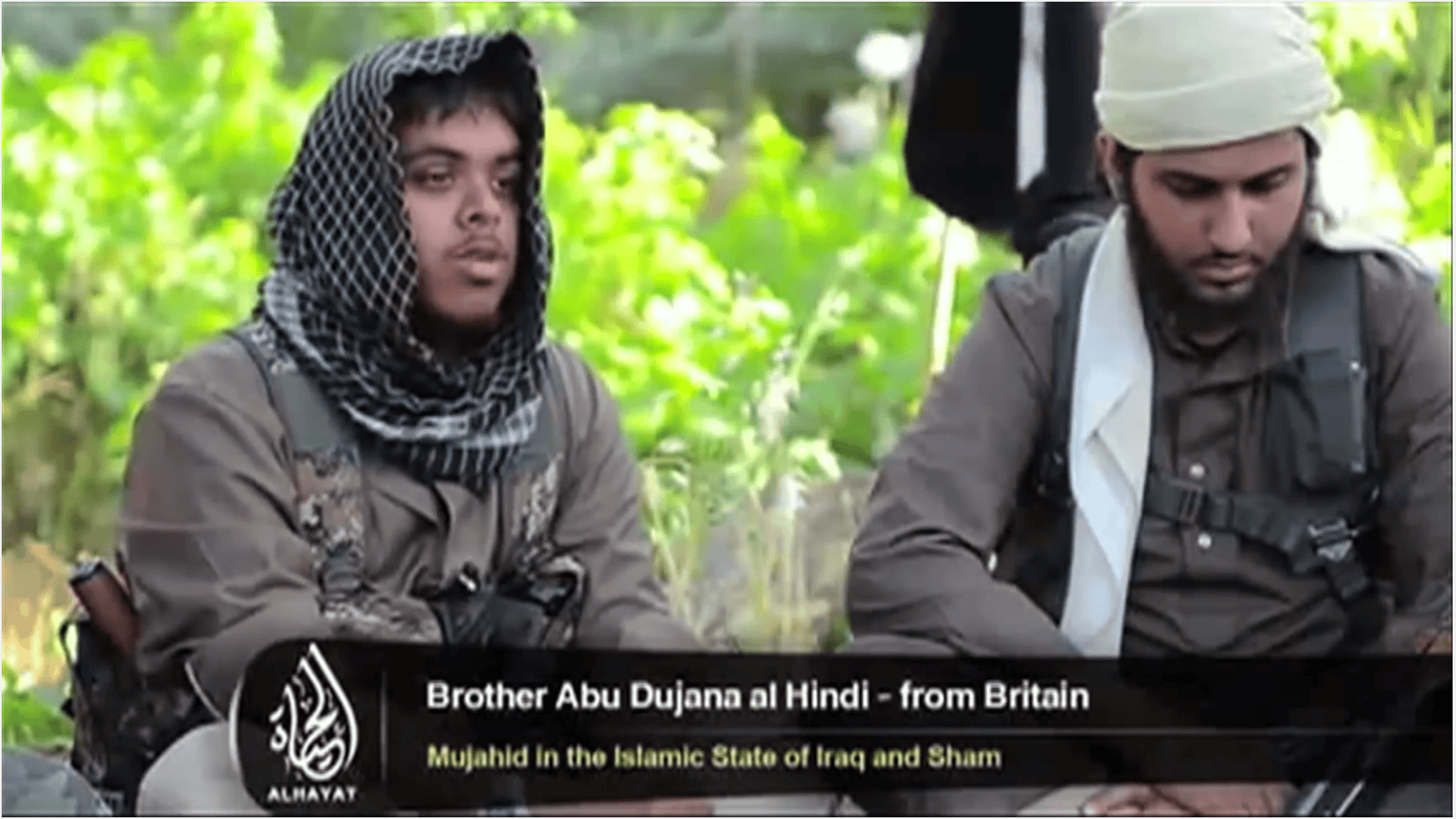
Last year, Khan was featured in an Islamic State propaganda video alongside two others from the UK. Khan was introduced as “Brother Abu Dujana al Hindi – from Britain” in the video. Khan and his comrades called for others to join the jihad.
Junaid Hussain didn’t hide his desire to assist plots in the US and UK. Indeed, his digital trail helped Western officials hunt him down. Earlier this month, The Washington Post cited anonymous officials as saying that “Hussain was tracked in part by monitoring his online activities” and that the British government was “consulted on the decision to make him a target.”
Even before he relocated to Syria in 2013, Hussain had built a reputation as a hacker. He broke into former Prime Minister Tony Blair’s digital address book and posted some of its contents online. The stunt landed him several months in jail in 2012.
In Syria, Hussain reportedly helped lead the “IS Hacking Division” and the “cyber caliphate.” The latter claimed credit for obtaining CENTCOM’s passwords for its Twitter and YouTube pages in January. Both pages were temporarily rebranded with imagery from the “cyber caliphate,” which also posted information on US personnel. Press reports fingered Hussain as one of the main suspects behind the CENTCOM social media hackings.
Hacking web pages and address books wasn’t Hussain’s only specialty. In one iteration of this Twitter feed, “Abu Hussain Al Britani” (believed to be Junaid Hussain) listed his user names for several encrypted applications, saying that anyone interested in carrying out attacks could learn how to do so using the apps. After his death, some high-profile Islamic State supporters blamed Britani’s use of apps that aren’t totally secure for his demise.
Abu Hussain al Britani’s Twitter presence drew suspicion in May and June, when his comments seemed to indicate ties to terrorists and extremists in the US.
On May 3, two gunmen opened fire at an event dedicated to drawing images of the Prophet Mohammed in Garland, Texas. As first reported by the SITE Intelligence Group, Britani quickly claimed the gunmen were acting on behalf of the caliphate. Then, in June, Britani claimed on Twitter that he had encouraged Usaamah Rahim, an Islamic State supporter, to carry a knife in case anyone attempted to arrest him. Rahim was shot and killed by police in Boston after allegedly wielding a knife.
Cameron said the strikes on Hussain and Khan are part of larger effort to contain the threat of jihadist terrorism. “Since 2010 over 800 people have been arrested and over 140 successfully prosecuted,” Cameron said. In addition, British aircraft have launched “nearly 300 air strikes over Iraq” and assisted operations in Syria in order “to tackle the threat at [the] source.”