The political posturing about the status of American forces in Iraq continues. On Dec. 28, Prime Minister Nouri al-Maliki declared to the Wall Street Journal, “The last American soldier will leave” in 2011. He added: “This agreement is not subject to extension, not subject to alteration. It is sealed.” Two days ago, Vice President Joe Biden reiterated America’s commitment to pull up stakes by the end of the year.
And yet … yesterday’s Washington Post looks at the nature of America’s continued presence in Iraq:
Despite Iraqi leaders’ insistence that the United States meet its deadline of withdrawing all troops by the end of 2011, the contours of a large and lasting American presence here are starting to take shape.
…
Iraq’s newly reelected prime minister, Nouri al-Maliki, has insisted publicly that the United States must abide by its agreement to leave, prompting U.S. and NATO officials to begin planning other ways for 400 or more military personnel, as well as hundreds of support staff members, to remain in Iraq.Lt. Gen. Michael D. Barbero, the outgoing commander of U.S. and NATO training programs in Iraq, said half that number could come from extending the current NATO mission. Maliki has formally asked NATO to begin planning for that possibility, Barbero said, and leaders of Iraqi security forces and NATO officials have expressed support for the idea.
The other half could stay under the auspices of the U.S. Embassy. The 2008 agreement that set this year’s deadline for the U.S. troop withdrawal allows the State Department to establish an Office of Security Cooperation in Iraq, which officials here say they expect to resemble similarly robust U.S. military offices at embassies in Saudi Arabia, Turkey and elsewhere.
Other U.S. military infrastructure could also remain in Iraq. The State Department is negotiating with the Pentagon to have its security contractors assume control of a rocket-detection system that protects the U.S. Embassy in Baghdad, military officials said.
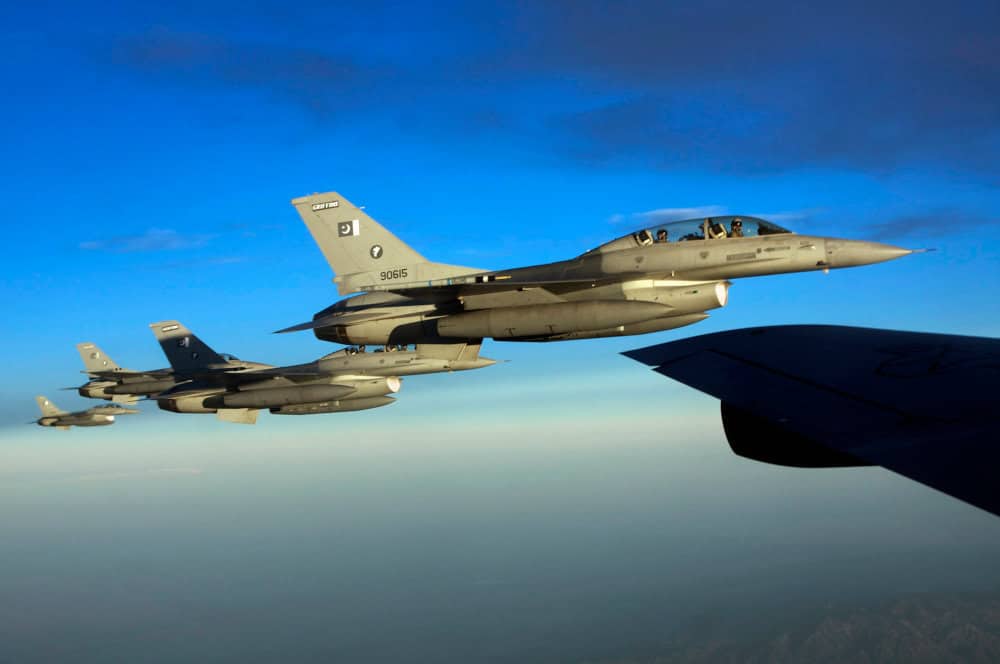
Troop levels may draw down lower than many would have predicted, and faster than most rational analysts would have hoped for — but the United States will maintain an enduring presence and significant influence in Iraq, under whatever guise is deemed suitable. Maliki’s nationalist rhetoric to the contrary, someone has to supply, maintain and train his military on those M-16s, F-16s, and M1A1s.
The scale of the drawback, coupled with Maliki’s vigor in pushing the issue, raises legitimate concerns about maintaining Iraq’s political stability and progress. It also calls into question the tenability of his government openly working with America while trying to keep a broad coalition together. But Iraq’s preference for American military hardware as the country reconstitutes its armed forces speaks volumes, auguring long-term partnership and a check on Iranian influence.