Generation Jihad’s Bill Roggio and Edmund Fitton-Brown, FDD senior fellow and former coordinator of the UN Monitoring Team, unpack the new UN 1267 report on the global state of the Islamic State, Al Qaeda, and their affiliated groups.

The Afghan United Front has emerged as the first major Pashtun-led resistance organization to launch operations against the Taliban. The group’s likely focus on operations in southern Afghanistan would expand resistance organizations’ historical focus in the country’s north.

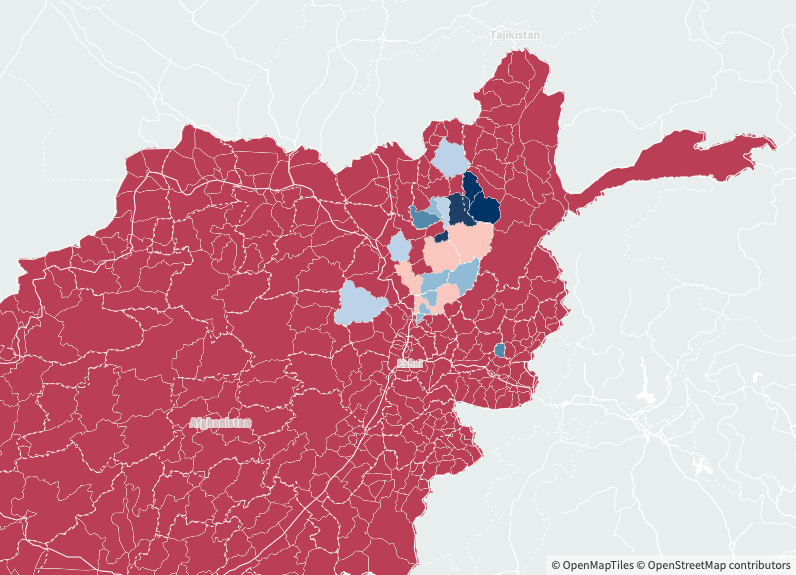
Three anti-Taliban resistance groups launched separate operations across Badakhshan province, Afghanistan, over a two-week period, temporarily overrunning a district center and attacking Taliban positions in multiple districts. While there is no evidence of direct coordination among the resistance groups, there are signs cooperation may be increasing.

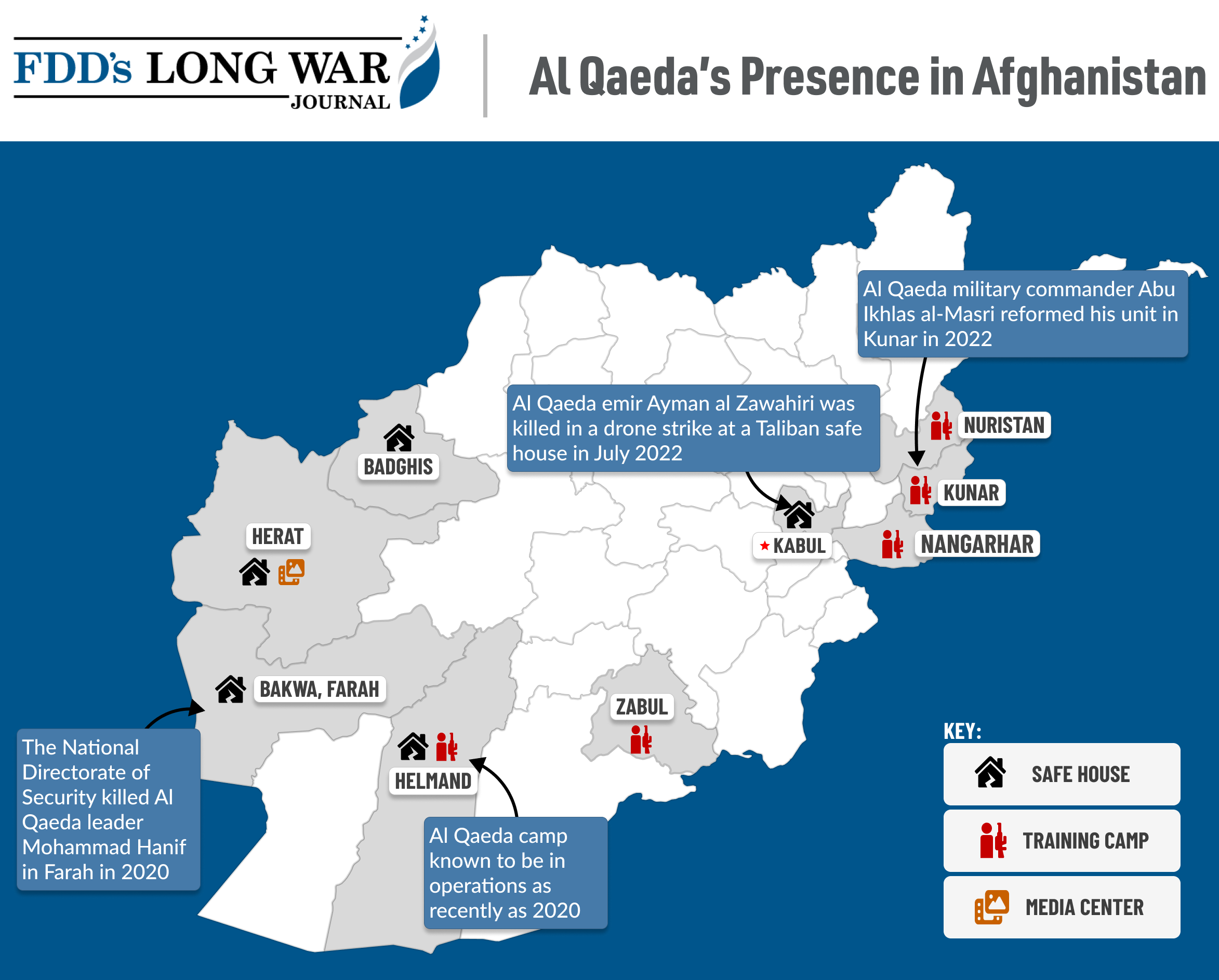
According to the Taliban’s self-assessment (what could go wrong), Afghanistan is “stable” — but according to reality, it’s not. Terrorist groups still operate openly, Al Qaeda remains embedded, and the same extremists are now being trusted to “fight” other extremists. Bill Roggio and Edmund Fitton-Brown break down why outsourcing counterterrorism to jihadists is a fatal mistake — and why the so-called “peace of the Taliban” comes at an unbearable price: the erasure of half the country’s population and the return of Afghanistan as a global terror hub.

The Taliban, a monster Islamabad built but can’t control, is waging a war against Pakistan—and it shouldn’t surprise anyone. After decades of Islamabad playing both arsonist and firefighter—nurturing the Taliban, harboring al Qaeda, and weaponizing jihad against India—Bill Roggio and Tom Joscelyn reunite to dissect why the blaze is finally backfiring on Pakistan.

Pakistan and the Afghan Taliban have entered into a ceasefire after accusing each other of another round of deadly fighting along their shared border, this time at the Afghan border crossing at Spin Boldak in Kandahar province. The Afghan Taliban’s support for the Movement of the Taliban in Pakistan (TTP) remains the main point of contention between the two otherwise longtime allies.

The Afghan Taliban and the Pakistani military each heralded their operations as a success and claimed to have inflicted high casualties on the other’s forces. The Afghan Taliban’s support for the Movement of the Taliban in Pakistan (TTP) is creating fissures between the two allies.

Four years after America’s chaotic retreat from Afghanistan, President Trump has said he wants US forces back at Bagram Air Base — or as Bill Roggio and Tom Joscelyn call it: a fantasy. They explain why the Taliban will never allow it, China wouldn’t tolerate it, and that Washington still hasn’t learned. From Doha to Abbey Gate, Bill and Tom retrace how America’s exit empowered jihadists—and why talk of going back is pure madness.

After US President Donald Trump said that “we want that base back,” the Taliban quickly rejected US attempts to return to Bagram Air Base. The Taliban has been clear that it will not accept a return of US forces to Afghanistan.

After the International Criminal Court issued arrest warrants for Taliban Emir Mullah Haibatullah Akhundzada and Chief Justice Abdul Hakim Haqqani for human rights abuses, the Taliban rejected the legitimacy of the court and described the action as an attack against Islam. Akhundzada and Haqqani have served in the Taliban’s harsh judicial system for four decades and are significantly responsible for the group’s extreme policies.

After US Congressman Bill Huizenga said, “Afghanistan has once again become a hotbed for terrorists looking for safe harbor,” the Taliban’s spokesman denied the presence of terrorist organizations despite evidence that Al Qaeda and other terror groups are operating in the country.

The Taliban sided with Iran and condemned Israel’s attacks on Iran’s nuclear and military targets. Iran has a long history of supporting the Taliban since 9/11, and the Taliban appears to be returning the favor.

Taliban Emir Mullah Haibatullah Akhundzada expressed his support for “the oppressed people of Palestine” while denouncing “Zionist assaults and acts of oppression.” In the past, the Taliban has praised Hamas’s fight against Israel and celebrated its brutal October 7, 2023 assault on the country.

Over 90 former leaders of the previous Afghan government, civil society representatives, and anti-Taliban resistance leaders attended the conference at the Austrian Institute for International Affairs and called for help forming a transitional government.

Four years after the US withdrawal from Afghanistan, the threat posed by the Islamic State Khorasan Province (ISKP) has expanded beyond the region, now endangering both America and Europe. With the group actively recruiting and transferring fighters across borders, regional actors such as the Taliban, Iran, Tajikistan, and Pakistan have proven unable to curb its growth.

Khalil al Rahman Haqqani was the uncle of Sirajuddin Haqqani, the Taliban’s minister of interior and one of the group’s two deputy emirs, and a brother of the late Jalaluddin Haqqani, the founder of the Haqqani Network. Khalil was a US Specially Designated Global Terrorist who had “acted on behalf of” Al Qaeda’s military.

The Afghanistan Freedom Front (AFF), led by former Afghan Armed Forces Chief of General Staff Yasin Zia, is increasing the scope and lethality of its attacks. While the AFF is still in its infancy, Zia’s battlefield experience bodes well for its future.

A recent meeting between Turkish aid organization representatives and the Taliban’s deputy prime minister highlights renewed economic and investment interest by Turkish entities in Afghanistan. The Taliban’s growing ties with Turkey are a worrying development as Afghanistan remains a haven for terrorists and narco-state.

After meeting the ruler of the UAE, Sirajuddin Haqqani traveled to Saudi Arabia to attend the Hajj. His travel was approved by the international community. Official recognition is almost certainly to follow.

Hamza al Ghamdi is a legacy Al Qaeda leader who fought alongside Osama bin Laden against the Soviets, led bin Laden’s bodyguard, organized terror attacks in Tajikistan in the 1990s, and fought at the battle of Tora Bora. He is currently a member of Al Qaeda’s shura, or executive leadership council. Ghamdi is likely based in Afghanistan or Iran.

Leveraging its stronghold in Afghanistan and networks across Central and South Asia, ISKP is surging as a formidable transnational actor, posing a threat from Asia to Europe. The Taliban’s self-portrayal as a counterforce to ISKP raises concerns about their true motives and the perpetuation of regional instability.

Sayf al-Adl, who is thought to be al Qaeda’s current leader, calls on supporters around the world to migrate to Afghanistan to gain training, experience, and knowledge before undertaking attacks against so-called “Zionist” and Western targets around the world.

The anti-Taliban resistance is gaining strength and conducting more attacks on the Taliban regime. However, these groups lack cohesion, outside support, and a safe haven. Until those requirements are met, they will lack the strength to be a formidable challenger to Taliban rule.

Afghanistan has grappled with a surge in terrorism, deepening ethnic rifts, protests, and the devastating impact of natural calamities in recent weeks. Two years into their control of Afghanistan, the Taliban is struggling to govern as a state actor.

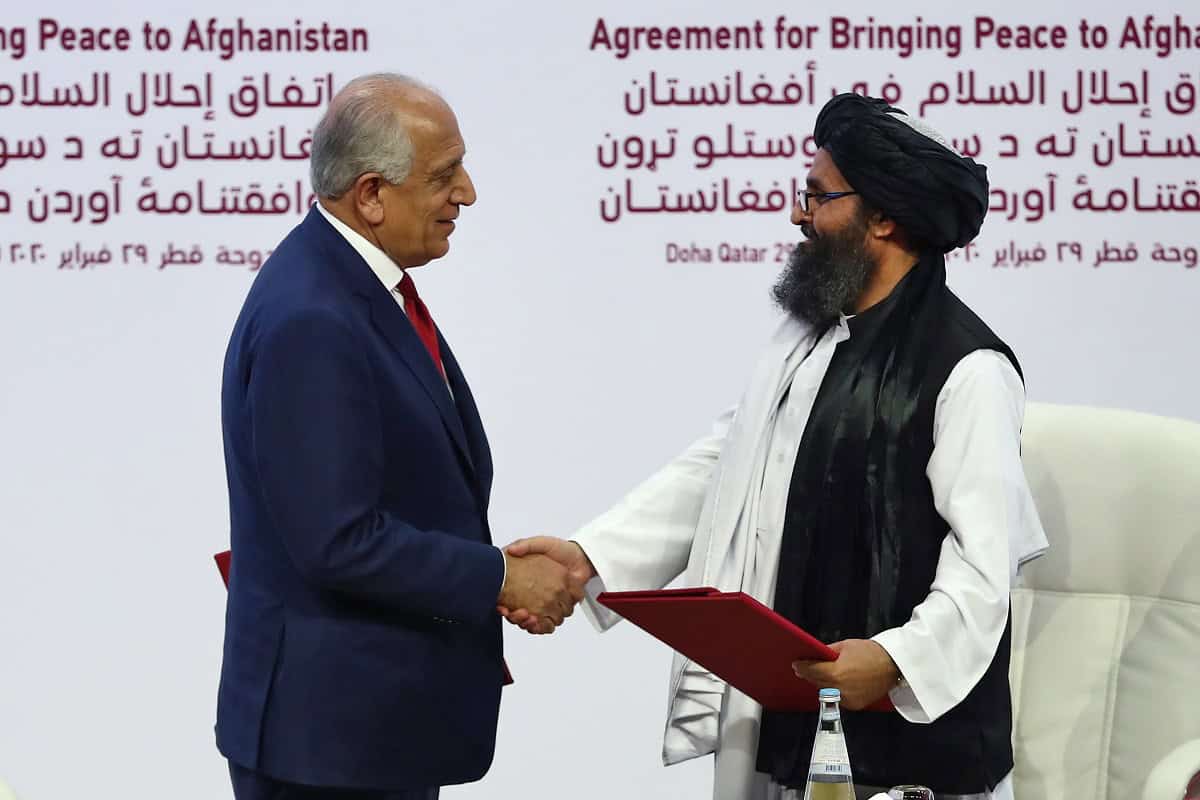
Zalmay Khalilzad, the former Special Repressive for Afghanistan Reconciliation and the key architect of the Doha Agreement, continues to maintain that the Taliban “dismantled” Al Qaeda, despite evidence to the contrary from the UN and CENTCOM.

Whatever disputes the Pakistani state has with the Taliban, it is unlikely that its strategic depth with respect to India and strategic relations with the Taliban will be discarded for the lives of hundreds of Pakistani citizens.