|
|
|
Manssor Arbabsiar. Image from ABC News. |
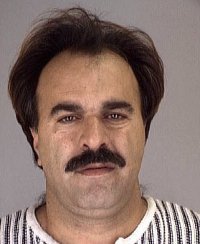
The Justice Department unsealed a criminal complaint today alleging an audacious plot to assassinate the Saudi Arabian Ambassador to the United States. Two Iranians, Manssor Arbabsiar and Gholam Shakuri, have been named in the plot, and US officials have stated that elements within the Iranian military authorized the plot. Both Arbabsiar and Shakuri have been linked to Qods Force, the special operations branch of the Islamic Revolutionary Guards Corps that directs terror attacks.
Also today, the US Treasury Department added Shakuri, Arbabsiar, and an Iranian Qods Force officer known as Mustafa Abdullahi to the list of specially designated global terrorists. Abdullahi was not named in the indictment that identified Shakuri and Arbabsiar. [Note: the full US Treasury Department designation, which was released after the publishing of this article, listed senior Qods Force leaders Qasem Soleimani, Abdul Reza Shahlai, and Hamed Abdullahi as being involved in the plot. Soleimani is the overall leader of Qods Force, and Abdullahi and Shahlai are senior commanders. Shahlai has been previously designated as a terrorist by the US for his role in killing US soldiers in Karbala, Iraq, in January 2007. See LWJ report, Mastermind of deadly raid on American soldiers coordinated plot against Saudi ambassador, and Threat Matrix report, More on the US designations of top Qods Force leaders, for more information.]
According to the criminal complaint, Arbabsiar, who has both a US and an Iranian passport, traveled to Mexico on several occasions where he met with a confidential DEA informant (CS-1). During these meetings, Arbabsiar was under the impression that CS-1 was a member of a narcotics-trafficking cartel and willing to carry out the plot. Arbabsiar had been advised by Shakuri to hire someone in the narcotics business as “people in that business are willing to undertake criminal activity in exchange for money.”
“Chevrolet” was the code word used by Arbabsiar and Shakuri to refer to the plot to assassinate Ambassaor Adel al-Jubeir. During many recorded phone conversations in Farsi, Shakuri repeatedly told Arbabsiar to “buy” the Chevrolet, indicating that the plot was still to be carried out.
The plot included bombing a restaurant said to be frequented multiple times a week by the ambassador in Washington. Along with many discussions on payment for carrying out the plot, which was agreed to be $1.5 million, Arbabsiar was pressed by CS-1 about who had directed him to carry out the plot.
Arbabsiar stated to the CS-1 that the “money is in Iran.” Arbabsiar went on to discuss, when asked by the CS-1, the role played by his cousin (Shakuri) in Iran. Arbabsiar explained that his cousin was “wanted in America,” had been “on the CNN,” and was a “big general in the army.” He said that his cousin “works in outside, in other countries for the Iranian government.” Arbabsiar also indicated that his cousin did not wear a uniform or carry a gun, and had “taken certain unspecified actions related to a bombing in Iraq.”
At a later meeting, CS-1 said to Arbabsiar, “I don’t know exactly what your cousin wants me to do,” to which Arbabsiar replied, “He wants you to kill this guy.” When further pressed, Arbabsiar said, “Doesn’t matter how you do it. I mean, if you do it by himself, kill is better, but… sometime, you know, you have no choice, is that right?” Arbabsiar went on to say that the plot is “not personal … it’s politics.” He explained that his cousin would not pay for the plot out of his pocket and that the Iranian the government is behind him. If the assassination was successful, Arbabsiar would be used for further attacks.
On Sept. 28, Arbabsiar was denied entry into Mexico and then flew to JFK Airport in New York City. Law enforcement monitored him on this flight and he was arrested as he exited. Among the things found on him were an Iranian passport, a US passport, and a travel itinerary for a flight departing Mexico for October 2011 with Tehran, Iran as his final destination. In post-arrest statements, Arbabsiar admitted to participating in the meetings with the confidential source and confirmed that he had agreed to pay for the assassination plot. He also confessed that he was directed by senior Qods Force officials.
“The criminal complaint unsealed today exposes a deadly plot directed by factions of the Iranian government to assassinate a foreign Ambassador on U.S. soil with explosives,” said Attorney General Holder. “Through the diligent and coordinated efforts of our law enforcement and intelligence agencies, we were able to disrupt this plot before anyone was harmed. We will continue to investigate this matter vigorously and bring those who have violated any laws to justice.”
Iranian officials have denounced the US assertion that the government of Iran was behind the plot, saying on state TV, “The Islamic Republic of Iran has rejected US accusations of the country plotting to assassinate the Saudi envoy to Washington as a prefabricated scenario.”
Today’s indictment is only the most recent incident in which the US has pointed the finger at Iran for supporting acts of international terrorism. Over the past several months, the US government has directly implicated Iran in supporting the operations of both al Qaeda and the Taliban in the Middle East and Central Asia.
On July 28, 2011, the US State Department noted Iran has forged an agreement with al Qaeda that allows the terrorist organization to coordinate its operations on Iranian soil. The Treasury Department designation of six al Qaeda leaders and operatives, several of whom are based in Iran, stated that Iran has a ‘secret deal’ with al Qaeda.
“Iran is the leading state sponsor of terrorism in the world today. By exposing Iran’s secret deal with al Qaeda allowing it to funnel funds and operatives through its territory, we are illuminating yet another aspect of Iran’s unmatched support for terrorism,” Under Secretary for Terrorism and Financial Intelligence David S. Cohen is quoted as saying in the press release.
On Aug. 19, 2011, the State Dept.’s annual Country Reports on Terrorism said that Iran “remained the most active state sponsor of terrorism in 2010.”
“Iran’s financial, material, and logistic support for terrorist and militant groups throughout the Middle East and Central Asia had a direct impact on international efforts to promote peace, threatened economic stability in the Gulf, and undermined the growth of democracy,” the report continued.
The State Dept. also noted that “Iran’s Qods Force provided training to the Taliban in Afghanistan on small unit tactics, small arms, explosives, and indirect fire weapons, such as mortars, artillery, and rockets.”
One year earlier, on Aug. 3, 2010, the Treasury Department designated General Hossein Musavi and Colonel Hasan Mortezavi, both senior Qods Force officers, “for their roles in the IRGC-QF’s support of terrorism” and for providing “financial and material support to the Taliban.” On the same day, Treasury also designated Hushang Allahdad for aiding Hezbollah, Hamas, and Palestinian Islamic Jihad; and Mohammad Reza Zahedi, the Qods Force commander in Lebanon, for acting as a “liaison to Hezbollah and Syrian intelligence services” as well as “guaranteeing weapons shipments” to Hezbollah.
The US has previously acted against Qods Force for its involvement in terrorist activities in Iraq. In October 2007, Qods Force was labeled a Specially Designated Global Terrorist entity. Brigadier General Ahmad Foruzandeh, the former Qods Force commander and current commander of the Iranian Revolutionary Guards Corps; Brigadier General Qassem Suleimani, the commander of Qods Force; and Abdul Reza Shahlai, a deputy Qods Force commander, among others, were designated under Executive Order 13382 for their roles in Qods Force terrorist activities in Iraq.