MOSUL, IRAQ: Among most American troops in Iraq, the city of Mosul has a reputation – the last urban battlefield, the place where the country’s Sunni insurgency remains strongest. But for some of the Iraqi units that operate in the city, the security situation is nothing they have not seen before.
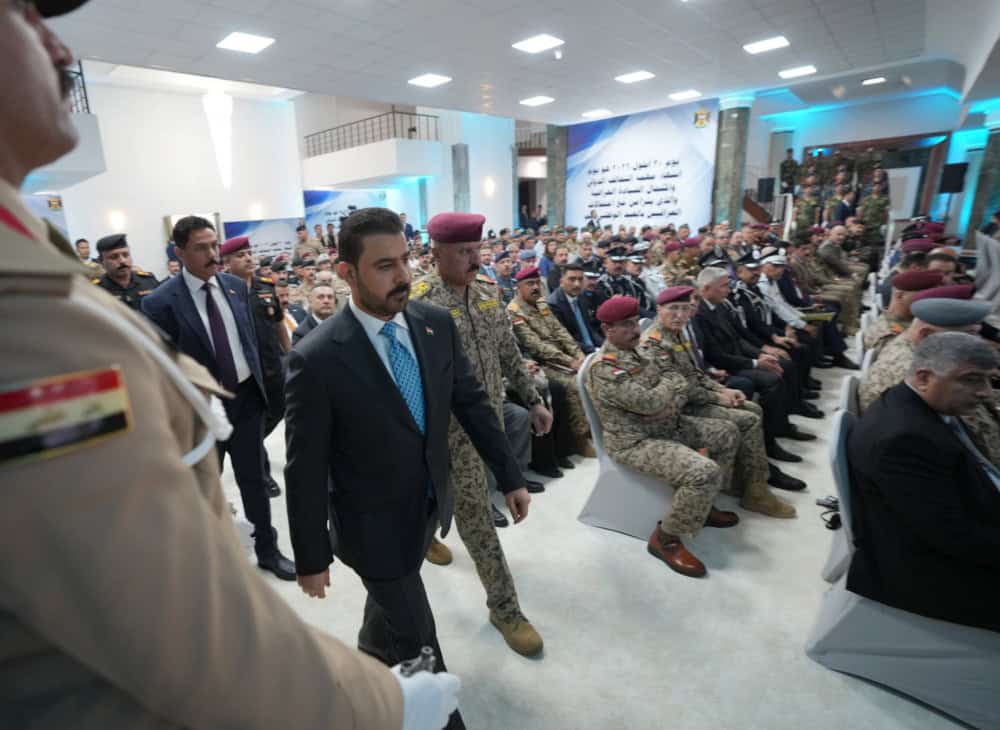
The 3rd Iraqi Army Division’s 3rd Battalion, 9th Brigade, is one such unit. Until this past spring, 3-9, as the battalion is known, was stationed in Baghdad’s East Rashid district. Operating in the Dora neighborhood, one of the last Baghdad strongholds of al Qaeda in Iraq, the battalion saw fierce combat. “Compared to al Dora,” the unit’s commander, Colonel Najem Abdul Wahad Mutleq, explained, “this is nothing here in Mosul.”
Typically, American combat units in Iraq spend the bulk of their yearlong deployments in one location, be it a province or a neighborhood. For Iraqi combat units, though, there is no such thing as a deployment – just a new mission in a new location. Individual soldiers regularly visit their families on leave, but for a unit as a whole, there is no respite. After leaving East Rashid this spring, 3-9 was dispatched to eastern Mosul.
Here, the battalion faces a different mission in a very different environment. In East Rashid, 3-9 fought as a clearing force, facing stiff resistance from insurgent fighters in entrenched positions, Colonel Najem recalled. In eastern Mosul, what the military calls the clearing phase is largely complete; the job of security forces now is to gather intelligence from a wary population about those insurgents who remain.
There is little doubt that the battalion’s soldiers learned valuable lessons in Baghdad, according to Captain Alexander Rasmussen, an American officer who works closely with them. Equipped with M16 rifles and other up-to-date equipment, 3-9’s troops appear, as American troops say, “squared away” to an unusual degree.
The battalion has come to Mosul, too, with a strong background in some of the more difficult aspects of counterinsurgency – forging bonds with the population in order to gather intelligence and isolate enemy fighters, for example. Asked if he could name one main, underlying problem with the security situation in his area, Colonel Najem answered without hesitation: “There is no sense of community here. People do not know their neighbors, so when bad people come in, like Tal Afaris, they do not know.” Many of the rank-and-file insurgents in Mosul are believed to have ties to the western city of Tal Afar.
In other ways, though, 3-9’s experience in Baghdad seems to have hindered its adaptation to Mosul. In a meeting with Captain Rasmussen, who commands Delta Company, 1st Battalion, 8th Infantry, Colonel Najem laid out the two-step plan that, in his view, would bring security to his portion of Mosul, which includes the volatile neighborhood of Karama, an area prone to grenade attacks.
“First point: clearance,” the colonel said, before describing the tactics his unit had used during the clearance of Dora in East Rashid. Among other things, he recalled a series of major pushes by American infantry forces, and a system whereby the entire neighborhood was cordoned off and residents were tracked with bracelets and stamps when they came and went.
Like other American officers in Mosul, Captain Rasmussen had heard this before, and he doubted that it was practical. In Baghdad, he reminded Colonel Najem, 3-9 had worked with a full battalion of American infantry concentrating on one neighborhood. In Mosul, a smaller American battalion was responsible for a large chunk of the city; with only the captain’s Delta Company in support, 3-9 would have to take on the lead clearing role itself. Colonel Najem conceded the point: “The coalition forces here are very few. Not like in Baghdad.”
Undeterred, the colonel continued to explain what he felt the area needed for lasting security. “Second point, Sahwa,” he said, using the Arabic word associated with the “Awakening” of Sunni tribes in Baghdad and other areas of Iraq.
Captain Rasmussen shook his head skeptically and tried to steer the conversation elsewhere. American commanders have long believed that Ninewa, the province of which Mosul is the capital, is too ethnically and tribally complex to be fertile ground for any kind of Sahwa movement. As the colonel himself had said a few minutes earlier, the heavily urban city lacked the tribal structure and “sense of community” on which the Sahwa in central Iraq was built.
For the rest of the meeting, the captain and colonel discussed shorter-term plans to build a new outpost, aimed at putting a permanent Iraqi Army presence in a market that insurgent leaders are thought to frequent. Here, Colonel Najem agreed enthusiastically. “We need to concentrate on the places where they plan IEDs and ambushes,” he said. “We need to find a way to control the market.” The American captain nodded in assent.