
Is the Taliban in control in Waziristan? Pakistan’s influence in the tribal belt is tenuous at best.
 Since the beginning of Operation Enduring Freedom in Afghanistan, Pakistan’s control of its western tribal belts has been a source of persistent concern for U.S. forces in Afghanistan. The radical Taliban movement, al Qaeda’s ally and host government, was spanned in the Pakistan’s Pashtun dominated tribal belt, particularly in the Federally Administered Tribal Area districts of North and South Waziristan. The writ of the Pakistani government is at its weakest along the remote, rugged and mountainous border with Afghanistan.
During the American assault on the Taliban during the fall of 2001, the Pakistani government began to move forces to seal the border, however al Qaeda cleverly masterminded an assault on the Indian Parliament, which diverted the attention of the Pakistani military to the eastern border with India. Al-Qaeda nearly engineered a full-scale war on the subcontinent between two nuclear-armed nations with a long history of animosity and open warfare. They successfully created a diversion for Pakistan’s military.
In the spring of 2004, with the very real threat of war with India receding and under pressure from the United States, Pakistan initiated an offensive in Waziristan aimed at routing out al Qaeda. It is difficult to ascertain the results of the fighting or the current situation in the tribal areas as foreign journalists and Non-Governmental Organizations are prohibited from the region. By all accounts, the offensive was at best a draw and at worst a defeat for the Pakistani Army. Official casualties [deaths] are slated at around 200, while unofficial counts place them upwards of 800. Pakistan was able to kill Taliban leader Nek Mohammed, however was forced to sign a truce with the Taliban fighters. This truce has been repeatedly broken by the Taliban-friendly tribes, with little to no consequences.
U.S., NATO and Afghan militaries have had successes fighting the Taliban within the Afghan borders, however Taliban support continues to flow through the porous border with Pakistan. The United States has been relegated to conducting cross border strikes at high-value al Qaeda and Taliban leaders when intelligence arises. Haitham al-Yemeni was killed in such a strike, as were Abu Khabab al-Masri and four other senior al Qaeda operatives.
Further reports emerge that indicate Waziristan is a haven for al Qaeda. Following on the heels of Syed Saleem Shahzad’s article on the creation of the “Islamic Republic of Waziristan”, Newsday states the region is “Where the Taliban still rule.”
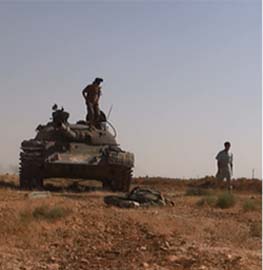
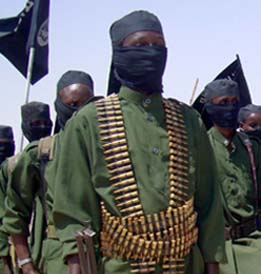
The recent upsurge in fighting in Afghanstan certainly lends credence to this theory. Just this week, Afghani security forces seized 700 bombs and related materials being smuggled into the country from Pakistan. A cross border strike from U.S. military mortar teams killed two Pakistani tribals in North Waziristan, and Forty-one Pakistanis were arrested in Zabul on charges of inciting violent protests over the Mohammed cartoons. The Pakistanis were led by a Saudi. And the recent video taped in Waziristan is planned on being distributed widely in Asia and the Middle East to boost recruiting for the Taliban.
However, in Ayman al-Zawahiri’s letter to Abu Musab al-Zarqawi, Zawahiri intimates that while Pakistan’s tribal belt is the main base of operations for al Qaeda and the Taliban, Pakistani security forces are indeed engaged in the area; “the real danger [to al Qaeda] comes from the agent Pakistani army that is carrying out operations in the tribal areas looking for mujahideen.” The arrest of Abu Farraj al-Libbi and Abu Musab al-Suri are attributed to Pakistani security forces operating in the North West Frontier Province.
Pakistan’s position in the Federally Administered Tribal Area & North West Frontier Province is probably best described as tenuous at best. It be believed the Pakistani military is holed up in forward operating bases in the cities of Wana and Miramshah, and their patrols are under constant attack. Pakistani intelligence is leveraging assets in the region (the strike in Damadola is likely the direct result of such intelligence operations) however the federal troops do not exercise real control. The situation is likely a push – with neither the Pakistani government or al Qaeda and the Taliban in complete control, which in a sense is a victory for the terrorists.
The fact that Pakistan must repeatedly address concerns with the border, and that the U.S. must conduct cross border strikes in lieu of active Pakistani operations gives a good picture of just how chaotic the situation on the border is. The U.S. would not have to “violate” Pakistan’s sovereign borders and work deals with Pakistani intelligence if the Pakistani government exercised reasonable control in the tribal belt.


5 Comments
As Bill correctly points out, Pakistan is anxiously awaiting the opportunity to address border ‘violations’ with Afghanistan. However, it works both ways. Hamid Karzai is also anxiously awaiting the opportunity to take up Pakistan’s unwillingness/inability to deal with the Taliban as well.
————————–
But the Taliban, most of them ethnic Pashtun, often with tribal links on both sides of the porous border, are being allowed to operate from Pakistan, says an increasingly exasperated Afghanistan.
“Mr Karzai will explain that the people of Afghanistan want an end to terrorism and there has been no decisive campaign (by Pakistan) about it,” said Rangeen Dadfar Spanta, an Afghan presidential adviser on foreign affairs.
“One of the requests will be for Pakistan to act with the same vigor in arresting Taliban as it has been doing with clamping down on al Qaeda,” Spanta told Reuters.
Exasperated Afghans to urge Pakistan act on Taliban
The Christian Science Monitor has a somewhat depressing article today about the state of affairs in Afghanistan. The following quote caught my eye because it addresses the topic of Bill’s post and also points out the problem of getting Afghanis to identify the Pakistanis in their midst who are bent on sowing disorder.
———————-
“The villagers know when someone has come from Pakistan, they know whose house they’re sitting in,” says Mr. Qaderi, the counternarcotics minister. “But they don’t trust the police. They don’t trust the government. They will hand them over, and then a few days later, someone will pay money and the police will release them.”
Qaderi says that Afghan villagers have all the information that would be needed to shut down a terrorist ring, or a cell of insurgents, or even the organizers of the cartoon protests.
Christian Science Monitor: Mounting concern over Afghanistan
Marlin,
Yep, the Afghan security forces are a lot further behind than the Iraqi security forces.
The thing to consider here for locals in this region is who would they rather rely on: other locals and Pashtuns or some combination of the American/Afghan/Pakistani government?
Security forces can only operate with local cooperation. This area has seen the way that that US abandoned Afghanistan as soon as the Soviets were defeated and people hear the rhetoric from folks like OBL and the American Left about cutting and running.
It is our own actions from the past as well as the rhetoric of getting out ASAP in Iraq and Afghanistan that has created this feeling that our presence is only temporary. And given the nature of government in the region, these areas have operated autonymously under tribal control except for brief periods like now where the national government has a reason to send troops. If we don’t make the committment to stick around, these folks will continue harboring Taliban and other AQ figures.
I don’t think it is about training or the Afghan security force itself but about the fact that the Taliban is not seen as an outside presence or outside threat here like it is among many in Iraq.
Pakistan’s frontier provinces are a real problem, not only locally and with Afghanistan, but globally as a source of terrorist fodder as well. These tribes are not going to become part of the modern world for at least several generations. Reasoning with them or other diplomacy are going to be very difficult. If they continue to be a significant irritant, then they should get a very significant military response.