-
Pentagon confirms death of senior al Qaeda leader in Afghanistan
The Pentagon confirmed today that Faruq al Qatani, a senior al Qaeda leader, was killed in an airstrike in Afghanistan on Oct. 23. Qatani was suspected of planning attacks against the US. He established safe havens for al Qaeda in Afghanistan several years ago and also worked with the Taliban in the insurgency against the Afghan government, US forces and their allies.
-
US targeted 2 senior al Qaeda leaders in eastern Afghanistan
The US targeted Faruq al Qatani and Bilal al Utabi in an airstrike in Kunar Province, Afghanistan on Oct. 23. Both of them have been involved in al Qaeda’s anti-Western plotting, according to the Pentagon. Qatani was identified as a key al Qaeda commander in Osama bin Laden’s files.
-
Treasury designates head of al Qaeda’s eastern zone in Afghanistan
Nayf Salam Muhammad Ujaym al Hababi, also known as Farouq al Qahtani, has been added to the US government’s list of specially designated global terrorists. Hababi, a senior al Qaeda leader, has been heavily involved in both the insurgency in Afghanistan and in plotting terrorist attacks in the West. He has also worked with the Taliban.

-
Report: airstrike killed Taliban shadow governor Sheikh Dost Mohammed
One of the most wanted Taliban commanders in eastern Afghanistan, Sheikh Dost Mohammed, was reportedly killed along with two other Taliban leaders in a US airstrike in the Ghaziabad district of Kunar province. The death of Dost Mohammed has been erroneously reported in the past.

-
ISAF analysis shows Afghan violence remains worse than before surge
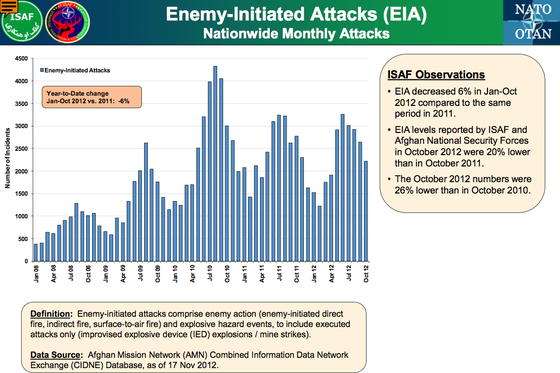
During a speech last week, Secretary of Defense Leon Panetta said that ISAF’s analysis of the Afghan insurgency shows that the level of violence has decreased in 2011 and 2012. That is true when compared to 2010, a peak year for violence. But the level of violence remains worse than prior to the surge.