-
Mapping terrorist groups openly operating inside Pakistan
For decades the country has permitted a number of jihadist groups to openly operate under its aegis. A map highlights the more prominent groups openly operating inside Pakistan.
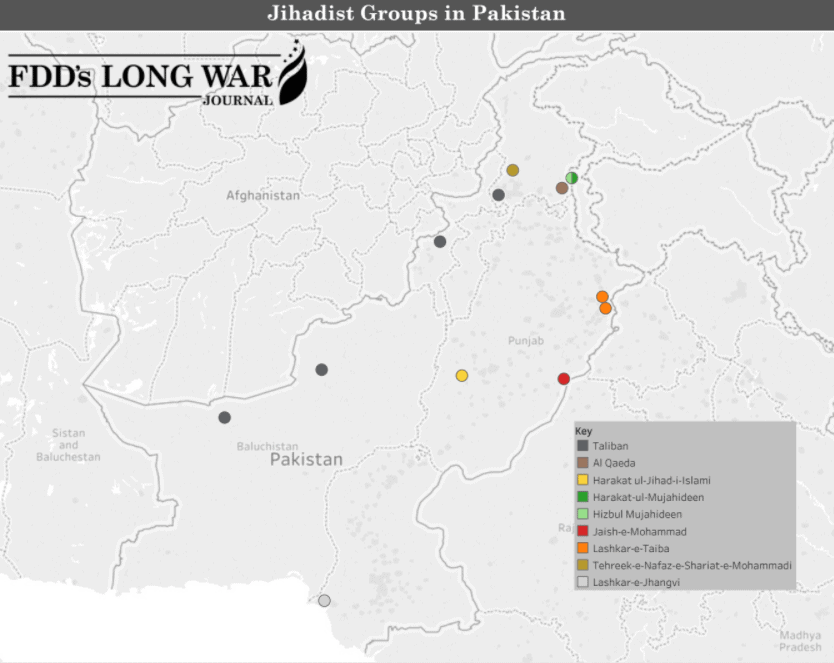
-
US drones hit ‘good Taliban’ commander’s compound in North Waziristan
The Hafiz Gul Bahadar Group was the target of the attack, and a “high-value target” is reported to have been killed.

-
Pakistan condemns drone strike that targeted ‘good Taliban’ and foreign fighters
Members of the Haqqani Network, the Hafiz Gul Bahadar Group, and “Uzbeks” are reported to have been killed in an attack in the Shawal Valley.
-
US launches drone strike in North Waziristan
Nine of the 19 drone strikes in Pakistan this year have occurred in the jihadist hub of Datta Khel in North Waziristan.
-
AQIS leader, ‘good’ Taliban commander killed in 2 US drone strikes in Pakistan’s tribal areas
Sheikh Imran Ali Siddiqi, a senior al Qaeda in the Indian Subcontinent leader, and Muhammad Mustafa, a Taliban commander loyal to Hafiz Gul Bahadar, were reported killed in the strikes in Khyber and North Waziristan.
-
Pakistan’s ban of LWJ enters 3rd year
The Pakistani government has blocked The Long War Journal website from being accessed inside Pakistan. The censorship began sometime in July 2012, and continues to this day.
-
US launches another drone strike in North Waziristan
The strike is the second in the Datta Khel area of North Waziristan in the past week.
-
Pakistani military says ‘ground operation’ in North Waziristan has begun
The Pakistani military continues to claim no civilians have been killed in its offensive in North Waziristan. No Haqqani Network or Hafiz Gul Bahadar Group commanders or fighters have been identified as killed or captured.
-
Pakistani military kills local Taliban leader, captures al Qaeda bomb expert
The military said the Taliban commander is known as “Commander Umer” but did not name the al Qaeda explosives expert.
-
Pakistani forces focus on ‘foreigners’ in North Waziristan operation
The military appears to be focused the Movement of the Taliban in Pakistan as well as foreign fighters from the Islamic Movement of Uzbekistan and the Turkistan Islamic Party.
-
Pakistan launches ‘comprehensive operation against foreign and local terrorists’ in North Waziristan
Operation Zarb-e-Azb appears to be aimed at the “bad Taliban” and foreign terror groups such as the Islamic Movement of Uzbekistan. It is unlikely the Haqqani Network or the Hafiz Gul Bahadar Group will be targeted.
-
Pakistani military strikes anger ‘good Taliban’ commander
Hafiz Gul Bahadar’s “good Taliban” may end its peace deal with the Pakistani military and government after the military launched punitive raids in North Waziristan.
-
Uzbeks, Germans reported killed in Pakistan airstrikes
Unconfirmed reports indicate that 33 Uzbeks and three Germans are among those killed in Pakistani airstrikes in North Waziristan.
-
Pakistan launches airstrikes in North Waziristan after Taliban suicide attacks
Adnan Rasheed, the emir of the Ansar al Aseer Khorasan, appears to have been one of the targets of the airstrikes in the Mir Ali and Datta Khel areas of North Waziristan. Tribesmen claimed the Pakistani Air Force launched indiscriminate attacks on villages.
-
US drones kill 4 Turkistan Islamic Party fighters in Pakistan strike
The strike in Pakistan is the first reported in the country in more than a month. The Turkistan Islamic Party fighters were allied with Hafiz Gul Bahadar, who is considered by the Pakistani government to be a “good Taliban.”