 |
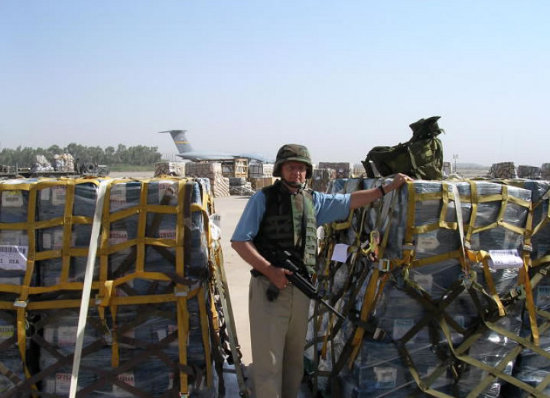
| Pallets of US currency arriving in Iraq. Source: US Congress, House Committee on Government Reform. |
That’s “billion,” with a “B”:
After the U.S.-led invasion of Iraq in March 2003, the George W. Bush administration flooded the conquered country with so much cash to pay for reconstruction and other projects in the first year that a new unit of measurement was born.
Pentagon officials determined that one giant C-130 Hercules cargo plane could carry $2.4 billion in shrink-wrapped bricks of $100 bills. They sent an initial full planeload of cash, followed by 20 other flights to Iraq by May 2004 in a $12-billion haul that U.S. officials believe to be the biggest international cash airlift of all time.
This month, the Pentagon and the Iraqi government are finally closing the books on the program that handled all those Benjamins. But despite years of audits and investigations, U.S. Defense officials still cannot say what happened to $6.6 billion in cash — enough to run the Los Angeles Unified School District or the Chicago Public Schools for a year, among many other things.
The post-invasion chaos in Iraq was severe enough that massive sums of money regularly went missing, the majority thought to have found its way into the pockets of those Iraqis who were early to adopt dialogue with Coalition forces. Some of it undoubtedly funded the insurgency. In 2008, an Iraqi politician told the LWJ his positive assessment that the “major” corruption, the deals worth “hundreds of millions of dollars,” were over. But he anticipated that the “middle to lower-level corruption will continue for a long time and will be a huge problem.” This was progress of a depressing sort, I thought at the time.
The lack of effective accounting controls in place to manage Iraqi use of funds, both oil receipts and international aid, was shocking then, and continued to surprise, despite noticeable improvements at the ministry and ground levels. A relevant amount of corruption along the lines of baksheesh and “ghost soldiers” is culturally inevitable in Iraq, but the fact that individuals and organizations could steal that quantity of money is a big deal, and potentially very harmful to US security interests. It almost goes without saying that billions can buy lots of people, Kalashnikovs and IED components. In fact, the best case scenario is that a number of Americans, Iraqi political figures, and Iraqi businessmen are merely living incredibly large off ill-gotten gains and pumping most of the money into the economies of Jordan and Dubai. Fingers crossed.
A certain degree of error is expected and excusable in the circumstances of post-invasion Iraq. But $6.6 billion-worth is not.