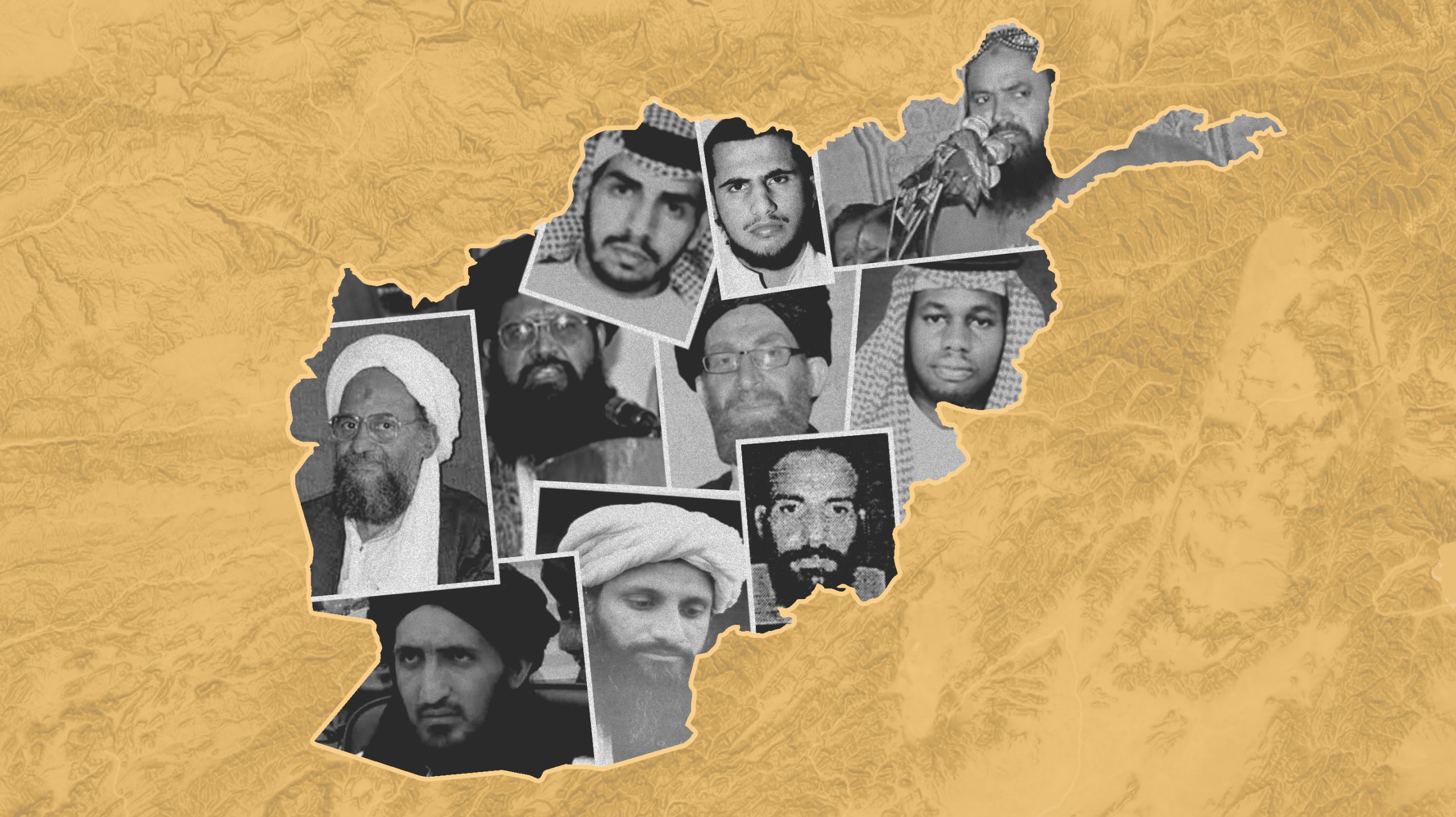
Government inks peace agreements with Taliban in North & South Waziristan
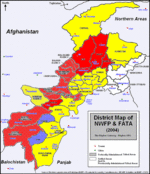
A little over one week after the military said it would not conduct operations in North and South Waziristan, the provincial government cut new peace agreements with Taliban leaders in the lawless tribal agencies.
Peace agreements have been signed with Hafiz Gul Bahadar in North Waziristan and Mullah Nazir in South Waziristan. Bahadar controls a significant Taliban force in the Miramshah region, while Nazir controls Taliban forces in the western regions in South Waziristan.
The deals were crafted by Owais Ghani, the governor of the Northwest Frontier Province. Nazir and Bahadar agreed to stop fighting the Pakistani military and said they would permit tribesmen to "provide shelter to foreigners," a clear reference to al Qaeda.
"We will not fight the Pakistani forces because by doing so we will be helping the Americans in Afghanistan," Bahadar said in a press statement issued by a Taliban spokesman. "We will not let the deal collapse," Bahadar said, referring to an agreement signed with the military in February.
The agreements directly contradict with the government's conditions for negotiations. The Taliban are required to "to surrender arms unconditionally" and "appear before [the] political administration," Daily Times reported.
Nazir and Bahadar have not surrendered their weapons, nor have they appeared before the tribal political administration.
The Taliban have blatantly violated similar peace agreements in the past. The Taliban have refused to lay down their weapons and continue to shelter al Qaeda operatives in the tribal regions. The Taliban, al Qaeda, and allied terrorist groups have established 157 training camps and more than 400 support locations in the tribal areas and the Northwest Frontier Province, US intelligence officials have told The Long War Journal.
Operation in the Waziristans was never in the cards
While fighting has been intense in Swat and Bajaur, the military signaled it had no intentions of taking on the Taliban in North and South Waziristan. On Oct. 8, a senior general reassured "Utmanzai tribal militants" -- Bahadar's tribe -- that no operation was planned. Negotiations were also opened with Nazir in South Waziristan.
While Bahadar and Nazir are often described as "pro-government" Taliban leaders as they oppose fighting the Pakistani military and overthrowing the government, both men have extensive ties to al Qaeda and the Afghan Taliban.
Bahadar and Nazir's forces fight against Afghan and Coalition forces inside Afghanistan. Al Qaeda, in conjunction with Bahadar and Nazir, run terror camps inside their tribal areas. The US has been conducting strikes in Nazir and Bahadar's tribal regions; the majority of the attacks have occurred in their areas.
On Oct. 16, Bahadar threatened to attack US forces in Afghanistan iattacks in his tribal regions were not halted.
Bahadar was one of the signatories of the Feb. 17 peace agreement that ended clashes in the region. He also signed the Sept. 2006 North Waziristan Accord, along with other senior Taliban leaders. Bahadar has opposed fighting the Pakistani military but sponsors al Qaeda camps and sends fighters into Afghanistan.
Nazir is a rival to Pakistani Taliban leader Baitullah Mehsud. He ejected Uzbeks from the al Qaeda-allied Islamic Jihad Union from the Wana region in 2007.
But Nazir openly supports al Qaeda and its leadership and admitted he would provide shelter to senior al Qaeda leaders. "How can I say no to any request from Osama bin Laden or Mullah Omar under tribal traditions, if they approach me to get shelter?" Nazir asked the Pakistani press in the spring of 2007. Arab al Qaeda operatives help finance Nazir's operations.


READER COMMENTS: "Government inks peace agreements with Taliban in North & South Waziristan"
Posted by don juice at October 18, 2008 2:06 AM ET:
u gotta be kidding me right? these savages bombed that hotel and we still talking about peace agreements?
Posted by NS at October 18, 2008 8:35 AM ET:
Don,
If you asked the average Pakistani if he wanted to fight the Taliban and AQ tooth and nail, the answer would be a resounding NO.
The situation in Pakistan has been the worst in the last 20 years or so - an economy that is teetering on the brink and a nation state chock full of terrorist sympathisers. Plus they have nukes too.
Swell.
Posted by Private Finch at October 18, 2008 10:50 AM ET:
The slow motion collapse of Pakistan continues. They seem to be a government of fragmented groups each trying to have a different policy. It is too bad they have nuclear weapons and missiles. Now that they are so close to bankruptcy, it will be temping to sell them.
Posted by Rhyno327/lrsd at October 18, 2008 11:20 AM ET:
HAH! How come Iam not surprised? More backpeddaling, ceding of territory and government. Its as if the Pak Gov. says "you can go across that border and kill as many Americans as you want, just leave us alone"....then they WHINE and MOAN about "sovereignty" when we take action. I think thats the only way to make A-stan safer, is to hit THEM where they live. P-stan is not interested at all about our needs. I already let it be known how I feel and wat we should do concerning P-stan. Better find another logistics route, if not this mission will FAIL.
Posted by Covert Radio at October 18, 2008 6:19 PM ET:
Question:
What peace treaty is this with the Taliban #7,8 15, 20??? I have lost count. This is amazing.
Posted by Render at October 18, 2008 8:45 PM ET:
Each "peace" treaty (or Hudna) results only in prolonging the inevitable.
JUST
DO
IT,
R
Posted by Mr T at October 18, 2008 10:48 PM ET:
I wonder why Pakistan flagrantly inflates enemy casualty figures and minimizes their own. I used to think it made them look good even though they were losing. After all these bogus peace agreements, I think I am beginning to see through this.
I think the Pakistani army is totally on the side of the Taliban. They inflate casualty figures to fake out the people that they are actually doing something about the Taliban. They lie to their own people about their own casualties so they don't know how bad they are losing. This allows the military leaders to continue helping the Taliban win.
They sign fake peace agreements to show the people they are doing the right things knowing full well they are helping them fight in Afghanistan. The complain about us taking unilateral action in Pakistan because they want us to give them advance warning so they can they tell the terrorists where & when the US is going to strike. Otherwise, if we have to be judicious about our strikes, why are we killing 5-6 low level terrorists at a time? That s a waste of our limited strike potential. In other words, the Pakistani military is playing us and their people (unless the people are in on it). They will sacrifice their own for the sake of the cause of jihad. They know the longer it drags out, the more the west will be weakened. We are being played like a violin by that country.
Posted by Albert at October 19, 2008 12:20 AM ET:
Hey, NATO is seriously considering making a deal with the Taliban in Afghanistan. I think Pakistan has the right to negotiate with their Taliban as well.
Posted by bard207 at October 19, 2008 4:43 AM ET:
Albert
Hey, NATO is seriously considering making a deal with the Taliban in Afghanistan. I think Pakistan has the right to negotiate with their Taliban as well.
Pakistan has been making deals with their Taliban for several years and that is one of the root causes of the continued problems in Afghanistan. Pakistan didn't take care of their Taliban as they said they would and the problem has now mushroomed beyond what they can cope with.
From what I have read, many of the ANP leaders have left the NWFP because of the threats by the militants against them.
Have you thought through to the situation that Pakistan will be in 2 - 3 years from now if they refuse to head off the militants?
Posted by Albert at October 19, 2008 8:01 AM ET:
I understand where you are coming from bard207, but I think we have to take Pakistani interests in this region into consideration as well. They fear a strong Afghanistan allied to India as a grave threat to their existence as a state and will do everything they can to avoid that situation, including negotiating with various pro-Taliban groups. As long as the Kashmir question remains unresolved, Pakistan will continue to support the Taliban. I believe the Pakistanis are doing the best they can.
Posted by bard207 at October 19, 2008 9:50 AM ET:
Albert,
I understand your POV and of those in Pakistan, but the next chapter likely won't be favorable for Pakistan.
The fear of an Afghanistan - India alliance has been mentioned in the Pakistani media and several Message Boards.
If one compares the death toll caused by the Pakistani Taliban vs that by India + Afghanistan over the past decade (Kargil incident included), then the Taliban are more dangerous to the Pakistani State.
It isn't Indian or Afghanistani troops dislodging the government authority in various parts of Pakistan.
Here are some interesting reads.
Mr Sharif out of synch?
Terrorism's psy-war is bad news
In Pakistan, the fog refuses to clear
This is pathetic...
Regional ownership needed to tackle terrorism: Zardari
Even the LeT chief is scared...
Pak allows LeT founder to import bullet proof car
Over the Top
Rebuffed by China, Pakistan May Seek I.M.F. Aid
President Asif Ali Zardari returned from China late Friday without a commitment for cash needed to shore up Pakistan's crumbling economy, leaving him with the politically unpopular prospect of having to ask the International Monetary Fund for help.
As Pakistan's economy has tumbled, food prices have soared. A crowd sought food handouts at a shrine in Multan last week.
Pakistan was seeking the aid from China, an important ally, as it faces the possibility of defaulting on its current account payments.
With the United States and other nations preoccupied by a financial crisis, and Saudi Arabia, another traditional ally, refusing to offer concessions on oil, China was seen as the last port of call before the I.M.F.
Accepting a rescue package from the fund would be seen as humiliating for Mr. Zardari's government, which took office this year.
An I.M.F.-backed plan would require Pakistan's government to cut spending and raise taxes, among other measures, which could hurt the poor, officials said.
The Bush administration is concerned that Pakistan's economic meltdown will provide an opportunity for Islamic militants to capitalize on rising poverty and frustration.
The Pakistanis have not been shy about exploiting the terrorist threat to try to win financial support, a senior official at the I.M.F. said.
But because of the dire global financial situation, and the reluctance of donor nations to provide money without strict economic reforms by Pakistan, the terrorist argument has not been fully persuasive, he said.
"A selling point to us even has been, if the economy really collapses this is going to mean civil strife, and strikes, and put the war on terror in jeopardy," said the official, who declined to be identified because he was not authorized to speak to the news media.
They are saying, 'We are a strategic country, the world needs to come to our aid,' " he said.
Pakistani officials said they had received promises from the Chinese to help build two nuclear power plants, and pledges for business investment in the coming year.
But Pakistan had also hoped China would deposit $1.5 billion to $3 billion in its central bank, according to senior officials at the I.M.F. and Western donor countries.
The infusion of cash would have helped with payments for oil and food as currency reserves dwindle, officials said.
Shaukat Tareen, the new Pakistani financial adviser who accompanied Mr. Zardari to China, began to prepare the public for an I.M.F. program on Saturday, saying for the first time at a news conference that if Pakistan could not stabilize its economy within 30 days, it "can go to the I.M.F. as a backup."
"We may have to go to Plan B," he said.
Economic hardship has been mounting across Pakistan for several months. Electricity shortages have become so dire that even middle-class families in big cities have to ration supply, with power cuts for 12 of every 24 hours, with one hour on, and one hour off.
Food prices have soared, making some basics, even flour, too expensive for the poorest to afford. No large-scale riots have occurred, but concern is mounting that such protests are not far off.
The new government has reduced subsidies on fuel and food, and the central bank moved on Friday to ease an intrabank liquidity crisis.
In addition, new rules were imposed several weeks ago on the Karachi stock exchange to stop sell-offs.
But none of those steps have stanched the crisis in confidence.
The central bank's currency reserves have dipped to $4 billion, enough to cover payments for oil and other imports for about two months. As it became clear over the past two days that the Chinese were not going to provide a cushion for Pakistan, the rupee slumped to a record low.
The thin results from the China trip were of little surprise to Western donors.
Asked about the likelihood of Pakistan winning the direct cash infusion it was seeking, a senior Chinese diplomat was reported by Western officials to have said, "We have done our due diligence, and it isn't happening."
"What we needed is $3-to-$4 billion," said Sakib Sherani, a member of the government's economic advisory panel and chief economist at ABN Amro Bank in Pakistan. That amount was necessary "to build confidence," he said.
The central bank governor, Shamshad Akhtar, said in a telephone interview on Saturday, "We are very open to all kinds of financial support." She added, "We've taken a lot of corrective actions, and we plan to take more."
But Zubair Khan, a former commerce minister and a critic of the government's economic management, said confidence would improve once Pakistan arranged an I.M.F. rescue package. Mr. Khan said that the alternative would be the imposition of controls on imports and capital flows that could do long-term harm to the economy.
Meanwhile, the American financial crisis is also expected to hurt ordinary Pakistanis.
Remittances from Pakistanis living abroad to their relatives in Pakistan were expected to be about $7 billion this year, about $3 billion of that from Pakistanis living in the United States. But those remittances are likely to dwindle, affecting real estate values in Pakistani cities and families who live in poorer rural areas.
Mr. Zardari had approached the China trip with considerable fanfare, saying he was looking forward to visiting a country that had enjoyed a warm relationship with Pakistan, particularly during the rule of his father-in-law, Zulfikar Ali Bhutto.
His visit to Beijing followed a trip there by the chief of the army, Gen. Parvez Kayani, and came at a time when the relationship between Washington and Pakistan was strained over how to deal with the escalating threat from the Taliban and Al Qaeda.
Javed Burki, a former Pakistani finance minister, said China had provided $500 million in balance-of-payments support in 1996, when Pakistan was on the brink of default. He had flown to Beijing to ask for the money and his request was fulfilled.
But those days are over, he said, because China is no longer inclined to grant cash outright without structural reforms from the receiving government, he said.
In regards to India wanting to threaten the existence of the Pakistani state, on at least one Indian BBS, the common viewpoint is to just watch as Pakistan crumbles from within. Don't be too hostile to Pakistan because doing so will give the various fragmented groups a rallying point.
Even though many in Pakistan think that some alliance of India and Afghanistan would be a threat to the existence of their country, I think that the Taliban pose a much larger and more likely threat.
Posted by TS Alfabet at October 19, 2008 10:14 AM ET:
It is time to stop dancing around the obvious: Pakistan is a failed state. It was an artificial creation (like many former British colonies in that part of the world) and appears that the centripetal forces are greater than any cohesive forces.
Will this be a major disaster and result in huge upheaval in the region? Absolutely. But it's time to start thinking about what will emerge from the ruins of the nation state formerly known as Pakistan? Perhaps the NWFP and FATA areas become even more autonomous and exist as a lawless region until either Afghanistan and or India take portions. Baluch area in the south goes independent perhaps?
And above all, the nukes must be secured and removed from all possibility of capture by AQAM. (It's ironic, though, how so much hand-ringing occurs over P-stan's nukes while virtually nothing is done to prevent Iran from loading up with nukes in the next year or two). Sorry to digress there.
Posted by TEM at October 19, 2008 10:41 AM ET:
Bahadar has smoked too much hash. I doubt if any US commander who knows how Bahadar ran like a coward,when he discovered Delta and British SBS operatives were about to snatch him, would take his meaningless threat seriously. Bahadar may send some of his 12-14 year old warriors to fight,however,that coward will be hiding under a rock.
Gul Bahadar has no stomach for fighting US soldiers.
Posted by ST333 at October 19, 2008 2:08 PM ET:
I'm sure the peace agreement will work this time. You know what they say, the 326th time is a charm. I can't really blame the Paki's, they have no political will nor does the majority of the public care to take on the Taliban and AQ. What they are left with is a very weak and timid approach for peace agreements almost as if they are saying, "Please don't hurt us"....What we are left with is a uncertain future and a very unstable and weak Ally. Add this situation with the Iranian timeline and rising troubles in places in Africa and....oh boy, the next POTUS will be sleepless.
Posted by Albert at October 19, 2008 2:16 PM ET:
Thanks for providing us with those resources and links, bard207. I agree the Taliban is a grave threat to the Pakistani state, but I believe also America's open embrace of India will only distract them from that threat. That is why I am strongly opposed to US strikes in Pakistan.
Posted by bard207 at October 19, 2008 5:54 PM ET:
Albert,
No problem providing the information.
Do you have any other ideas (besides making peace treaties) that Pakistan can implement to deal with the militants?
There are a few key things that Pakistan hasn't faced up to yet.
1. That the Pakistani Army and Pakistanis in general feel uncomfortable fighting the militants because they are fellow Muslims. Yet, there will also be mention that what the militants are doing doesn't fall within acceptable Muslim doctrines & practices, so the actions are being done by those who are deviants rather than True Muslims. Either the militants are True Muslims doing what are acceptable Muslim practices or they aren't and then Pakistan should eliminate them because they are kaffirs hostile to the Pakistani State.
2. Pakistan complains about actions by the US into the Pakistani border areas with mention of violations of their territorial integrity and sovereignty. Yet, Pakistan has no problem making deals with the Taliban who have lack any legal basis to be considered a governmental entity that can be negotiated with. If territorial integrity and sovereignty really matter to Pakistan, then they wouldn't be making deals with the Taliban.
Posted by Albert at October 19, 2008 7:53 PM ET:
I certainly do not believe that most Pakistanis actually agree and approve with what the Islamic militants are doing to their country. But I think the silent majority are being undermined by US strikes on their territory. The Pakistani tradition in dealing with those tribes on their borders seems to be making deals with them. Pakistanis believe the violence in Waziristan really started only AFTER NATO got involved in Afghanistan. I think the rebels can be co-opted. In Chechnya, the Russians basically paid off former rebels and now there is stability in that republic. I think the Pakistanis are doing the right thing by trying to co-opt these tribes.
Posted by Mr T at October 19, 2008 10:06 PM ET:
"Pakistanis believe the violence in Waziristan really started only AFTER NATO got involved in Afghanistan."
Yeah, when they ran like roaches from American troops in Afghanistan.
Pakistanis believe a lot things. Most of them false. That is a big part of the problem.
Posted by NS at October 19, 2008 10:31 PM ET:
Albert,
You are missing the point - a majority of the tribes in NWFP are NOT going to fight the Taliban - blood runs thicker than water and most of these tribesmen are pro-Taliban. No amount of enticing from the Govt is going to help.
Besides as Bill has already pointed out, there is no co-ordinated action between these tribes and the Pakistan military - simply because the military along with the ISI is actively sabotaging the prospects of peace and is trying to bring the Taliban back to power to re-establish strategic strength against India - a point that you seem to recognize (vis-a-vis Kashmir) The bombing of the Indian embassy in Kabul was planned by ISI according to US intel.
Here's one thing that i would like to remind you though -the India-Pakistan bitterness and rivalry is 5 decades old and has resulted in 3 wars already including one in 1999. There is going to be no resolution on Kashmir as per the wishes of Pakistan any time soon if ever. Besides even if this issue is resolved according to Pakistan, what is the need for the ISI and Pakistan military to suddenly drive out the Taliban ? They would still need a Govt that is Pakistan friendly - this remains the same no matter what the situation in Kashmir is.
In fact they now have achieved both their goals - get a favorable resolution to their Eastern and Western borders. What's not to like ? Where's the incentive to fight the Taliban ?
It increasingly looks like that the Taliban is returning to power - Karzai may be forced into exile or power sharing with the Taliban. It is very possible that NATO troops may have to withdraw with in the next 3 years.
Posted by Albert at October 20, 2008 12:23 AM ET:
No incentive at all. You are right. The Pakistani military and intelligence services believe they can outlast NATO in a war of attrition. I happen to agree with them. I am not even sure if Hamid Karzai can manage to win re-election. The idea of establishing a democracy in Afghanistan is dead.
Posted by Rhyno327/lrsd at October 20, 2008 7:55 AM ET:
The P-stani population hates the US. Do you think thier military or thier ISI feels different? There is not going to be any "buying off" of the hardcore T-ban/AQ. Some tribes have aligned with the Gov. today, wat about a week from now? There is a short term answer to A-stan's security, but it means crossing the P-stani border, using thier airspace. They cannot conduct ops in A-stan if they are defending thier own turf.
Posted by bard207 at October 20, 2008 8:31 AM ET:
Albert,
If money (payoffs) was a motivator to the Tribals in FATA and NWFP, then somebody would have turned in the locations for bin Laden and other High Value Targets.
Two things that Pakistan has yet to resolve.
1. The claims of difficulty in getting the Pakistani Army to fight the militants because they are fellow Muslims. Yet, when the militants do a suicide bombing or other heinous acts, then the claim is that those aren't sanctioned Muslim actions and go against Muslim doctrine. The militants can't be both Muslims and Kaffirs, yet the Pakistani people want to have it both ways.
2. Pakistan claims territorial integrity and sovereignty violations when the US launches attacks into the Border Areas of Pakistan. That is offensive to Pakistan, yet they negotiate Peace Deals with the militants in the Border Areas who have no Legal Standing. If territorial integrity and sovereignty really matter to Pakistan, then stop making Peace Deals with the militants.
Posted by TS Alfabet at October 20, 2008 8:56 AM ET:
"I am not even sure if Hamid Karzai can manage to win re-election. The idea of establishing a democracy in Afghanistan is dead."
Hmmm.... sounds very similar to what alot of people were saying about Iraq in 2005-2006: hopeless, failure, no prospects of democracy, etc... And yet here we are in 2008 with a provincial elections law passed for elections set for January 2009 and all indicators that there will be extremely heavy voter turnout with real competition among political parties. All the while, U.S. forces are steadily withdrawing from lead combat roles.
So what about A-stan? Hopeless? Democracy is dead? Give Petraeus and the troops a little bit of time to survey the situation and adjust strategy. If Petraeus and the troops could turn around Iraq's situation, it is a good bet that they can figure out A-stan, too. Whether the next POTUS will allow them to do it is another question.
Also, as to Albert's comment that the Russians were able to "buy off" the Chechen's, that is not completely correct. The Russians first used the kind of indiscriminate, brute force to wipe out rebel sanctuaries and then, only after the surviving rebel leaders were convinced of the suicidal alternative, were the Russians able to pay them off. Plainly this is not an option for the tribal areas in P-stan.
Posted by Gringo at October 20, 2008 10:45 AM ET:
It will come down to some quarantining of Pakistan. Many Brits of Pakistani descent go to "madrassas" in the frontier regions to train for jihad. It's not just a matter of Taliban going over to Afghanistan.
If the Pakistanis would quarantine the frontier regions, OK. If they do not, quarantine the whole country.
Posted by Albert at October 20, 2008 11:58 AM ET:
Good points made by all in the above posts. You guys got me thinking. Have any of you fellows read Nir Rosen's new piece in the Rolling Stone magazine about the Taliban. It's pretty depressing and pessimistic about the situation there.
Posted by Albert at October 20, 2008 12:04 PM ET:
I believe the situation in Afghanistan CAN be turned around and improved, but I think more modest goals are in order. Most western countries will accept some sort of stable Afghanistan, even if it is not a Jeffersonian democracy. I just don't think we should be putting all our eggs in the Karzai administration's basket. It bears a great deal of responsibility for the problems we see in Afghanistan today.
Posted by Mr T at October 20, 2008 12:40 PM ET:
We must turn Afghanistan around. We can not allow the Taliban to return to power in Afghanistan. If we do, we are right back where we started. Won't the Taliban then reestablish their bases on a broad scale to wage war against the west? That is what they did before and even backed up Osama to their own detriment. They have reestablished in Pakistan to do the same thing.
The world community can not allow a country or " tribal area" to wage war on other nations. The Taliban may not mass troops on a border or launch ICBM's but that is only becasue they can not. If they could, they probably would. They have stated their goals very clearly. We need to take decisive action along with the world community. What is a good strategy to do that is what we need to address. Peace deals? Nuclear bombing? Money? All of the above?
Posted by Neo at October 20, 2008 3:55 PM ET:
Mr T at,
"What is a good strategy to do that is what we need to address. Peace deals? Nuclear bombing? Money? All of the above?"
"Nuclear Bombing?" No! One of our chief objectives is to avoid all out war. Do you want to trade a low grade conflict for a high grade one. We may eventually get pushed into a high grade conflict but that doesn't mean we should jump into one head first.
"Money?" It is already a big part of the equation, but don't expect to get much more out of it than we already are. If it were not for long and short term monetary support by the United States and World Bank there would be no country called Pakistan right now. The alternatives are too frightening for either side to really consider. That is what keeps the supply lines to Afghanistan open. In return we try not to make things impossible for the Pakistani government.
The other aspect is paying off individuals for information. That in itself is very valuable, but don't think you are going to pay off the Taliban or get any real political movement by using cash.
"Peace deals?" The Islamists are openly amused by the very thought of a peace deal with the unbelievers. Real deals are made quietly with community leaders away from the action. I do think the US Army needs to formally set up a negotiating apparatus in conjunction with the State Department and NATO. It's not about getting peace deals anytime in the near future. If they don't set up a mechanism for negotiations, someone else will.