Uzbeks presence in Pakistan's tribal areas reignites intra-Taliban conflict


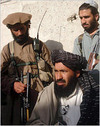
Mullah Nazir [center]. Click to view.

A several-year-old intra-Taliban conflict between two South Waziristan warlords has flared up again. Mullah Nazir has teamed up with Mullah Gul Bahadar to oppose Baitullah Mehsud's support of Uzbek extremists in the tribal areas.

Nazir, a Taliban commander in South Waziristan and a chieftain in the Ahmedzai Wazir tribe, and Bahadar, a Taliban commander in North Waziristan and a leader in the Utmanzai Wazir tribe, have been given permission to join forces against Baitullah Mehsud to stop him from attempting to "re-impose Uzbek militants" on the tribes. Nazir and Bahadar's union was approved by an Ahmedzai Wazir tribal council consisting of more than 500 tribal leaders.

Baitullah Mehsud is a powerful leader of the Mehsud tribe in South Waziristan and the leader of the Tehrik-i-Taliban Pakistan, or the Movement of the Taliban in Pakistan. He has close links with al Qaeda and the Afghan Taliban, and has sheltered Uzbek terrorists from the Islamic Jihad Group.

The presence of the Uzbeks in the Waziri tribal areas has fueled resentment amongst the tribes. The conflict is based on a complex series of issues such as tribal rivalries, land ownership, jihadi strategy, and the murder of al Qaeda supporters.

Baitullah.jpg

Baitullah Mehsud from a recent Taliban video.

An intra-Taliban turf war

While many Pakistan analysts were quick to seize upon the infighting between Nazir and Baitullah in 2007 as the nucleus of the Pakistani version of the Anbar Awakening, the Sunni insurgent and tribal revolt that led to the defeat of al Qaeda in Iraq, a closer look at Nazir shows he is committed to the Taliban and al Qaeda cause.

Nazir openly supports al Qaeda and its leadership, and admitted he would provide shelter to senior al Qaeda leaders. "How can I say no to any request from Osama bin Laden or Mullah Omar under tribal traditions, if they approach me to get shelter?" Nazir asked the Pakistani press in the spring of 2007. Arab al Qaeda operatives help finance Nazir's operations. He also openly supports the continuation of the jihad in Afghanistan and vowed to provide fighters to support the Taliban.

The Ahmedzai Wazir tribal meeting that sanctioned the agreement between Nazir and Bahadar shows the extent of the disagreement between Baitullah and Nazir. The jirga was clear to limit the alliance to opposing the return of Uzbek influence in the tribal areas. There is no discussion of preventing Baitullah's armed opposition to the Pakistani government, halting his suicide campaign against the Pakistani government and people, ending the fighting against Coalition forces in Afghanistan, or ejecting Arab al Qaeda members from the tribal areas. One of the tribal leaders present was temporarily jailed after saying the agreement between Nazir and Bahadar would only help the enemies of the Taliban.

The feud between Nazir and Baitullah can be traced back to early 2007, when Nazir led an offensive against the Uzbeks living in the Waziri tribal areas in April 2007. Nazir and his tribe resented the Uzbeks for their encroachment on Waziri lands and the Uzbeks insensitivity to tribal customs. In the feudal-like state of Waziristan, the Uzbek's land ownership was a direct challenge to the tribal power structure.

The Uzbeks proscribed fighting the Pakistani government versus foreign forces in Afghanistan. This theory has gained considerable ground in the tribal areas and is promoted by Sheikh Essa, an Egyptian al Qaeda strategist and cleric. Nazir also accused the Uzbeks of committing "crimes," when in fact the Uzbeks were responsible for the murder of at least three of Nazir's financial representatives to al Qaeda.

The fighting was hyped by the Pakistani government as an indication of the success of the 2006 South Waziristan peace agreement with the Taliban. But the fighting ended after senior Taliban commanders Mullah Dadullah, Siraj Haqqani, and Baitullah Mehsud intervened. Baitullah supports the presence of Uzbek fighters in the tribal areas. The deal allowed the Uzbeks to resettle in North Waziristan in regions inhabited by Bahadar's clan.

In early January 2008, Nazir's forces clashed with Baitullah's legions after Baitullah's men executed eight members of a Waziri peace jirga. Nazir ordered all Mehsud clansmen to leave Wana and formed a lashkar, or tribal force, of 600 men to follow through. But a promised offensive against Baitullah's forces failed to materialize, even after the military struck at Baitullah's power centers in late January.

The disagreement between Nazir and Baitullah comes as the Pakistani Taliban is consolidating recent gains after fighting the Pakistani military to a standstill last winter. The government has sued for peace throughout the tribal areas and the settled districts of the Northwest Frontier Province. Baitullah recently moved against a rival tribal in the town of Jandola in South Waziristan, which borders Tank to the east. The Pakistani military is threatening to conduct an operation to eject Baitullah's forces from Jandola.

The Taliban and al Qaeda are likely to reign in the warring tribal leaders to minimize the distractions and disunity during the campaign to secure greater control of territory in the Northwest Frontier Province. The powerful Haqqani family will likely initiate negotiations between Nazir and Baitullah to place the internecine fighting on the back burner if fighting breaks out between the two groups.


For more information on the conflict between Baitullah Mehsud and Mullah Nazir, the controversy over Uzbeks in the tribal areas, see:

The Taliban's internecine war in Waziristan (April 2007)
Spinning the Fighting in South Waziristan (April 2007)
Taliban commanders clash in South Waziristan (January 2008)


READER COMMENTS: "Uzbeks presence in Pakistan's tribal areas reignites intra-Taliban conflict"

Posted by David M at July 9, 2008 10:12 AM ET:

The Thunder Run has linked to this post in the blog post From the Front: 07/09/2008 News and Personal dispatches from the front and the home front.

Posted by C. Jordan at July 9, 2008 12:02 PM ET:

Why doesn't everyone see? Isn't it clear they
can't even make deals or hold a peace amongst
themselves.

No honor among thieves.

Let them fight themselves :)

Posted by Neo at July 9, 2008 12:35 PM ET:

C. Jordan

Don't get your hopes up. The Uzbek issue comes up about once a year. They have a little fight over it, than it back to business. It won't slow them down a bit.

Posted by C. Jordan at July 9, 2008 1:26 PM ET:

Neo,

Point taken. But a guy can still dream of AQ doing themselves in.

Posted by Haroon at July 10, 2008 2:34 AM ET:

By the way the picture of Baitullah is wrong. This is not the guy.

Posted by Zarin at July 10, 2008 6:11 AM ET:

British Imperial ruled the area now called FATA with very good diplomacy. They also used force when ever necessary but overall they ruled with decipline and strong hands. They ruled with policy of DIVIDE AND RULE and it was really successful in this area where iq is very low. They implemented a law called frontier crime regulation which is still valid but unfortunately the Pakistani authorities are currupt and unable to implement. This rift in between these stupid groups is very good sign to overcome these low iq militants. If the American and coalition brain use this rift to keep one group in hand, the Mehsud group will definetly loose the ground. One can read all the history and policies of British era in a book called IMPERIAL FRONTIER. Britishers created their one clerics and sufi saints in the area and they were able to turn the whole ground in their favor. Now the Americans are spectators and expect corrupt and pro taliban pakistani security forces to clear ground for them to enable them to have sound sleep but unfortunately this will never work and the situation will deteriorate day by day. America should search for real anti taliban tribes and immoral militants inside taliban camp like that mullah Nazir to use them otherwise the situation will reach to the point that American and coalition forces direct intervention and operation will not work. Militants will gain more support among masses and pakistani security forces. They can also use the situatio of Kurram parachinar where strong tribes are bravelely fighting against talibans and are cut off from rest of country for the past one year. They are using Afghan territory for travel but are not getting any kind of support either from Afghans or coalition forces stationed on their boarder.
O,American and coalition partners, see the ground realities not bogus reports and revise you policies in this area on the bases of priciples framed during British rule from 1860 till 1947.

Posted by Rhyno327/lrsd at July 10, 2008 8:28 AM ET:

Yes, its a dream, but its great when they are killing each other. That will stop, and they will re-focus. Hitting them in Pakistan is a wish that may not come true, but it would cripple them. They are a bunch of 2 faced double-dealing maggots, and that goes for the Pak "gov" and thier ISI. The P-stani gov. just wants them to leave Peshawar alone, other than that, they have free reign to train and launch attacks from P-stani soil. UNREAL.

Posted by Neo at July 10, 2008 11:51 AM ET:

Some people would have us negotiate with the Taliban as well. Even though none of the Taliban factions has the slightest interest in talking to the US. The Pakistani's aren't gaining anything by negotiating with the Taliban, although Pakistani public opinion seems to dictate that the new government negotiate. Until the Taliban is faced with failure they are unlikely to be influenced. Factions within the Taliban may eventually grow frustrated at the constant warfare and fruitless efforts. That will be the time to start talking. Not while they see their goals as obtainable though.

Also, divide-and-conquer only works if you have influence over some of the factions. As of now, we have no influence over any of the Pakistani Taliban factions. That's not for the lack of trying either.

Dividing the Iraqi insurgency only worked once the Marines proved they could consistently support a popular uprising against Al Qaeda in Anbar. Only than could the local populous contemplate opposition to Al Qaeda without being massacred. Neither the US nor Pakistan can create those conditions in the tribal areas. For now we can not get at the Pakistani Taliban. The best we can do is fend off their efforts.

At the other end of the opinion scale are those who would have the US invade Taliban territory within Pakistan. Such action would surely bring an undesirable backlash among the Pakistani population. You might as well just hand the country over to Nawaz Sharif and PML-N. In that case, I suggest the Taliban might be the least of your worries.

The best we can do for now is to Stonewall them. Don't give them an inch to operate within Afghanistan. Frustrate their every effort and keep wearing at their resolve. In time the Pakistani population may become even more disillusioned with the Taliban. Pushing by the Americans isn't producing any positive results within Pakistan. For better or worse, only the Pakistani's can resolve their domestic political situation. I doubt if the present coalition government will last long. Will PPP defend itself against the onslaught or will they fold.

We also have our own domestic political concerns. We need to get through the next election and into the next without a major military flair-up. We need to get the draw down process in Iraq under way without jeopardizing gains. We need to get our regional military posture shifted now that the effort in Iraq is starting to whined down.

Posted by Neo at July 10, 2008 11:54 AM ET:

"For now we can not get at the Pakistani Taliban."

that should be "can't get at the Pakistani Taliban"

Posted by bard207 at July 10, 2008 9:18 PM ET:

Neo,


There are several things that I would be interested in having you expand upon.


Only than could the local populous contemplate opposition to Al Qaeda without being massacred. Neither the US nor Pakistan can create those conditions in the tribal areas. For now we can not get at the Pakistani Taliban. The best we can do is fend off their efforts.

The Pakistani Army is unable to do it because their hearts aren't in it or because they are overmatched in a strategic - military sense? I realize they have troops committed to the border area with India, but even the Army troops that are based near Peshawar aren't out in the surrounding towns to provide a visible presence. I realize that COIN operations are different than a conventional battle with India, but it still reflects poorly on their ability to hang in there when the going gets tough and India probably takes note of that. If it is because their hearts aren't in it to subdue the militants, then the Game is over and we are looking at one of the bad scenarios for Pakistan and the rest of the world.

At the other end of the opinion scale are those who would have the US invade Taliban territory within Pakistan. Such action would surely bring an undesirable backlash among the Pakistani population. You might as well just hand the country over to Nawaz Sharif and PML-N. In that case, I suggest the Taliban might be the least of your worries.

What would things look like if PML-N and Nawaz Sharif become the dominant partner in a new government?

Posted by Neo at July 12, 2008 1:22 PM ET:

bard207,

Sorry, I've been busy and hadn't time to think about this.

"The Pakistani Army is unable to do it because their hearts aren't in it or because they are overmatched in a strategic - military sense?"

I think you can safely say their hearts aren't in it, but it is a complicated situation. Like the Pakistani political scene, the army itself is factionalized. The top officer core and certain key parts of the armed forces are broadly nationalist, and also represent the old power center of the Punjab ethnic group. The long involvement of the ISI with Islamic insurgent groups in Afghanistan and Kashmir has long ago coalesced into a political faction promoting those causes, and broadly supporting an Islamic state. Many younger officers have been attracted to this, but to what proportion is unclear.

While these factions form polar centers of power within the Pakistani army, I think it would be a mistake to say that the Army rank and file clearly align themselves behind either nationalist or Islamic party interests. To the contrary, it seems that much of the rank and file would rather not be forced to make a choice between the two. This sentiment seems to be share throughout much of the population. They don't see nationalist and Islamic interests as being inherently in conflict, even though the Taliban's methods would seem to bring it into conflict with any notion of state.

I'm afraid there isn't much sympathy for US interests to be found within the Pakistani population. On some level many Pakistani's recognize that harboring terrorist groups within their national boundaries will eventually bring them into direct conflict with outside nations. Islamist insurgent groups have been an instrument of Pakistani policy for so long that most Pakistani's accept them as part of the political scene. If the US and India have a problem with these groups than that is tough. Along with this, many Pakistani's seem to prefer to see this as an American problem, not as a dire threat to their own government.

I wouldn't quite interpret this as uniform support for the Taliban, either though. There seems to be a general sense amoung much of the populous that the Taliban's methods are too extreme. There is also a genuine resentment at Al Qaeda and the Taliban for drawing the US into the region and have plunged the Pakistani nation into crises. I'm afraid that many have the notion that they can just push the US out of the region, than go back to their former relationship with the Taliban and other extremist groups. I don't think there is broad recognition of the depth that this has brought them into conflict with regional and world powers. Right now, I'm afraid that if push came to shove sympathies in Pakistan would support the Islamist groups. That's why we treat Pakistani nationalist interests with some delicacy and don't push too hard.

I must admit, getting some notion of what is on Pakistani's minds is difficult. Not only are personal and national interest different from ours, but the whole cultural perspective is very different. Unfortunately, getting the perspective from English speaking news and academic sources is somewhat problematic since the perspective seems to be highly filtered and represents the thoughts of a small but influential "western educated" fraction of the population.


Any sort of permanent US presence in the region might be a little too much to expect in the long run. There are just too many things against it. The best we might be able to achieve Pakistani's to tire of the Islamist groups. They need to persuaded that these militant groups are a liability their nation cannot afford and that allowing them to operate from Pakistani territory is unacceptable. In the mean time the Pakistani's need to be concerned about being devoured be these groups. They also need to be concerned that these groups further pull them into impossible political situations. That was Al Qaeda's original intent, to create an impossible political situation on which they could capitalize locally. So far, they have had mixed results, as have we.

The long term problem the Pakistani's have is that they don't have any realfree choice in accomodating or getting rid of the extreamists. The extreamists will impose themselves with all the violence they can bring. In the end the extreamists leave only one choice, submission.

Posted by bard207 at July 12, 2008 4:56 PM ET:

Neo,

Thank you for the detailed response. It fits with what I read on a Pakistani Forum. The members there aren't happy with the actions of the Taliban, but have more indignation for India on the Eastern border and Afghanistan - United States on the Western border.

There are some that point out that Pakistan's problems are caused by the militants - Taliban, but they tend to get shouted down by the more nationalistic members.

Overall, they seem to have a damaged pride angle in their frustration.

1. Loss of Bangladesh several decades ago.

2. Kashmir is still part of India and has no intentions of relinquishing it to Pakistan.

3. The sphere of influence in Afghanistan that they enjoyed previously is threatened by US - NATO actions

4. They appear to be falling well behind India on several different levels.

5. Between poor leadership from various military dictators and also from most elected leaders over the years, they haven't created the right environment to move forward into the 21st Century.

-------------------------------------------------------
What would things look like if PML-N and Nawaz Sharif became the dominant partner in a new government?

Thank you

Posted by Neo at July 12, 2008 10:12 PM ET:

"What would things look like if PML-N and Nawaz Sharif became the dominant partner in a new government?"

Before considering what things might look like under a PML-N government we need to look at the current political relationships. I do think the PML-N leadership and the Taliban are political and ideological co-travelers but have very different methods and a different public face. To what degree they directly cooperate is difficult to ascertain. PML-N does largely maintain its presence as a legitimate player within the Pakistani political system rather than go the revolutionary route and take its effort to the streets. On the surface PML-N maintains some distance from the Taliban's violent methods. At the same time they are positioned to benefit from the Taliban's actions. The current troubles have been very beneficial for PML-N.

The current political crises has already provided a way to allow Nawaz Sharif directly back into the political process. The international community couldn't legitimately justify pressuring the Musharraf government into allowing Benazir Bhutto back into the political process without also allowing Sharif the same sort of access. To allow a secular political leader into the country while banning the Muslim league leader would be easily targeted as anti-Muslim in political circles.

Nawaz Sharif's biggest political obstacle has long been Musharraf and the Punjab army establishment. Musharraf has been largely neutralized at this point and the Army establishment in a much weakened state.

That leaves PPP and PML-N's in direct competition for political power. The direct assassination of Bhutto last winter backfired resulting in a large sympathy vote sweeping PPP into a parliamentary majority.

The Pakistani public does not want this fight with the Taliban. This leaves both PPP and the Army establishment in a very precarious position. While PML-N enjoys a peaceful coexistence with the militants, PPP and the Army find themselves targeted. The PPP led government finds it must appease the Taliban to satisfy public desire to avoid open conflict, and at the same time is politically outflanked by PML-N which enjoys a peaceful relationship with the Taliban. The Taliban openly mocks the PPP governments position with open violence. The PPP finds it's credibility and public support gradually undermined by both the Taliban and PML-N. The Taliban makes a mockery of the governments attempts at pacification and PML-N at the same time attacks PPP's competence and credibility. Much of the Pakistani public's frustration gets directed at both the PPP and the Taliban. Of course the PPP is directly undercut by diminishing support but the Taliban is not so much effected. One might posit that diminished public support might hurt any chance of a direct Taliban takeover, but I don't think the Taliban really ever had the power to challenge both the government and the army. The Taliban isn't aiming at a direct takeover. That will be left to others with broader public appeal than the Taliban. PML-N finds itself increasingly in a position to directly benefit, and it will eventually mount a national challenge to a discredited both the army and PPP.

PPP can't handle the present situation without internal political allies, but it finds itself unable to effectively ally with PML-Q as long as Musharraf is in charge. Musharraf at this point is politically radioactive but his absence could well be just as destructive. His absence leaves PML-Q with a leadership vacuum and also the messy legal after-effects of Musharraf's downfall. In the mean time PML-Q might find much of its political base siphoned off by either PPP or PML-N. The Taliban plays spoiler in this to PML-N's advantage.

Not only do I find this a likely political scenario, I think has been in play for some time already. The question is, what each of the players expect to get out of an unofficial alliance?

Posted by Neo at July 12, 2008 11:49 PM ET:

For those who don't know the Pakistani parties.
PML-N Pakistan Muslim League - led by Nawaz Sharif
PML-Q led by General Musharraf - close ties to the Army
PPP Pakistan Peoples Party - led by the Bhutto family