-
Ex-Guantanamo detainee prominently featured in al Qaeda propaganda
Al Qaeda in the Arabian Peninsula (AQAP) released a two-part lecture by ex-Guantanamo detainee Ibrahim al Qosi earlier this month. Qosi threatened the Saudi government and explained al Qaeda’s rationale for waging jihad in Arabia. Qosi has starred in several AQAP productions since the group revealed his leadership role in early December.

-
Treasury designates head of al Qaeda’s eastern zone in Afghanistan
Nayf Salam Muhammad Ujaym al Hababi, also known as Farouq al Qahtani, has been added to the US government’s list of specially designated global terrorists. Hababi, a senior al Qaeda leader, has been heavily involved in both the insurgency in Afghanistan and in plotting terrorist attacks in the West. He has also worked with the Taliban.

-
AQAP publishes insider’s account of 9/11 plot
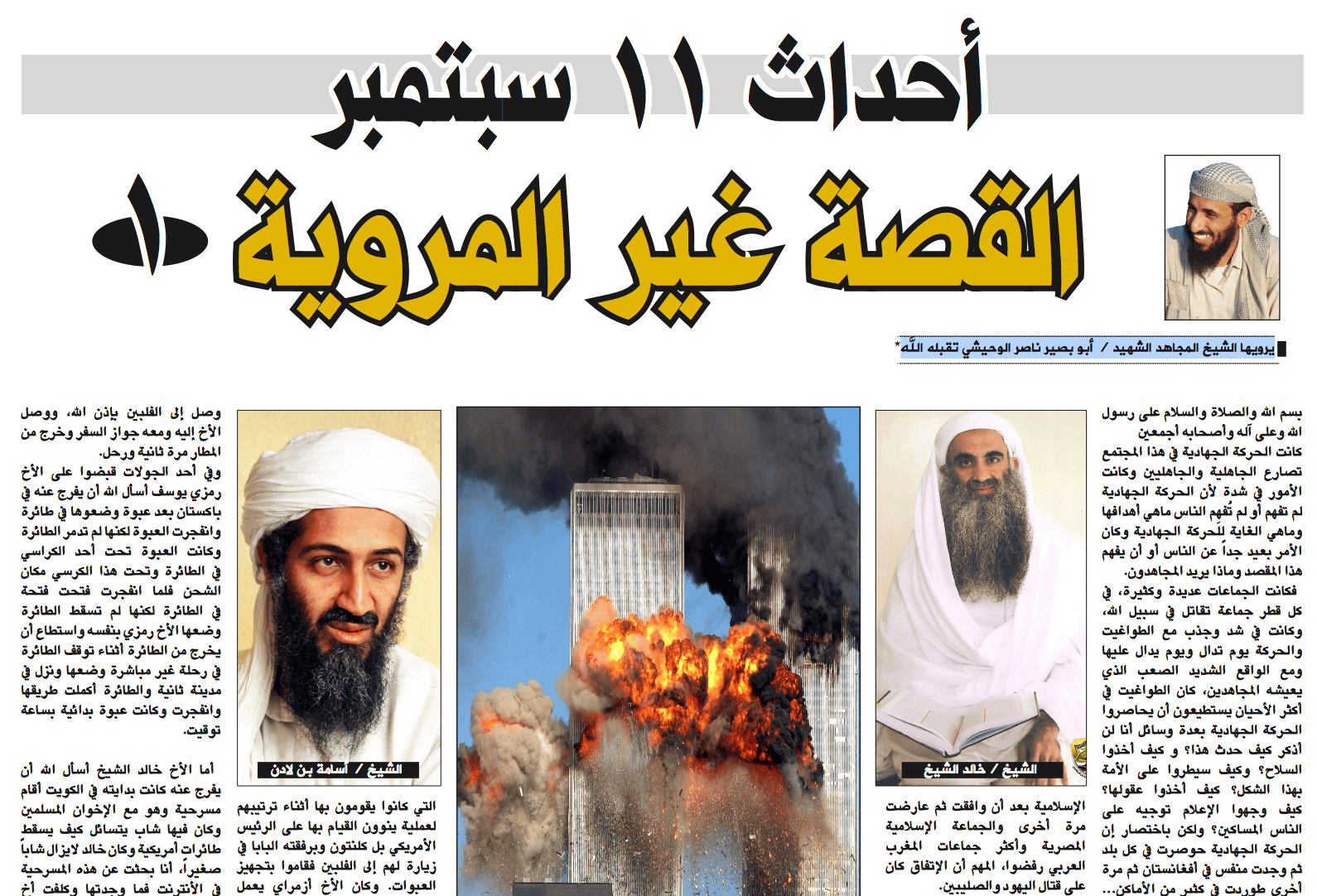
AQAP has published a two-part interview with Nasir al Wuhayshi, who was killed in a US drone strike in June 2015. The interview is a transcript of Wuhayshi’s account of the 9/11 plot. Wuhayshi was Osama bin Laden’s aide-de-camp prior to the hijackings.
-
Analysis: Osama bin Laden’s son praises al Qaeda’s branches in new message
During the last months of his life, Osama bin Laden worried about the fate of his son, Hamzah. In a newly-released audio message, Hamzah picks up his father’s banner.

-
US airstrike kills one of Osama bin Laden’s most trusted commanders in Afghanistan
Abu Khalil al Sudani worked with Osama bin Laden and Ayman al Zawahiri for years. He was a member of al Qaeda’s shura council and directed suicide operations. Osama bin Laden’s files reveal that he was one of al Qaeda’s most trusted leaders. The airstrike that killed Sudani took place in the Bermal district of the Paktia province, where the US operated a base before withdrawing its forces.

-
Osama bin Laden’s Files: Taliban mourned senior al Qaeda leader as US attempted negotiations
A newly-released file recovered in Osama bin Laden’s compound shows that the Taliban offered its condolences on the death of a senior al Qaeda leader in May 2010. Other documents reveal that Mullah Omar’s representative corresponded with bin Laden’s chief lieutenant even as he negotiated with the State Department.
-
Nearly all of Osama bin Laden’s files should be released
Earlier today, the Office of the Director of National Intelligence released a set of files recovered from Osama bin Laden’s compound. These are but a fraction of the files that should be released to the public.

-
Lebanese Army defector portrayed as ‘martyr’ in Al Nusrah Front video
The Al Nusrah Front, al Qaeda’s official branch in Syria, has released a video portraying Osama Mansur as a “martyr” for its anti-Iranian, anti-Hezbollah cause. Mansur served in the Lebanese Army before defecting to Al Nusrah.

-
Osama bin Laden’s Files: The Pakistani government wanted to negotiate
Recently released letters recovered in Osama bin Laden’s compound reveal that key Pakistani leaders, including the brother of Pakistan’s current prime minister, sought out negotiations with al Qaeda. Pakistan intelligence also communicated with al Qaeda leaders through jihadist intermediaries to discuss a possible truce.

-
Osama Bin Laden’s Files: The Arab revolutions
Al Qaeda’s general manager, Atiyah Abd al Rahman, believed there was “good” in the 2011 Arab uprisings. And he discussed with Osama bin Laden how to send al Qaeda operatives around the globe to take advantage of the situation. The Libyan “brothers” were especially anxious to wage jihad in their home country.

-
Osama bin Laden’s Files: Al Qaeda’s deputy general manager in Yemen
Documents recovered in Osama bin Laden’s compound reveal that Nasser bin Ali al Ansi, a senior Al Qaeda in the Arabian Peninsula (AQAP) official, was appointed as one of al Qaeda’s deputy general managers. It is highly likely that he continues to serve in that role underneath Nasir al Wuhayshi, who is both AQAP’s emir and al Qaeda’s global general manager.
-
Osama Bin Laden’s Files: ‘Very strong military activity in Afghanistan’
Correspondence between senior al Qaeda leaders indicates that the group maintains a larger foothold in Afghanistan than is widely recognized.
-
Analysis: Osama bin Laden’s documents pertaining to Abu Anas al Libi should be released
A top al Qaeda operative known as Abu Anas al Libi has died in US custody while awaiting trial. Several documents recovered in Osama bin Laden’s compound discuss al Libi after he was released from Iranian custody in 2010. These files should be released to the public.
-
AQAP official calls on rival factions in Syria to unite against West
Nasser bin Ali al Ansi, an AQAP leader, is featured in a new video calling on rival jihadists in Iraq and Syria to unite against their common enemies. Al Ansi says the jihadists should form a “coalition” to strike America.

-
Al Qaeda renews its oath of allegiance to Taliban leader Mullah Omar
In the first edition of its new online newsletter, Al Nafir, al Qaeda renews its oath of allegiance to Taliban leader Mullah Omar. The move is likely a response to the Islamic State’s claim that it rules over a caliphate with its leader, Abu Bakr al Baghdadi, serving as the new caliph. Last week, al Qaeda released a video of Osama bin Laden discussing his oath of allegiance to Mullah Omar.

-
Analysis: Al Qaeda attempts to undermine new Islamic State with old video of Osama bin Laden
Al Qaeda has posted a video featuring Osama bin Laden from mid-2001. Al Qaeda is attempting to undermine the legitimacy of the Islamic State’s announced caliphate by highlighting bin Laden’s testimony. Bin Laden spoke of the “pillars” necessary for building a “strong Islamic state.”

-
Taliban commander exchanged for Bergdahl coordinated with al Qaeda to attack Northern Alliance the day before 9/11
Mohammad Fazl, one of the five Taliban leaders exchanged for Bowe Bergdahl, played a key role in al Qaeda’s military preparations leading up to the Sept. 11, 2001, terrorist attacks.
-
Member of Taliban’s elite Supreme Shura among 5 transferred to Qatar
Two court decisions provide insights into the career of Khairullah Khairkhwa, who is one of the five senior Taliban leaders recently transferred to Qatar in exchange for Sgt. Bowe Bergdahl.

-
Review board recommends indefinite detainee at Guantanamo be transferred
Ali Ahmad Mohamed al Razihi is one of the 48 detainees President Obama’s Guantanamo Review Task Force said should be held in indefinite military detention. But a Periodic Review Board has now recommended that he be transferred to his home country of Yemen.

-
Al Qaeda spokesman convicted on terrorism charges
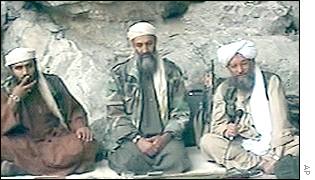
A New York jury has convicted Sulaiman Abu Ghaith on terrorism charges. In the weeks following 9/11, he became infamous for his threats against America. During questioning by the FBI in 2013, Abu Ghaith admitted he knew a Guantanamo detainee who is still in custody.
-
Review board rules against Guantanamo detainee
Earlier this month, a review board responsible for evaluating the status of Guantanamo detainees determined that a Yemeni held in Cuba since early 2002 should remain in custody. According to a leaked threat assessment, the detainee was slated to be a hijacker on 9/11 before al Qaeda canceled his part of the operation.

-
AQAP’s emir also serves as al Qaeda’s general manager
Nasir al Wuhayshi, the emir of al Qaeda in the Arabian Peninsula, has been appointed the overall general manager of al Qaeda. Osama bin Laden’s letters contain a description of the general manager’s role.

-
Benghazi suspect fled to Pakistan, recently detained in Libya
A Libyan named Faraj al Chalabi has been detained in connection with the Sept. 11, 2012 attack in Benghazi. It is “unclear” what role he is suspected of playing, but he fled to Pakistan afterwards. Muammar Qaddafi’s regime previously said he worked for al Qaeda.

-
Analysis: Al Qaeda central tightened control over hostage operations
Several months before his death in May 2011, Osama bin Laden ordered al Qaeda in the Islamic Maghreb to stand down with respect to hostage negotiations. The terror master said he would negotiate with France concerning AQIM’s hostages. Mokhtar Belmokhtar’s spokesman recently confirmed that he still answers to al Qaeda central.
-
Osama bin Laden’s documents cited by Canadian intelligence
A recently declassified threat assessment authored by Canadian intelligence in April 2012 concludes that the al Qaeda network still leads the global jihad movement and remains the “primary threat.”
-
Key Mumbai plotter arrested in Saudi Arabia
Saudi authorities arrested Sayed Zabiuddin Ansari, a key operative in the 2008 Mumbai attacks, earlier this month. Ansari has reportedly implicated Pakistani officials in the attacks.

-
Pakistan detains al Qaeda operative tied to multiple plots
An al Qaeda operative named Naamen Meziche has been reportedly detained in Pakistan. Meziche had extensive ties to the 9/11 plotters and was part of a 2010 plot to launch Mumbai-style attacks in Europe. That plot also had significant links to al Qaeda’s Iran-based network.
-
Osama bin Laden on the Muslim Brotherhood
Just one week before his demise, Osama bin Laden wrote that al Qaeda members should avoid confrontation with the Muslim Brotherhood, which he said offers only “half solutions” but is migrating towards the “true Islam.”
-
Analysis: Spinning Iran and al Qaeda, part 2
The Combating Terrorism Center’s report on the bin Laden files gets a basic fact about the history of the relationship between Iran and al Qaeda wrong.
-
Bin Laden docs: Al Qaeda asserts authority in letter to Pakistani Taliban leader
The letter shows a confident al Qaeda leadership working to maintain order and consistent behavior within the ranks of its affiliates in Pakistan.