-
Iraq’s Western Borders, North to South
A quick look at Iraq’s long border with Syria and Jordan

-
Tips, Infighting, and Strong Horses
The Iraqi people step up to the plate, and more Red-on-Red fighting Further details emerge about the developing rifts between the native elements of the Iraqi insurgency and al Qaeda and their Islamist allies. Army Major General Rick Lynch, the spokesman for Multinational Force Iraq, acknowledged the infighting has occurred in Anbar province; “Many times these citizens are urged by their local tribal leaders to rid the area of the insurgent influence… In Fallujah and Ramadi, citizens have established checkpoints to keep insurgents out and six al Qaeda leaders have been killed in the area since September.” According to Maj.…

-
The Search for Zarqawi
Al Bawaba reports “US, Iraqi forces closing on al Zarqawi” in northern Iraq

-
al Qaeda Jailbreak in Yemen
23 terrorists escape from custody, including the leader of the attack on the USS Cole and 12 others

-
More Border Wars
Unrest Continues in Afghanistan and Pakistan; Taliban claims to have set up the “Islamic Republic of Waziristan”
-
An Anbar Update
The status of the insurgency in the province formerly known as the “Wild West” Iraq’s Anbar province has been, along with Baghdad, one of the most violent in Iraq. Over one-quarter of Coalition deaths originated in the cities and towns along the Euphrates River, from Fallujah in the east to Husaybah on the Syrian border. The yearlong campaign to establish a permanent U.S. and Iraqi security presence in the province, which began in Fallujah during Operation Dawn and culminated in Operations Rivergate in the Triad and Steel Curtain in the Qaim region, has made a dramatic impact on the region.…
-
Afghanistan Battles Continue
More fighting in Helmand; drug trade plays a role The battles between the Taliban and Afghan Army and police units, backed by U.S. forces, enters the third day in the troubled southeastern provinces of Helmand and Kandahar. Six Afghan policemen are killed in a roadside bombing near Kandahar as U.S. air forces conduct strikes in the Ghoraz region, where “close-air support was called to the scene of the attack. British Harriers, Air Force A-10 Thunderbolt II and B-52 Stratofortress aircraft responded to the scene, attacking enemy positions and forcing them to flee into a nearby town.”

-
Battles in Helmand, Afghanistan
Afghan Army and police units, along with the U.S. military are engaged in combat with Taliban forces in Afghanistan’s southern province of Helmand. The Associated Press states the fighting began after Afghan “police were deployed to the Haji Fateh area to hunt for Taliban rebels” and the Taliban attacked the police forces. Afghan police and Army units poured into the region to engage what is believed to be a force of about 200 Taliban fighters, and U.S. air support, including A-10 Warthog ground-attack aircraft have been pounding the Taliban positions. Reuters initial report stated there have been four engagements in…

-
Foreign Fighters Found in Ramadi
The city of Ramadi has seen some progress of late in the fight against the insurgency. While Ramadi, the provincial capital and largest city in Anbar, is perhaps one of the most dangerous cities in Iraq, the government has been working to gain local support and cleave off the domestic nationalist elements of the insurgency from the more violent Islamist and foreign elements. One result has been the declaration of war against al Qaeda by the Islamic Army in Iraq and other insurgent groups. The Iraqi Army has taken on greater responsibilities in the province, with Operation Final Strike being…
-
Adventures in Afghanistan
The resurgence of the Taliban has been predicted each year since the fall of the Taliban in the winter of 2002. The fact that over 1,600 Afghanis were killed during combat is often touted as evidence for the Taliban’s resurgence, however obscured in this number is the fact that the vast majority of those killed were Taliban fighters. Over the spring and summer, of 2005, the Taliban attempted to engage Coalition forces in mass formations, and were repeatedly destroyed en masse. The Taliban’s only success worth mentioning was the downing of a U.S. Special Operations helicopter in the mountains of…

-
Joining al Qaeda, Declining al Qaeda
The fracturing of Iraq’s insurgency has gained the attention of the media of late, and this is becoming a source of concern in some jihadi circles. ABC News provides an analysis that mirrors one written by ThreatsWatch over a week ago. ABC News quotes Fawaz Gerges, a consultant; “the Sunnis are chasing the al Zarqawi men from all over the al Anbar Province. The implications are tremendous for Iraq, the American military presence in Iraq, and the war against al Qaeda. The tide has seemed to turn against the al Zarqawi network in Iraq.” Jihad Unspun attempts to counterbalance the…
-
Operations and Negotiations in Iraq
The ‘maintenance’ phase of the Anbar Campaign proceeds as Iraqi Army units continue to take greater responsibility for security operations in Anbar province. Iraqi units are increasingly conducting independent operations in the region after joint Coalition and Iraqi operations over the fall placed a permanent presence in the towns and cities along the Western Euphrates River Valley. Operation Moonlight on the Syrian border was one such example. Operation Final Strike is the latest. Final Strike is an independent counterinsurgency operation conducted by two battalions (about 1,000 troops) of the 3rd Brigade, 1st Iraqi Army Division in the eastern Jazerra desert…
-
False Foreign Fighter Report
Great strides have been made to turn the native elements of the Iraqi insurgency against the al Qaeda wing of the insurgency. Insurgent groups in Anbar province and the city of Samarra have declared war against al Qaeda. But news the Karabilah tribe is summarly rounding up al Qaeda without a fight should be viewed with skepticism. Omar at Iraq The Model translates and reprints a spectacular claim by Arabic newspaper Dar al-Hayat which purports a massive operation to purge the al-Qaim region by local tribal groups is currently underway. According to Sheikh Usama Jad’aan, the leader of Karabila tribes…
-
The Iraqi Insurgent Divide Widens
The residents of troubled Sunni city of Samarra, where the insurgency has maintained an active presence, have voiced its dismay ay al Qaeda’s brutal tactics. One week ago, a local resident tipped off Coalition forces on the whereabouts of an insurgent bomb-making cell. A joint Iraqi-Coalition raid netted seven suspects, including two of the city’s most wanted terrorists. Two days ago, a demonstration against al Qaeda, organized by the Iraqi Islamic Party and the Muslim Scholars’ Association, turned out over 1,000 protestors. Kamal Ahmed, a protest organizer, spoke out against al Qaeda; “They have to stop killing innocent people like…
-
The Pakistani Frontier
The airstrike on al Qaeda leadership in the town of Damadola has done more than just kill up to five senior al Qaeda commanders, including Abu Khabab, the chief of al Qaeda’s WMD program; it has shone a light on the largely hidden war occurring on the Afghan-Pakistani border, the pervasiveness of al Qaeda and the Taliban in the tribal belts, and Pakistan’s struggles in fighting al Qaeda in the region. The Jamestown Foundation’s Akram Gizabi highlights the difficult situation Pakistan faces as the Taliban has deep ties in the tribal regions and local customs that work in al Qaeda’s…

-
Iraqis vs. al Qaeda, Continued
Al-Qaeda’s situation in Anbar province and the embattled city of Ramadi has slowly worsened since the deadly suicide strikes against police recruits. The attack did not deter Sunnis in Ramadi from volunteering for the police, and provoked a backlash against al Qaeda’s gruesome tactics. Sunnis in Anbar, including in the cities of Samarra and Ramadi, have vowed to fight al Qaeda, and six insurgent groups, including the Islamic Army of Iraq, declared war on the foreign terrorists. The latest news from Ramadi indicates a “3,000-strong militia has been created in the insurgent stronghold of Ramadi, central Iraq, to protect civilians…
-
Bangladeshi Terrorist Commander Believed Captured in India
The nature of al Qaeda and its International Islamic Front is a fount of confusion for most observers of the War on Terror. Often, al Qaeda is seen as a small group of Arab terrorists confined to the Middle East, with the main base of operations in Afghanistan prior to the country’s invasion in the fall of 2001. But the fact is al Qaeda is a global organization with extensive ties to regional Islamist groups in Europe, Africa, the Middle East, and Asia. It is believed al Qaeda has networks established in well over sixty nations. But their ties to…

-
Faultlines in Iraq’s Islamist Insurgency
The location of Abu Musab al-Zarqawi, al Qaeda in Iraq’s commander, and the state of the Islamist insurgency have been recent topics of conversation. Late last year, ThreatsWatch stated the focal point of the insurgency has shifted from Anbar province to the regions north of Baghdad. Today, Coalition forces believe Zarqawi is currently operating “in Diyala province near Baghdad…If his presence in Diyala is confirmed, it will reinforce the belief that violence follows him around Iraq.” The Sunday Times: reports that, according to “a leading insurgent who met [Zarqawi] two weeks ago”, Zarqawi “goes to sleep every night wearing a…
-
Developments in Damadola
pakistan afghanistan al-qaeda operations terrorism
-
Election Results; Iraqis Fight al Qaeda
The much anticipated results from the December 15th election are now available. Iraq the Model provides a full breakdown of the apportionment of seats in the new Iraqi parliament. The Shiite-dominated UIA has fallen ten votes short needed to independently form a government. They will now be required to reach out to an outside party to create a coalition government. The Kurdish Alliance netted 55 votes, the Sunni led Accord Front 44, Allawi’s Iraqi List 25 and al-Mutlaq’s Dialogue Front 11. Coalition forces anticipated attacks would coincide with the release of the election results, in an attempt to hijack the…
-
Two more al Qaeda Commanders believed killed in Damadola
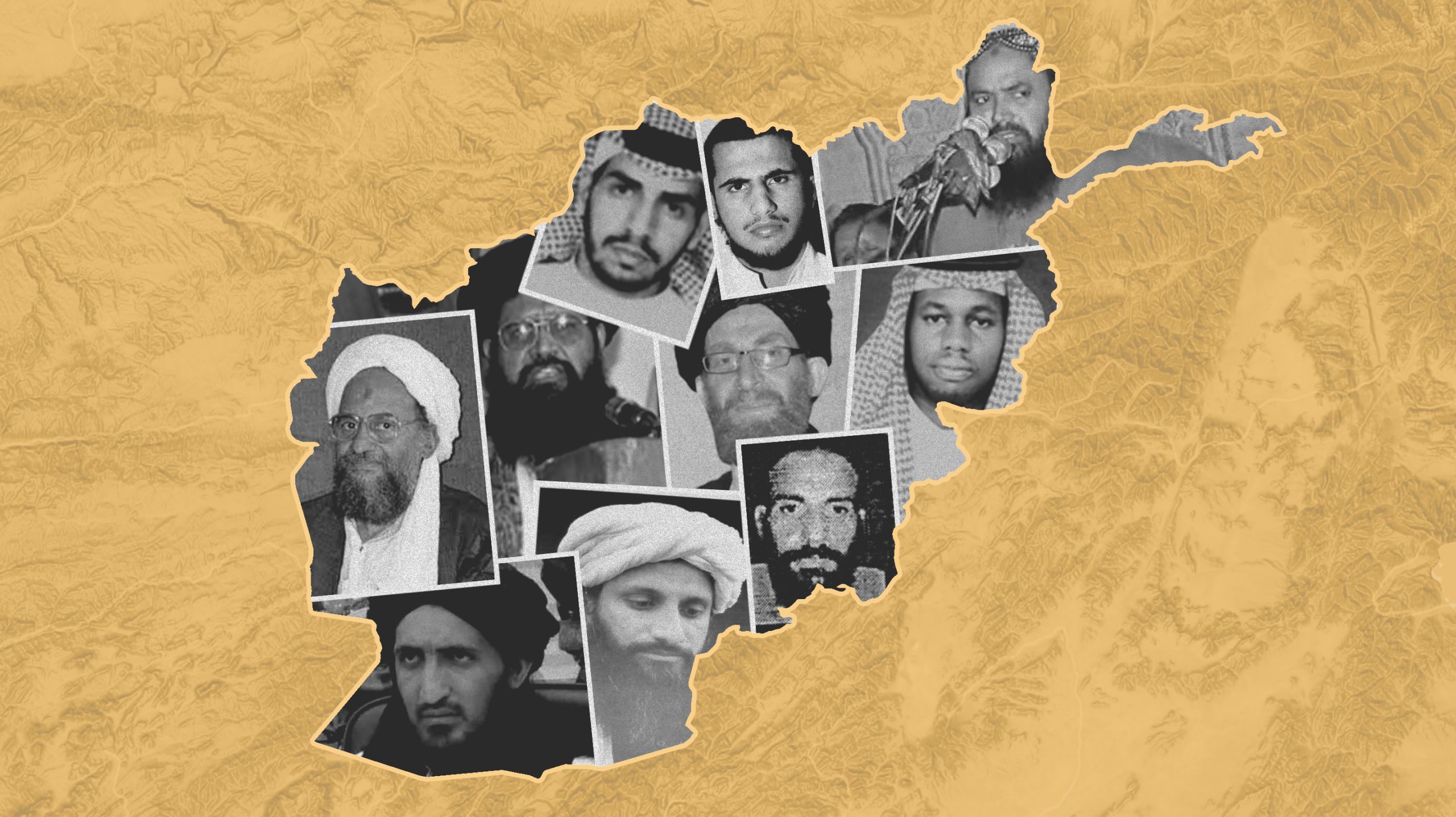
Al Qaeda’s losses in Damadola may be even worse than thought last evening. Since the death of Abu Khabab al-Masri, Khalid Habib and Abd Rahman al-Maghribi were reported, two more al Qaeda commanders are believed to have been killed. Dan Darling provides a breakdown of the al Qaeda leaders thought to have been killed in the nightime airstrike: Abu Khabab al-Masri (WMD committee head) Abd Rahman al-Masri al-Maghribi (al-Zawahiri’s son-in-law, al Qaeda commander) Abu Ubeidah al-Masri (Kunar operations chief) Marwan al-Suri (Waziristan operations chief) Khalid Habib (southeastern Afghanistan commander) Abdul Hadi al-Iraqi (southwestern Afghanistan commander) Mr. Darling includes Abdul Hadi…
-
al Qaeda, Taliban Suicide Attacks Unpopular in Afghanistan
The Taliban and al Qaeda have renewed their suicide campaign in Afghanistan. The recent strike on al Qaeda leadership in Damadola is believed to have been the scene of a planning session to increase attacks in Afghanistan. The meeting was attended by senior Taliban and al Qaeda commanders, and al Qaeda lost three very senior operatives: the head of the WMD program and chief bomb maker, one of two al Qaeda commanders in Afghanistan, and the commander of al Qaeda in Pakistan. There have been three suicide attacks in the last week alone, two in Kandahar and one in Spin…
-
al Qaeda Commanders al-Magrabi and Habib killed in Damadola
The final results of from the airstrike in the Pakistani border town of Damadola are now known. In addition to Abu Khabab al-Masri, who was al Qaeda’s chief bomb maker, head of the WMD program, and former terror camp commander, two other al Qaeda commanders were killed in the strike. ABC News confirms that Khalid Habib [or Khaled al-Harbi] and Abdul Rehman al Magrabi perished in the attack. Khaled al-Harbi is al Qaeda’s operational commander in Pakistan and Afghanistan. Al-Harbi splits duty in Afghanistan with Abd al Hadi Al Iraqi, and both are considered “two of [al Qaeda’s] most able…
-
Abu Khabab al-Masri Killed in Pakistan Strike
The strike on the compound in Damadola, Pakistan, where Ayman al-Zawahiri. al Qaeda’s number two in Command, was believed to be attending a dinner to celebrate a Mulslim holiday, has netted at least one high-level al Qaeda operative. Pakistani intelligence has confirmed that Abu Khabab al-Masri, al Qaeda’s chief bomb maker and chemical weapons expert. Counterterrism expert Dan Darling reported that Masri ran al Qaeda’s Weapons of Mass Destruction Program, known as “Project al-Zabadi” and was likely involved in the foiled Amman WMD attack. After the U.S. ejected the Taliban from power in Afghanistan, Masri’s training camps were discovered.Tapes were…

-
Counterinsurgency Operations in Anbar
Since Coalition and Iraqi forces conducted Operations River Gate, Iron Fist and Steel Curtain on the western stretch of the Euphrates River Valley, the insurgency has been largely quiet in the region. The fruits of the year-long Anbar Campaign have allowed the joint Coalition and Iraqi forces to shift from overt offensive search & destroy and clear & hold operations to a more subtle counterinsurgency posture, which includes establishing and nurturing local governments and police forces, rebuilding civilian infrastructure and conducting security operations. This is what Colonel Stephen W. Davis, the Commander of Marine Regimental Combat Team – 2, refers…
-
Hunting Zawahiri and al Qaeda on the Border
Four days after the strike in the Pakistani border village of Damadola in the province of Bajaur, the status of Ayman al-Zawahiri, al Qaeda’s second in command, remains unknown. Zawahiri was purportedly invited to a dinner celebration for the Muslim holiday of Eid, but it is likely he sent senior aides to attend the dinner. A statement issued by the administration of Pakistan’s semi autonomous tribal regions indicates four or five of those killed in the strike were indeed “foreign terrorists” and that “between 10 and 12 foreign extremists had been invited to the dinner.” This refutes claims all of…

-
Security Incidents in Iraq
al Qaeda in Iraq has issued a statement claiming to “have set up an umbrella body to coordinate their fight against U.S.-led forces and the Iraqi government.” Notably excluded from this body of insurgent groups are Ansar al-Sunnah and the Iraq Islamic Army. A look at the reported security incidents in Iraq from the past week may give some insight as to why al Qaeda sees the need for further consolidation and coordination of the jihadi groups in Iraq. Reuters compiles the list of major security incidents in Iraq on a near-daily basis. The following list contains the incidents reported…
-
Zawahiri, and al Qaeda’s Future Plans
The fate of Ayman al-Zawahiri is still unknown after an airstrike in the Pakistani town of Damadola, near the Afghan border in the province of Bajaur. An Al-Arabiya source close to al Qaeda states Zawahiri is still alive, and Pakistani intelligence sources claim he escaped the attack. American intelligence officials are still eager to see the results of the DNA tests, and are unusually optimistic on the possibility Zawahiri was indeed killed in the strike. The fact that a team was able to gather remains indicates a certain level of sophistication and coordination in the strike, as Bajaur is a…
-
al Qaeda Attacked: Zawahiri Dead?
Unconfirmed reports from Pakistani and U.S. intelligence sources indicate a CIA airstrike was carried out against a compound in Pakistan which contained Ayman al-Zawahiri, al Qaeda’s number two in command, and four other unnamed senior al Qaeda leaders. Eighteen people are believed to have been killed in the strike. According to Reuters, “A Pakistani intelligence official said four U.S. aircraft had intruded into Pakistani airspace and fired four missiles.” The Counterterrorism Blog quotes a source which indicate ten missiles were fired. The aircraft are believed to have been predator drones, presumably armed with Hellfire missiles. The strike is said to…
-
The Iraqi Police and Continuing Operations
In the immediate wake of the double suicide attack on the police recruiting station in Ramadi, which claimed over eighty lives and injured over seventy, the Sunni police candidates lined back up to volunteer while the carnage was still fresh. The police continue to be a main target of al Qaeda’s intimidation campaign, as a concerted effort is being made to stand up the national and local police forces in 2006, just as training the Iraq Army was the main effort in 2005. On Thursday, one week after the horrific attack in Ramadi, another police recruitment drive was conducted. Captain…