 |
|
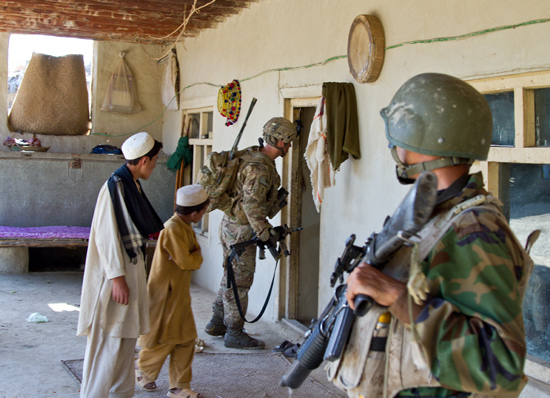
A US soldier searches a compound in the village of Majiles in Sabari district, Afghanistan. Photo by Bill Ardolino for The Long War Journal. |
I offer a lengthy analysis of the state of International Security Assistance Force (ISAF) strategy in eastern Afghanistan at Small Wars Journal, extrapolated from my August interviews and patrols conducted in Bagram, Khost City, and Sabari district. Highlights:
Despite the unique challenges of Afghanistan, American forces have proved that they can conduct successful counterinsurgency that shows tangible and potentially sustainable progress in the key southern provinces of Kandahar and Helmand with proper resources and strategy. But the US government’s recent commencement of a premature drawdown and its concurrent failure to supply necessary resources in the Afghan east, along with a high-level diplomatic failure to adequately address Pakistan’s support of the Afghan insurgency, has created fissures in strategy that may result in its failure.
Put more simply: effective counterinsurgency doctrine is more than the sum of its parts. And while current strategy that merges elements of COIN, including punishing offensive operations, with accelerated development of indigenous security forces may be making the absolute best of current resources, it remains inadequate to the task. US strategy in Afghanistan remains conflicted and lacks a clear path to success.
The Obama Administration’s announcement of a surge and COIN strategy in 2009, followed by commencement of withdrawal less than two years later, is an irresponsible policy. Tangible (and hard fought) gains in southern Afghanistan are now imperiled by a lack of resources in Regional Command East, and any reasonable analysis of Afghanistan – based on terrain and tribal heterogeneity alone – clearly forecasted that COIN would take longer than the unusually rapid example set by Iraq in 2006-2008.