|
|
|
Aftermath of the bombings in New Delhi. Click to view more images at The Times of India. |
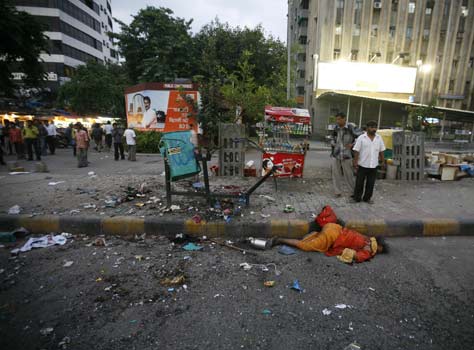
A Pakistani-linked terror group took credit for a series of bombings in India’s capital on Saturday. Five bombs were detonated within 45 minutes in three markets in New Delhi, causing multiple casualties. Eighteen civilians were killed and more than 90 were reported wounded in the coordinated attack.
The attack matches the profile of recent attacks in Ahmedabad, Bangalore, Jaipur, and Uttar Pradesh over the past year. The bombings are designed to maximize casualties, demonstrate the capacity to conduct multiple attacks at the same time, and maximize media coverage.
A group called the Indian Mujahideen sent e-mails to Indian media outlets just minutes before the attack, warning of the strike. “[The] Indian Mujahideen strikes back once more,” the e-mail from the terrorist named “Arbi Hindi” read, according to DNA India. “Within 5 minutes from now … This time with the Message of Death, dreadfully terrorizing you for your sins. And thus our promise will be fulfilled. Inshallah.”
The terror group taunted the Indian security forces to stop them. “Do whatever you want and stop us if you can,” the e-mail stated.
The Indian Mujahideen and recent attacks
The Indian Mujahideen has been behind multiple attacks in India this past year. The group claimed credit for the July 25 and 26 bombings in Ahmedabad and Bangalore. At least 36 Indians were killed and more than 120 were wounded in attacks.
The terror group also took credit for the May bombings in Jaipur and said the attacks were intended to disrupt the tourist economy. The group sent videos to the media using an e-mail address that is nearly identical to the one used to announce the attacks in Uttar Pradesh in November 2007. The Jaipur blasts killed more than 60 and wounded more than 200, while the Uttar Pradesh attacks killed 14 and wounded more than 50.
India’s Intelligence Bureau denies that the Indian Mujahideen exists. Instead, the Bureau claims the terror group is a creation of the Bangladesh-based Harkat ul Jihad al Islami, or HuJI-B and the Lashkar-e-Taiba, and operates with the support of the Students Islamic Movement of India. The group receives support from Pakistan’s Inter-Service Intelligence and is an al Qaeda affiliate.
The Bangladeshi branch of HuJI was established in 1992 “with assistance from Osama bin Laden’s International Islamic Front,” according to the South Asia Terrorism Portal.
HuJI-B fighters are recruited from madrassa, or religious schools, in Bangladesh and are trained in al Qaeda and Taliban camps Pakistan and Afghanistan. The Bangladeshi terror group plays a crucial role in training jihadists “from southern Thailand, Cambodia, Indonesia and Brunei” and providing manpower for al Qaeda’s affiliates in Jammu and Kashmir, Afghanistan, Indonesia, the Philippines, and Chechnya.
HuJI-B created the Indian Mujahideen to confuse investigators and cover the tracks of the Students Islamic Movement of India, or SIMI, Indian intelligence claims. SIMI provides logistical support for the attacks.
SIMI has been implicated in two other major attacks in India since 2006. SIMI is said to have helped the Pakistani-based Lashkar-e-Taiba conduct the attack on the Samjhauta Express rail line to Pakistan in February 2007 and the Mumbai rail line bombings in July 2006. The attack on the Samjhauta Express resulted in more than 67 Indians killed and 15 wounded. The Mumbai rail bombings resulted in 63 civilians killed and more than 460 wounded.
Indian security forces have cracked down on SIMI over the past year, but police and intelligence officials believe the recent attack show the movement has regenerated its leadership.