
|
|
|
Map of the northern regions of the NWFP, including Swat. |
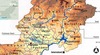
Just one day after over 500 Taliban marched from the district of Swat in the Northwest Frontier Province into the neighboring district of Shangla and overran the district offices, the Pakistani Army and the Taliban fought a series of clashes in both districts. Reports on the outcome of the fighting are still sketchy, and the Pakistani Army and the Taliban claim each bloodied the other side.
The Pakistani military claimed to have killed 54 Taliban during three separate engagements, which largely consisted of helicopter gunship attacks and artillery barrages on Taliban positions. “According to reports, 31 militants were killed in Swat army operation while 23 were killed in Shangla,” The Nation reported, based on statements from military spokesman Major General Waheed Arshad. A prominent Taliban commander, who has not been named, was also reported killed in the fighting. Eleven civilians were also reported killed in the fighting.
The Taliban have not refuted the casualties, but said they inflicted heavy casualties on Pakistani forces in both Shangla and Swat. Sirajuddin, a spokesman for Taliban leader Maulana Fazlullah, “claimed that they had murdered at least 31 security forces personnel including four in Saidu Sharif and two in Batkhela and 23 in other parts of Shangla and Swat.” In the past, the Taliban reports of casualties and captured soldiers have proven to be accurate while the Pakistani military has repeatedly obscured the numbers.
The current round of fighting in Swat and Shangla was initiated by the Pakistani military, which “had been assigned to flush out fighters from Swat by the middle of December,” Al Jazeera reported, based on an anonymous police source.
The army recently assumed control of the offensive in the region, after hundreds of police and paramilitary soldiers defected or surrendered to the Taliban. A Pakistani offensive in Swat initiated on October 26 stalled after the Taliban killed or captured hundreds of police and paramilitary troops.
The Pakistani military has largely relied on air strikes and artillery bombardments to attack the Taliban in Swat and other tribal agencies and settled districts in the Northwest Frontier Province. To date, the military has failed to clear the Taliban from regions such as North and South Waziristan, Bajaur, and Swat and to hold that territory.
One unconfirmed report indicates the Taliban may actually be on the offensive. “According to another report, the militants, after having taken control of Alpuri, are moving towards other parts of Shangla and adjacent Kohistan and Battagram areas. So far they reached at Belay Baba and Korara areas,” The Nation reported.
Fazlullah’s Taliban in Swat is said to be supported by “up to 800 foreigners.” Fazlullah is one of the more radical and eccentric Taliban leaders in the Northwest Frontier Province. Known as Mullah FM, he preaches jihad and calls for the imposition of sharia law on his illegally run radio station. He campaigns against girls’ schools and polio vaccinations. Fazlullah also conducts campaigns where he organizes the burning of television sets, digital and video cameras, computers, and other electronics as they are a “source of sin.”
The 28-year-old radical cleric is leader of the local al Qaeda-linked and outlawed Tehrik-e-Nifaz-e-Shariat-e-Mohammadi (TNSM – the Movement for the Implementation of Mohammad’s Sharia Law), also referred to as “the Pakistani Taliban.” The TNSM sent over 10,000 of its fighters into Afghanistan to fight US forces in 2001 before the fall of the Taliban.
In neighboring Bajaur agency, the TNSM is run by Faqir Mohammed, who has close connections to al Qaeda’s Ayman al Zawahiri. Bajaur is an al Qaeda command and control node. The Pakistani government negotiated with Faqir and the TNSM in the spring of 2007, and the cut a “peace deal” that turned the province over to the terrorists. Multiple strikes against high-value al Qaeda targets have been conducted against Faqir’s compounds in Bajaur.


10 Comments
The early morning Australian papers have a little more information.
———————————
Witnesses said that in Shangla district, militants had disappeared off the streets and moved out, but residents said there was still fighting there overnight.
“Militants have fled from streets to forests and their mountain hideouts after the military offensive,” a security official said.
Residents said around 700 to 800 troops had also taken up positions in the Belay Baba area, which had been a militant stronghold a day earlier.
Troops used artillery and mortars to push insurgents from another area on one of the main roads leading toward China, a security official said, and also captured a strategic mountain position.
The Australian: Pakistani troops strike back at militants
I haven’t heard the term “Civil War” applied to Pakistan yet in the MSM. But I think it qualifies at this point.
America needs to be massing on the Waziristan border…we should be placing a fleet of helicopter pilots on the ready to attack the Taliban and Al Qaeda elements full force in order to back Musharraf and give meaning and power to his State of Emergency. To not do this at such a sensitive moment is a matter of Insanity or delusional addiction to Democracy, a delusion which allowed the Khomein regime to come to power…unless we seek to artificially depose the leadership by not attacking until after a Totalitarian Pashtun upstart conquering regime has breached a peace treaty with our Ally to the point of Pakistani military mutiny. Even if that be the case, when this Pashtun Peace is officially good and broken, the US must attack in force and char that Province or it is in gross derilection of its duty to protect the United States against all enemies foreign and domestic. Only a complete Annihilation of the Taliban will secure Peace…and devastate Al Qaeda at its fountainhead of rejuvination and reunification. One thing that is certain – if history is to be learned from – is that to leave even 40 souls, men women or even children alive in the effort guarantees a resurgence within five to 20 years. We must annihilate the Taliban/Al Qaeda Mujahideen without Mercy and domesticate the Pashtun with a new vision of prosperity. This militant force in the wilds of a mountain range, ready to swoop in at any moment is the source of the Islamist party power in bloc force…it must be severed before it can fully realize its potential.
Gary,
While I totally agree with your statement ‘We must annihilate the Taliban/Al Qaeda Mujahideen without Mercy and domesticate the Pashtun with a new vision of prosperity.’
I would add Pakistan & Pakistani Army (PA) to that list because if you don’t then you will find PA becoming the new nucleus for the Taliban just as it was in the past.
The simplest way to implode PA and by extension Pakistan right now is for the Whitehouse/DoD/DoS to issue a joint statement and say that the Government of Pakistan does not have any WMD’s and that they are all locked up in the lower 48 states.
On one point I am very clear that you will have to implode Pakistan is you want to prevent the Taliban from getting hold of a WMD.
The big mistake strategic mistake AQ made was that they should have waited another ten years and they would have got a functioning WMD and a delivery system from Pakistan. 911 happened a decade too early.
Raj
—“The big strategic mistake was that they should have waited another ten years and they would have got a functioning WMD and a delivery system from Pakistan.”—
Raj, this is always the strategy of the jihadist, and it works very well in some cases(such as the original conquests in the ME, No. Africa and Spain). The very fact that it has worked so well has encouraged them to play their hand prematurely, giving the rest of the World a chance to react before it is too late.
Now, whether the rest of the World will act, given the warning that has been received, is still up in the air in my opinion, as many players have withdrawn from a confrontation with AQ(I’m thinking of Spain here, who of all countries should know better, given her history), and seem satisfied to let AQ seek its dream of a Caliphate. I don’t know why there is not a broad coalition of players who seek to save what is civilized and decent, including Russia, W. Europe, and most Islamic countries, since they have the most to lose if AQ were to be successful.
There are over 15 million Pakistani Shia who want to fight the Taliban/AQ/Pakistani Resistance. They are reaching out to us, NATO, and the whole world. We have been ignoring them, and not standing up in solidarity with them, while for two decades AQ has continued to massacre them. This has to stop.
More info on AQ’s attacks against Pakistani Shia from the former head of India’s CIA:
http://iraqimojo.blogspot.com/2007/11/aq-terrorizing-shia-and-christians-in.html
http://saag.org/papers25/paper2451.html
Templar,
I think the ‘western’ world (I include India which has a version of what I call enlightened democracy) has got too used to being rich and has forgotten the lessons learned by the founders and that the price of liberty has to be paid in blood.
For me personally I love the concept of enlightened democracy and all that this entails too much to want to give it. I want to be left in peace to enjoy my warm beer in a pub and the green beards would seriously crimp my style.
There was a time when I did wear the uniform for my Queen and country but now that I am a father its much harder to think about sending ones own flesh and blood to do battle in a far away place but it might come to that.
Bill has made mention in the past about the reliability of the reporting of Pakistani Taliban casualties vs. the reliability of the reporting of Pakistani Government forces casualties. I thought this factoid was interesting and might be relevant to that discussion.
——————————-
It added that militants “disguised some of their dead bodies in the uniform of the Frontier Constabulary” to make it appear as if they were soldiers.
AFP: Pakistan gunships raid militant bunkers: army
Marlin,
OK, so that begs a question: where did the FC uniforms come from?
I no longer trust statements made by the ISPR. When the 300 soldiers were captured in North Waziristan, the ISPR claimed they were lost for days. The Taliban said from the get-go their were 300 captured troops. The government has lied about the number of casualties repeatedly. It has misrepresented the nature of the “peace accords.” I loath to put the word of the Taliban ahead of the word of the Pakistani military, but there we are.
Raj,
Yes, India is in the sphere of nations I call civilized and decent, and I fully intended to list India as one of the nations with a real interest in the Taliban, both because of the proximity of the Taliban, and the historical numbers of what are today Indians who were killed in the Muslim conquests beginning in the 10th C.
I like my comfort as well, Raj, and while you may contemplate sending your children to fight, I face that very prospect, as my youngest son is now in the US Army, and I expect him to be deployed to Iraq or Afghansitan very soon. He is in a combat unit.
But how can I say my son is better than others who have sent their sons off to fight “the green beards”? I’m proud of him, and yet, fearful for him, as well. You have children, so you know how I feel. In any event, I did not mean to burden others with my problems. Best Regards.