
|
|
|
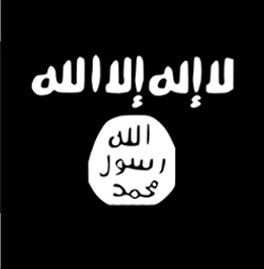
Banner of the Islamic State of Iraq. Click to view. |

The Anbar Salvation Council fights al Qaeda in Baghdad – the second confirmed expeditionary engagement, as reconciliation is on the table
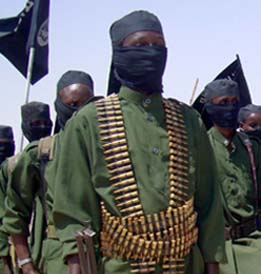
The news of battles between al Qaeda in Iraq on one side, and the residents of the Baghdad district of Amariyah, the Islamic Army of Iraq and the 1920 Revolution Brigades on the other dominated the headlines late yesterday and this morning. The Washington Post reported the battles began Wednesday “over accusations that al Qaeda in Iraq had executed Sunnis without reason,” and portrayed the fighting as between the residents of Amariyah only and al Qaeda. The Associated Press stated the Islamic Army of Iraq and the 1920 Revolution Brigades battled al Qaeda. Most importantly, AFP reported that the Anbar Salvation Council sent in a unit to fight al Qaeda.
“We dispatched around 50 of our secret police from Anbar to Amiriyah, and started to hit Al Qaeda there. We killed a lot of them,” Sheikh Hamid al-Hais, the head of the Anbar Salvation Council, told AFP in a phone interview. “A similar operation will be launched in Al-Ghazaliyah against Al Qaeda today. We have sufficient information on places they are in, and we will punish them.”
The Anbar Salvation Council has formed a “clandestine SWAT unit” which is capable of operating outside of the western province, an American military intelligence official close to the operations of the group told us. These are the “secret police” described by of Sheikh al-Hais.
This is not the first expeditionary engagement by the Anbar Salvation Council. In the beginning of May, this “clandestine SWAT unit” engaged al Qaeda in the town of al-Nibayi, near Taji in Salahadin province. The Anbar Salvation Council had thought they killed Abu Ayyub al-Masri, but actually killed Muharib Abdul Latif, al Qaeda’s information minister, as well as Sabah Hilal al-Shihawi, Latif’s religious advisor and Abu Ammar al-Masri, an operative that was “facilitating insurgent activity and infrastructure support for al Qaeda in Iraq.”
Back in Amariyah, Mohammed Abdul Khaliq, the neighborhood mayor, claimed al Qaeda is on the decline due to its abuse of power, but warned U.S. forces to stay out of the fighting. “I think this is going to be the end of the al Qaeda presence here,” Mr. Khaliq told the Washington Post in a telephone interview. “But if the Americans interfere, it will blow up, because they are the enemy of us both, and we will unite against them and stop fighting each other.”
There have been conflicting reports on U.S. involvement in the fighting. “Lt. Col. Dale C. Kuehl, commander of the 1st Battalion, 5th Cavalry Regiment, who is responsible for the Amariyah area of the capital, confirmed the U.S. military’s role in the fighting in the Sunni district,” the Associated Press reported. The American intelligence official informed us U.S. forces are hesitant to engage in fighting as the forces are “unable to distinguish between the Islamic Army in Iraq, the 1920 Revolution Brigades, and al Qaeda” as they are fighting in plain clothes. Six al Qaeda have been reported killed and 45 captured. U.S. and Iraqi Security Forces are said to have moved into the neighborhood and established a curfew.
The fighting between al Qaeda in Iraq and the Islamic Army of Iraq and the 1920 Revolution Brigades is not a new development. In March of this year, the two sides fought pitched battles in the town of Amiriya in Anbar province, as well as in Diyala. Just today, al Qaeda attacked the 1920 Revolution Brigades in Baqubah “Northeast of Baghdad, an al-Qaida-linked suicide bomber blew himself up Friday in a house sheltering members of the rival 1920 Revolution Brigades, killing two of the other militants and wounding four,” the Associated Press reported. “The suicide bombing of Sunni insurgent groups is no small matter,” the American intelligence official told us in a phone interview. “Al Qaeda is alienating these groups while diverting needed resources from attack U.S. and Iraqi government targets.”
In March, we noted that “elements of the Islamic Army in Iraq, Jaish Al-Mujahideen, the 1920 Revolution Brigades and other elements of the Sunni insurgency are battling al Qaeda in Anbar, and are fighting alongside government forces. al Qaeda is countering by assassinating as many of the leaders of the Sunni opposition as possible.” This fighting has spread outside of Anbar, into Diyala, Salahadin and Baghdad as the Awakening movement spreads to the provinces. Today, the 1920 Revolution Brigades has been “by and large co-opted,” according to the American intelligence official, while the Islamic Army in Iraq is fragmented between pro and anti-al Qaeda factions.
The fighting in Amariyah comes just as Lieutenant General Ray Odierno, the Commander of Multinational Corps-Iraq discussed the prospects of reconciliation with insurgent groups, with the exclusion of al Qaeda. “I believe there are elements [of the insurgency] that are irreconcilable, but I believe the large majority are [reconcilable],” said LTG Odierno in yesterday’s press briefing. “The figures I use, I believe, about 80 percent are reconcilable, both Jaish al-Mahdi as well as Sunni insurgents. I believe little, very few of al Qaeda are reconcilable, but there might be a small portion.”
To conduct reconciliation talks, the insurgents need a political component to work through the negotiation. This is where the Anbar Salvation Council, and its political dimension, the Anbar Awakening, came into play in the province. “The Awakening is the face of reconciliation for all practical purposes in Anbar,” the American intelligence official familiar with the group informed us.
LTG Odierno confirmed this in yesterday’s press briefing. “[The Iraqi government has] reached out to the tribes in Al Anbar, and they are working with them in order to continue their movement towards the political process,” said LTG Odierno “And that’s what this reconciliation is about. It’s about bringing these groups into the political process so we can deal with their differences in a peaceful way instead of in violent ways.” And, as we have noted repeatedly, the Awakening movement is spreading throughout Iraq.

24 Comments
Bill/DJ
Very interesting.
Do you get the sense that the Iraqis are just getting tired of the violence, are sick of Al Queda and want something different, or are they playing for time?
I’d add to that….while it seems that the Sunnis might be fed up…how about those suffering from the Mahdi and Sadr violence. It would be nice to hear that this country might want to take up arms against the guys who are killing women and children.
Civil War????
I guess that’s what you call it when Sunni tribes band together and fight terrorists while being supplied by the Shite-majority government…….
Michael
I have never pretended anything, Sheikh Abdul Sattar’s Anbar Salvation Council is quickly building its own military force in Western Iraq much like the Kurds have their own military force in Northern Iraq.
As I have said many times before on this site. I believe that is a very good thing and something we should strongly support.
I see Abdul Sattar as the Sunni Talabani. In fact he is just as secular and pro-American as Talabani. Sheikh Sattar has two flags in his office an American flag and an Iraqi flag. Talabani has a Kurdish flag and an Iraqi flag in his office.
Sheikh Sattar like the Kurds wants a long term presence on his turf, he says the Anbar Salvation Council can provide day to day security not the US. He wants the US there to protect against foreign threats like Iran.
There is no better Sunni ally in Iraq for the US then shiek Sattar and we should support the Anbar Salvation Council’s Army in the same way we have supported the Kurdish armed force the Peshmerga.
Who is Sheikh Sattar al-Rishawi the man who started the Anbar Salvation Council and who the US and the Iraqi government have helped to empower to create Western Iraqi’s own native government backed security force.
—-
The most significant local ally of Coalition and Iraqi government in Anbar province – and surely in all of Iraq – is Sheikh Abdul Sattar al-Rishawi. He is a powerful Sunni from Anbar province, and, on Iraqi national television, he pledged his allegiance to Prime Minister al-Maliki and to the democratically elected Iraqi government.
In an overt and televised gesture of his determination and solidarity with the Iraqi government, Sheikh Abdul Sattar sliced the palm of his hand with a knife and proceeded to pound the blade into the table before him. “Sattar said, “The time for dictatorship is gone, and we are welcoming the new dawn of democracy and freedom here.”
“was Amariyah cleared as part of the Baghdad security plan?”
In progress.
Amariyah is part of Rasheed District which is current target area of western Baghdad.
First IA elements for Rasheed arrived 2 weeks ago.
None present prior to that.
The INP in that area has now been all rotated elsewhere and replaced by other Bdes.
That tends to reveil hidden problems…
3-2 SBCT is also in area now…
Eastern Baghdad is still focused on Sadr City.
BSP is all in-progress. Clearing an LA sized city takes time…
Michael,
Your “death squad” may infact be a government sanction group of turncoats with inside information on al-Qaida (who were once trusted and recognized) and who were thus able to get close to AQ and inflict telling damage.
Bad guys becoming good guys seems to be a crucial component of winning a counter insurgency.
“The country is fragmenting and each neighborhood and tribe are raising armies, while all we look at in the US is the number of al Qaeda dead.”
As I said the goal is for the Anbar Salvation Council to be the Sunni armed group that will protect the Sunni community across Western Iraq like the Peshmerga is the Kurdish armed group for protecting Northern Iraq.
The goal is for the Anbar Salvation Council to destroy or co-opt the other Sunni armed groups.
The Sunnis must have their own armed group as the Kurds have otherwise they will never turn against the insurgency. The Sunnis believe with good reason they need their own armed group and they won’t turn on the al-Qaeda and the other groups without an armed group to replace them.
And, what better group to replace the insurgency then one led by someone secular, anti sectarian, and pro-American.
It is not a “death-squad” I do not speak Arabic but if I remember correctly there is no direct translation of SWAT. As a matter of fact Hillah SWAT was known as the hit or death squad which is closer to there Arabic translation.
Once again I hope someone can clarify this as I am going on 2 year old memories.
Words like death squad, militia, armed group, paramilititary force, ect don’t matter.
What does matter is who is leading the group in question, what they want, and the level of control they exert of their organization.
The Anbar Salvation Council is led by seculars who are pro-America and want a unified Iraq. We can’t ask for anything more then that.
We have less then a year perhaps less then 6 months before the political situation in America forces US drawdown in Iraq. The Anbar Salvation Council is our best hope of not leaving an even worse security vacuume that will help al-Qaeda in the Sunni areas of Iraq.
Irish Guard:
You know, there are people that look at the cup half empty and the cup half full. I suppose in the fine civilized society that we live in, it’s stunning that there are 500+ murders in any given city in any given year. 27 Chicago public school children have been killed since the beginning of this school year. Chicago is a gun free zone. If you are looking for absolutely no violence, you don’t have to go to Iraq, you can look around this country. We have the National Guard in New Orleans, and Philadelphia wants their national guard on the streets. Geeze. Law of Attraction: Negative thoughts bring negative results. I don’t even want to get into Ireland.
“This is not a long term strategy for success, this is shortsighted madness to me.”
In two years if we give the Iraqi Army the necessary weapons and equipment the Badr, Medhi Army, Peshmerga, ASC, or any other group will be left so far behind from a military prospective that these organization will either become local national guards loyal to the government or be destoryed.
That is one model we can use. Another model is a decentralized Iraq with a weak Iraqi Army and strong regional armed groups like we have now.
And, the main reason for the surge is to give the Iraqi Army and local security forces time to get their act together. If we didn’t surge we would still be forced for political reasons to drawdown. But, the drawdown would start at a much lower number like 120,000 or 130,000.
Sorry, previous post should have been directed to Michael’s 5:54 p.m. comment. Sorry Irish Guard…
Michael, one thing to keep in mind.
There are generals and there are generals.
Schwartzkopf was a great general.
And General Petraeus is a cut above the generals who preceded him in this Gulf War II.
That makes more than a bit of difference.
A different aspect of this story is that I read about it in my local, small newspaper this morning. And the spin was anything but “we’re losing.” It was that the Sunni’s asked for help from the US to fight AQ. That’s unheard of. That and the fact that I read about the Anbar Awakening in Newsweek is a real change.
I would love to know the bona fides of the Cassandras who post at this excellent site while our fellow patriots overseas are forced to make daily life-or-death decisions to protect themselves, their brothers-in-arms, and those of us sitting comfortably at home in front of our computers. FYI, successful counter-insurgencies are never short, are always messy and are somewhat rare, but it is doable – the Brits in Malaya and the Boer War, the US against the Moros, and the Greeks against the communists after WWII to name a few. The big difference is that one could argue that the loss of Malaya or South Africa or the Philippines or even Greece likely would not have been the end of the world, so to speak, but a loss to Islamic terrorists in Iraq or Afghanistan or Pakistan likely will be.
Meanwhile:
WASHINGTON (AP) – A violent crime spike in four cities led the Justice Department on Friday to dispatch additional teams of federal agents to combat guns, gangs or surging murder rates in Mesa, Ariz.; Orlando, Fla.; San Bernardino, Calif., and San Juan, Puerto Rico.
So, what do you “experts” think we should do about this situation? Methinks handwringing and appeasement are the order of the day…but I could be wrong. God bless our troops.
The ASC is also significantly different in how cooperative and involved it is with the US.
Furtherstill a deathsquad is a group that seizes a group of innocent people and executes them in cold blood. Please Michael list off even one reported instance of the ASC doing this.
What Bill has reported here is the ASC going after the worst of the worst in Baghdad with US sanction.
I note also that not only does Sheik Sattar have a US flag up in his office as ECH has pointed out but I have read numerous reports of the US having an Abrahms tank parked outside his compound on permanent guard. Now that’s proof of allegiance! You don’t need an Abrahms parked out the front if all you’ve done is had the ocassional cup of tea with the local US commander. To answer the President’s famous question “he’s with us”.
Yes there is a risk here that the ASC could go bad on us but the probabilities are against that by a long margin. It seems to be the US commanders involved with the Councils are being very cautious and very keen to co-opt the tribal recruits into the ISF proper even if they largely follow direction from the Sheiks.
To my mind the ASC and its new franchises springing up elsewhere are a dream come true. This is the “big one” for Iraq IMHO.
The idea that the only way the COTW is to be allowed to achieve victory is for all insurgents to voluntarily hand in their weapons one day is unrealistic and unfair.
For some people, having the Sunnis unite to fight al Qaeda and offer to reconcile with the Shi’ites is “short-term madness.”
Quite a mad sentiment itself, really, but we’re in a bizarre era of inverted reality, in which appeasement is courageous, treason is patriotic, and surrender is victory.
On The Issue Of Militias
FYI: For the first century of its existence the United States of America used militias as it’s primary source of defense with few regular troops. Add to that the previous 200 years of colonial existence in which we relied primarily on local militias along with the occasional British garrisons. In fact we got along so well with the arrangement during the colonial years that we pretty much learned to govern for ourselves. Very few British troops were needed during the colonial period. In fact the primary cause of the American revolution was irritation at the increased garrisoning of British troops following the French and Indian war and increased taxation to support largely unwelcome British troops. Our own national guard system is what remains of our old State Militia system that now has a history of almost 400 years.
By Michaels reckoning we might as well label George Washington a notorious leader of “death squads”
For the information of all hands:
Solo aka SOD will be deleted automaticaly.
Michael, it seems you’d like the mass murdering al Qaeda terrorists, who do nearly all of the suicide bombing and most of the VBIEDs that kill so many innocent people, to be given the presumption of innocence. Perhaps their Miranda Rights are being violated, but as long as they’re being targeted and singled out I thing reasonable people will be all for it and not confused with the rhetoric of “death squads.” For ASC, it’s self-defense. Don’t worry about Iraq. Better men and women are taking care of it.
Elhombrelibre,
“Michael, it seems you’d like the mass murdering al Qaeda terrorists”
IMHO, a death squad is a loosely affiliated and secretive paramilitary force that primarily targets political, as opposed to military opponents.
Example:
Person “A” advocates non-violence, but political change.
Person “B” advocates violence, but doesn’t participate in violence, and also wants political change.
Person “C” uses violence to effect political change.
Typically, a death squad will focus on A and B persons. They are accessible and probably not well protected. The C persons are usually hidden, and harder to reach, except when they come out in an organized mission. It takes a more organized and professional force to counter the C persons.
As far as I can see, the ASC and other affiliated groups are going after the C persons, and thus, I would not characterize them as death squads.
Neo-andertal,
Maybe you didn’t notice, but I did not say Michael like al Qaeda. To get that type of quote you had to cut off a clause and more from my sentence. It’s not about whether Michael likes al Qaeda. I doubt if he does, but for most of my life people have tried to see the good side of the Soviet Union and Communism, North Vietnam, Castro, Noriega, the Sandinistas, the Ayatollah, Yasir Arafat, Mao, Ho, and Hugo Chavez, to name a few. To many phonies have implied there is no difference while millions have died because there is a difference. At the same time they’ve ignored the US and its goodness, which only shows how shallow they.
I was in Iraq and saw the squalor and the pseudo-grandeur or the Saddam regime. I met the American who headed up the team that was digging up the mass graves of Kurds, and I also heard words like “four dead, burned beyond recognition” used to describe our fallen. I take it personal. This isn’t an academic game for sophists, like Michael, who want to imply that killing al Qaeda is an abuse of human rights. Their executions are justice without any delay as we saw for Saddam.