
|
|
|
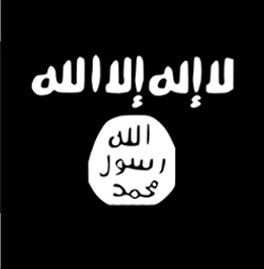
Banner of the Islamic State of Iraq. Click to view. |

An update on the al-Masri investigation as Anbar’s tribal fighters are operating outside of the province
Information on the status of Abu Ayyub al Masri, al Qaeda in Iraq’s commander and the Minister of Defense for al Qaeda’s Islamic State of Iraq, has remained essentially static since yesterday afternoon. Multinational Forces Iraq have taken a wait-and-see approach, and the Iraqi government has refused to confirm his death. What is clear is that a battle between forces of the Anbar Salvation Council and al Qaeda in Iraq occurred in the town of al-Nibayi, near Taji in Salahadin province, al Qaeda took casualties and U.S. and Iraq security forces, along with the tribal fighters of the Anbar Salvation Council are securing the scene of the fight in an attempt to find al Masri’s body.
The Anbar Salvation Council is openly taking credit for the strike in Salahadin. “Eyewitnesses confirmed his death and their corpses are still at the scene,” said Sheikh Abdul Sattar al-Rishawi, the leader of the Anbar Salvation Council. “We have evidence and eyewitnesses and our contacts with the tribes there all confirm the killing,” said Hamid al-Hayis, another leader of the Anbar Salvation Council.
The identification of al-Masri’s body may prove difficult as the al-Nibayi region is still contested. The Anbar Salvation Council has again sortied into the village in an attempt to secure the battlefield. “The area is still under their control, early this morning we sent an armed group to scout the situation, but we haven’t heard back from them yet,” Hamid al-Hayis told AFP. If al-Masri was killed, al Qaeda in Iraq will fight hard to keep the Coalition from recovering his body.
The tribal fighters will no doubt be accompanied by the hunter-killer teams of Task Force 145. “The team [of] military forensics will examine a number of corpses, taking fingerprints, scrutinizing teeth and DNA, to see if al Masri is indeed among the dead,” noted Richard Miniter. “Whether he is dead will remain a mystery until the military team completes its work. Thanks, to Egyptian intelligence, America has extensive medical records on al-Masri.”
Despite whether al-Masri is killed or not, the event highlights a significant development in the civil war within the Sunni community. The rise of the Anbar Salvation Council has far reaching consequences in the wider Sunni community beyond the backwaters of Anbar province.
After less than one year since its formation, the Anbar Salvation Council is no longer content with remaining a static paramilitary force designed to protects the tribal areas, cities and towns within the province. The Anbar Salvation Council has formed an expeditionary unit or units, designed to operate outside of Anbar’s provincial boundaries, apparently with the approval of the Iraqi government. The group is taking advantage of its tribal affiliations, which span the provincial boundaries. It is using the intelligence gained from former insurgents in its midst to attack al Qaeda and other Sunni insurgent groups in their strongholds.
The Anbar Salvation Council is now working with the nucleus of the Sunni Iraqi Awakening movements in Salahadin, Ninewa, Diyala and Baghdad provinces to attack al Qaeda nationwide. Two Diyala tribes, the Karki and Shimouri, “signed a peace agreement at the home of the Mujema tribal leader in Diyala province, Monday,” and “promised to ‘consolidate and unify to battle all insurgents that penetrate among [their] tribes.'” This will play an important role in the upcoming Diyala Campaign to root out al Qaeda’s bases, training camps, fortifications and command an control centers in the province. If al-Masri survived yesterday’s battle near Taji, he is now faced with the threat of the Anbar Salvation Council attacking his forces not just in Anbar, but nationwide.

13 Comments
I see those in the ASC that want permanent jobs as forming INP’s 3rd Division.
Later cross attaching to ethnicly balance.
INP needs to expand and to balance out if it is to be the primary for internal security (85-90% shia now).
Those tribal connections would help with sources and credibility of INP as well…
DJ,
That’d be great if it happened, but the ever shifting coalition of the UIA still doesn’t seem keen on much power sharing with Sunni Iraqis without extensive arm-twisting by the U.S. government. OTOH, Sattar has shown that he can deliver, and the parties involved should be rational enough actors to support this business if for no other reason than a neutral or indifferent Anbar is much better than an Anbar that is an Al Qaeda staging area.
“Sattar has shown that he can deliver, and the parties involved should be rational enough actors to support this business if for no other reason than a neutral or indifferent Anbar is much better than an Anbar that is an Al Qaeda staging area.”
Exactly. If they are going to do a deal, deal with someone competant.
That they authorized ASC’s ERUs to cross the border from Anbar, is a very good sign that GoI is treating them as a serious force.
Officialy ISC already is MoI Paramilitary. Officialy sliding them into the INP from the Temp IP is a PM/MNS/MoI decision.
I wonder to what extent this cooperation that the IG is giving the ASC comes from U.S. arm twisting. After all, the good news about the ASC’s growing effectiveness follows on the heels of the Maliki government’s antics WRT firing Sunni commanders in the Police and Army.
DJ, as an American I agree with you. But and INP unit formed out of ASC is likely to be viewed with some suspicion by some Iraqi Shia (a powerful sunni arab defacto militia).
Will Maliki be able to pull it off . . . will he even want to? I hope so.
Didn’t a major reason for the split in AlAnbar revolve around AlQueda not allowing a Sheik’s dead brother to be buried according to the 3 day rule?
If the tribes have AlMasri’s body…they are not going to give up the body for 3 days…eye for an eye and all of that..
anand,
Sunnis have decades of military experience that the Shia simply don’t have. That is why I believe it has been so hard to build a competent and non sectarian Shia forces. Having the ASC jump into the mix I believe will in the long run drastically improve the Iraqi police and Army.
But, you are right that some Shia leaders like Hakim, Sadr, and others seem more interested in making sure the Sunnis are kept out of the tent then anything else.
anand, good point. We are dismantling the Mahdi army and supporting the ASC, moves that could be interpreted as the US playing power broker. Despite the good efforts of ASC in hammering AQ, something that benefits every one in Iraq, there are those that would try to paint us in the worst possible light for political gain.
Like a lot of people here I’ve supported the war from the beginning and still do strongly. This is great news. The Sunnis have seen the handwriting on the wall and are acting quickly and proactively – an ASC expeditionary force rooting out al Qaeda! Having gotten this far I think they will work out a deal with the IG. In the big picture, I think Bush was right to fight and this is perfect example of why. Contrary to a lot of opinion, fighting has brought forward the day when real Muslims get serious about killing the fanatics. The solution to Radical Islam isn’t moderate Islam, its just sane Muslims taking care of business when radical interlopers try to take over a community. Insha’Allah their endeavors will prosper.
Given that most of this information is being released by Centcom without any other corroboration how can we be sure of its accuracy?
I was a big supporter of the war initially but after all the lies and distortions that have been exposed I am skeptical of the official emphasis on al-Qaeda and Iran in this mess.
What real evidence do we have from other independent sources?
Doryo, you obviously didn’t follow the links to the articles in the post, or you’d see:
Al Jazeera
IraqSlogger
Independent Online
Pajamas Media
I did actually try to go to many of your links (not all).
Pajamas Media is a source? OK.
OK, Doryo, explain exactly what was inaccurate with the information presented at Pajamas Media, or else your criticism is empty. Richard Miniter has written for The Wall Street Journal, and just returned from Iraq.