
The Taliban threatens to bombs schools as Musharraf looks the push more ‘peace deals’
|
|
|
Pakistan’s Northwest Frontier Province and Federally Administered Tribal Areas |

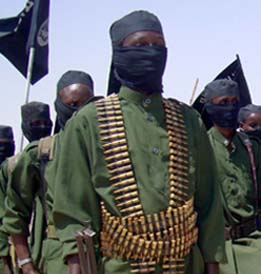
Western Pakistan’s decent into a Taliban state becomes more and more apparent as each day passes. For well over the past year we warned that not only were the tribal areas and Quetta falling to the Taliban, but the Taliban was seeking to expand its influence into the settled regions of Pakistan’s Northwest Frontier Province.
The Taliban, sufficiently emboldened by the Pakistani government’s unwillingness to meaningfully deal with with the threat, is now publicly flexing its muscle in the settled regions of the Northwest Frontier Province.
The Taliban have issued “threatening letters” and made phone calls to “schools and foreign banks” in Peshawar, the capital of the Northwest Frontier Province, ordering them “to shut down or face violent consequences,” reports ABC News’ The Blotter. A school and a business have already complied. “The Beaconhouse School, an English-language co-ed private school, shut the doors of its Peshawar campus in response to the threat,” notes The Blotter. “The Standard Chartered Bank also closed a Peshawar office.”
The Taliban threats are not limited to foreign institutions. As the news of threats against foreign schools and businesses materialized, the Taliban issued threats against local girls schools. Veils are now mandatory, according to the Taliban. “The principal of Mardan Government High School received a letter from an unidentified man, who had written that the school would be bombed within seven days if students and teachers did not start wearing veils,” Pakistan’s Daily Times reported yesterday. “It is believed that the letters are being sent by associates of Al Qaeda leader Abu Farah, who was arrested from the same area.” Two schools shut down due to the threat. This follows the murder of a female Pakistani provincial minister from Punjab for failing to wear a veil.
The Taliban threats to foreign and domestic institutions follows a series of suicide, roadside bombings, as well as attacks on government institutions in Islamabad, Peshawar, Mir Ali, Bajaur, Dera Ishmail Khan, Darra Adamkhel, Bannu, and Tank. The targets include police, the military, non-governmental organizations, doctors, the courts, government welfare centers and markets. This is occurring as the Taliban and al Qaeda launch attacks into Afghanistan from their established bases and command centers in Bajaur and North and South Waziristan.
Despite the obvious signs of the Taliban and al Qaeda expansion from the isolated tribal areas, the Musharraf government continues to seek reconciliation with the Taliban. President Pervez Musharraf will propose that the opposition in parliament approach the Taliban to “negotiate peace with militants.” The opposition is led by Maulana Fazlur Rahman, whose Muttahida Mujlis Amal political party rules in the Northwest Frontier Province and is openly supportive of the Taliban.
The Musharraf government has tried negotiating with the Taliban in North and South Waziristan several times in the past, and each time to Taliban violated the terms of the agreement. The ‘peace deals’ have resulted in the establishment of Taliban and al Qaeda sanctuaries now have a very real sanctuary in North and South Waziristan, as well as in Bajaur, where peace talks were scuttled after the U.S. and Pakistani military bombed a al Qaeda camps. President Musharraf apparently believes a deal can be done with the Taliban, despite all evidence to the contrary.

13 Comments
I think there is a 90% chance that the next major terrorist attack on US soil will be traced to Talibanistan in Pakistan. Not Iran, Syria, Somalia, etc.
What will we do then? And why would we not do that now?
Of all the “threat areas” in the Middle East and South Asia, this one is the most worrisome to me, because Musharraf’s fall to an Islamist regime would give a bunch of genocidal death-cultists nuclear weapons.
I’d give a lot to be a fly on the wall at the meetings of India’s national security council about now.
What is keeping us from engaging this area militarily from across the border? Musharaff doesn’t control this area any more, so surely he wouldn’t mind us cleaning the area out. We went into Afghanistan because they were harboring terrorists, now a few miles across the border Pakistan is harboring terrorists. Something has to got to give. Any thoughts?
Thoughts are we already surrendered, effectively, in Nov 2006.
Realistically we cannot do anything, Gates has supposedly said any attempt by Bush to bomb Iran would get him impeached and the same applies to Pakistan.
Dems have argued for surrender and withdrawal from Iraq and Afghanistan, that is exactly what we will do, and we will get a mass casualty attack afterwords.
Since we tried it Bush’s way (limited conventional war) and for political reasons (America will only tolerate extremely limited casualties and very short Grenada type wars) it was not acceptable, only two responses remain open to another mass casualty attack planned/launched from Talibanistan:
Surrender (which Dems will surely advocate).
Nuke em till they glow (which is the most likely outcome).
Nuking all of Pakistan (and Iran too for good measure) is within our capacity. Would erase the threat emanating from those regions (since everyone would be dead) and deter other regimes (because we’d prove we would to quote Pacino in Heat “Rock and roll at the drop of a hat.”)
I do not like this ugly reality but that’s the way I see it.
There have been three fights: Al Qaeda and it’s allies, the US military, and Democrats/Media to return the safe little world of 9/10.
I’m beginning to believe that this is the next major theater. Hence the Stennis Deployment. I predict we interdict on the Afgan-Pak frontier before any action against Iran. Or maybe simultaneous operations. If we do fight in Pakistan, how far can we trust the Pakistan Army?
Especially in those regions.
I am very sad to say that I see the future much in the same way Mr. Jim Rockford does. Iraq is all but over except for the humiliating exit and since last year the situation in Afghanistan has rapidly turned against us, we are very soon approaching a country wide mass resistance in that most unluckiest of countries. The reasons for these events are numerous. One being the Bush Administration made serious blunders in both theatres and that should be obvious to all. The most important reason though is the American Public has lost the will to fight and kill. War is fundamentally the act of killing enough of the enemy until he no longer has the will to resist. Now I am aware that Counter Insurgency is all the rage in America these days but it is my opinion that the way to defeat an enemy as full of hatred and religous fervor as our enemy lies in the way the Russians dealt with Chechnya. It will be bloody and it will be brutal, we will take tens of thousands if not hundreds of thousands of casualties before all is said and done but we have no choice. If we do not regain our willingness to kill large numbers of the enemy soon and become accustomed to taking casualties then we lose, and if we lose then wave goodbye to western civilization. That is the situation.
“Iraq is all but over except for the humiliating exit[.]”
What rot. What nonsense. What pathetic, TV-influenced, shallow, infantile garbage.
Turn off your television. Stop reading the dinosaur-media rags. Read the milblogs and the Pentagon reports in PDF from their various Web sites.
The Democrats and the media want you to believe that it’s all over in Iraq, yet they offer no evidence whatsoever. You’ve been taken in by nothing but hot air.
Shameful.
Here is a somewhat different take on Talibanistan.
Prevez Musharaff is a Special Forces officer – he spent years eating bugs and lizzards and studying counterinsurgency warfare. He knows, that an insurgency goes through several phases, and the best (most cost effective) time to engage and defeat it is in phase two – the intermediate phase, when the small guerrilla bands coalesce into larger field units (battalions and brigades). They are relatively easy to find, but they are not strong enough resist a determined attack, yet cannot disperse easily.
Try it earlier, in the terrorism/guerrilla war phase, and you expend a lot of time and treasure in futile search and destroy efforts, with very little to show for it. The guerrillas/terrorists are widely dispersed, highly mobile – they are tough to find, and wiping out those few you find makes little impression on the rest.
Leave it too late, to the open warfare phase, and you may not have any problems finding the insurgent main force units, but you may not have the strength to defeat them.
Musharaff may be betting on allowing the Taliban to consolidate their small bands into large units that can take on serious targets, and then beat them to the punch.
Peter,
People have been saying that since the Waziristan Accord was signed on September 4. It’s 6 months later, and Musharraf is going to give up Bajaur officially (I’ll post on this today).
This type of ruse might work outside your borders, but is poison inside. Kinda like ceding the southern border crossing points in the USA to drug and people smugglers, only to round them up at a much later date once they establish their control over the region. Is that any way to govern your own territory? If you actually had the capacity to control your territory, why would you resort to this?
The facts do not support the conclusion that this is some sort of ruse. I suggest you read ‘The Fall of Waziristan’ (linked in the TOPIC BRIEFINGS section in my left had sidebar) in full. If you follow the links to the individual posts, you will see plenty of evidence showing how badly the Musharraf government has been beaten in their own back yard.
Unfortuneatly wars like this are very often decided on the political level.
The way Iraq and to a lesser extent Afghanistan are going at the moment the Democrats may well succeed in their aims to get Bush to withdraw US troops from either and probably both countries.
The result would be the expansion of Islamic extremism accross the Middle East and elsewhere in the world. Not only is this likely to result in a mass casualty result in the US or indeed upon one of its allies, it would also result in the almost inevitable expansion of Iranian power accross the Middle East with all the short term impacts this would have on the West’s oil economy.
Even if the Iranians do not get the bomb in the short term an Islamised Pakistan could certainly be expected to share it wit Tehran.
But it would get much worse than that. The expansion of Iranian power would have to be confronted militarily at some point either when Isreal is attacked or whrn a mass caswualty terror attack in the West, possibly even an attack involving a nuclear device.
This would result in a general conflagration in the Middle East and this conflagration could drag in other powers at some point, specifically Russia and China and not neccessarily on the side of the West and the United States.
This would be the start of the Third World War. The stakes are bow that high.
That is why we must continue to remain in theatre in both Irak, Afghanistan and it is why we must deal both with Iran and the Taliban problem in Pakistan That way it is still possible to either contain a bad situation or indeed to turn things around. This will take an effort almost akin to that required of us in the Cold War, if not in World War 2.
If however we are not prepared to take the steps that are required and to take those steps now, however unpopular those stpes might be the consequences of inaction or withdrawl would be far worse in a couple of years time.
People such as Winston Churchill warned of the threat posed by Hitler in the 1930s. He was derided as a warmongering and bumbling idiot. History however records that Churchill was right but it took the Second World War to prove it. That holocaust could hve been prevented had action been taken sooner.
Today people deride George Bush as a bumbling idiot. The course of events in the future could well prove that he was right all along and in this case future historians (if any) will deride the Democrats and those like them in the same way that modern historians now deride Neville Chamberlain and the other appeasers of the 1930s.
Bill,
“Is that any way to govern your own territory? If you actually had the capacity to control your territory, why would you resort to this?”
Obviously IF you have any sort of control, this would be stupid. But the Pakistani central govt has very little control over anything – at least not the kind of control we in the West would consider adequate.
I do not pretend to fathom either the Pakistani military’s or Musharaff’s mind, although they (and he) seem to be reasonably competent. Even against India they finally seem to have hit on the right balance of diplomatic engagement and clandestine support for the Kashmir terrorists.
Giving the Taliban enough rope, then using it to hang them may seem to them to be a clever solution to a serious headache.
Having said all this, you are probably correct.
First, I do not receive my info from the MSM and certainly not the pathetic democrats and I would suggest that you look at other news sources besides the pentagon they tend to be a bit biased.
I say that Iraq is all but over not because of the military situation in iraq dealing with the insurgency but because of the political situation in both iraq and more importantly in America. Between 60 and 70 percent of the public disapproves of the way things are going in Iraq and a majority want a withdrawal in a year or less. You find these statistics in almost any poll you check. It is likely that as soon as bush leaves office the withdrawal will begin. In Iraq the political situation is even worse. We have installed a government thats run by shiite militias. The mahdi army and Sciri are the two most powerful players in the government. Both these entities are loyal to the Iranians. Once we are done doing their work for them by crushing the sunni insurgents they will ask us to leave and if we dont they will try to force us to. unless we dissolve the Iraqi govt and give up on democracy in Iraq the Iranians will have won.
What value are the Taliban controlled an influenced areas in the hills and mountains to Pakistan? Do they contribute economically? Do they contribute to the Army or any other civilized institution in Pakistan? Why not just eject the area, and let it handle us, on their own. We would have to increase the size of our real armed forces, the active services, but getting a crak at these terrorists, and their supporters, would be nice.