
A status update on Pakistan, plus the Brits call for a truce in Helmand province
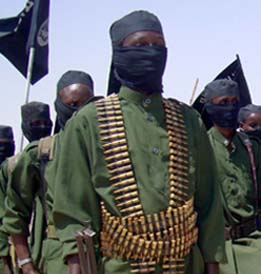
 The results of the Waziristan Accord, Pakistan’s ‘truce’ with the Taliban and al Qaeda in the tribal agency of North Waziristan, reverberate throughout the Afghan-Pakistani border region and beyond. The Taliban continue to violate the truce. A Pakistani military base in South Waziristan was struck with a rocket attack. A “Pakistani militia” and Afghan security forces battled at a border crossing point between North Waziristan and Paktia. The Taliban killed another “spy” and pinned a note on his body. “With Allah’s blessing, Taliban captured this spy and gave him punishment according to Shariah (Islamic law)… He had reported that 10 Taliban centres were here… He was working for Afghan intelligence.” The Taliban did not dispute the existence of the “10 Taliban centres.” The Pakistani government, clearly embarrassed by the international attention the opening of the “Taliban centre” in Miranshah, has ordered the Taliban to close the office. There is no word on the status of the other nine “Taliban centres.”
South of Waziristan, nine Taliban were arrested in Quetta hospital after being wounded in the fighting in Afghanistan. In Pakistan proper, Matiur Rehman, who was behind the failed London Airline Plot and thought to have been captured, has been tasked with rebuilding the banned Lashkar-e-Jhangvi.
As we’ve reported since the signing of the Waziristan Accord, the negotiations with the Taliban and al Qaeda would not end in North Waziristan. A Pakistani government official noted the Pakistani government is looking to sign agreements in Bajaur and South Waziristan. The Taliban have controlled South Waziristan since March of 2006, a agreement there would merely formalize the Taliban’s control over the region. Presidents Musharraf and Karzai have agreed in principle to conduct a series of loya jirgas (or tribal meetings) along the Afghan-Pakistani border.
The desire to cut a deal with the Taliban has grown, and has infected the British forces in Afghanistan. The British forces fighting in the troubled Musa Qala district in Helmand province have “agreed … [to]… quietly pull out of Musa Qala in return for the Taliban doing the same.” Brigadier Ed Butler personally attended a loya jirga to negotiate with the Taliban.
Elsewhere in Pakistan, President Musharraf has bristled over the suggestion the ISI (Pakistan’s intelligence service) continues to back the Taliban. “I have some reports that some dissidents, some people, retired people who were in the forefront in ISI during the period of ‘1979 to ‘1989, may be assisting with their links somewhere here and there,” said Musharraf. This glosses over the numerous purges Musharraf conducted in the ISI and the military to clean out suspected Islamists. Musharraf’s defense of the ISI comes amid Indian accusations the ISI was responsible for Mumbai train bombings that killed over 200 Indians. Over the summer, a Pakistan defence ministry official testified in court that the ministry “exercises only administrative control over Inter-Services Intelligence (ISI) and Military Intelligence (MI) and it does not have any operational control” of the organizations.
President Musharraf, clearly frustrated with the criticisms of his government and security agencies, issued a warning and a not-so-veiled threat against the West. “You’ll be brought down to your knees if Pakistan doesn’t co-operate with you. That is all that I would like to say. Pakistan is the main ally. If we were not with you, you won’t manage anything. Let that be clear. And if ISI is not with you, you will fail,” said Musharraf.

9 Comments
Are the Taliban likely to actually adhere to their agreement with the British?
Based on their past performance.. I would guess not. And the British know this. Do you think they’re only doing it so that when the Taliban fail to uphold their end, they can say “oh well, we tried” and use it as a pretext to go on the offensive?
On the other hand, perhaps they’re hoping they will withdrawn into Pakistan after their recent pasting. But why would that be a good thing? Surely it’s better to keep them in Afghanistan where they can be struck at and destroyed, rather than in a safe haven across the border?
Can anyone cast any light on the thought process behind such a deal? It doesn’t make much sense to me. It seems that the British should be going with the momentum and pushing to hurt the Taliban badly before winter.
The Captain’s Quarters had an interesting post yesterday on the Pakistan/Afghanistan issue that is worth reading in its entirety. I thought this conclusion was especially worth considering.
———————-
No wonder Musharraf cut a deal in Waziristan. He wants to mollify the Pashtuns in order to keep them from rising up and demanding an expression of nationalism within Pakistan. He doesn’t want to lose Waziristan as well as Kashmir. And this is why Karzai is so unhappy; without Pakistani pressure on the Pashtuns in Waziristan, they will have secured their flank enough to put all of their energy to undermine Karzai.
The Captain’s Quarters: A Graphical Depiction Of The Challenge In Afghanistan
Web Reconnaissance for 10/02/2006
A short recon of what’s out there that might draw your attention.
Pakistan’s Problems in Waziristan and Beyond
Courtesy of The Fourth Rail:
A status update on Pakistan, plus the Brits call for a truce in Helmand province
The results of the Waziristan Accord, Pakistan’s ‘truce’ with the Taliban and al-Qaeda in the tribal agency of North Wazi…
http://www.washingtonpost.com/wp-dyn/content/article/2006/10/01/AR2006100101083_2.html?nav=rss_world/mideast/iraq
Letters to Zarqawi from top al Qaeda leaders put them in Waziristan.
Pakistan Front Line Update
Bill at Fourth Rail has a great post on the recent events in Pakistan and the tribal areas. Some of the more recent and significant developments:
Frist is calling for the Afghan government to open itself to the Taliban?
What is going on?
http://www.iht.com/articles/ap/2006/10/02/asia/AS_GEN_Afghanistan_Frist.php
The War on Terror will not conclude before 5 Million non-Muslims and 100 Million Muslims have died over the next 15 years. Of this I am certain. This is more than WW2 or the Cold War.
1) Pakistan has nukes and Iran soon will.
2) Pakistan had AQ Khan selling nuclear secrets.
3) Pakistan is where OBL and Zawahiri are hiding, and where most people support them.
How can the combination of these 3 points lead to anything other than a horror of unprecedented magnitude?
Taliban kills another ‘spy.’ If you bring an American spy up they kill one of there people according to Shariah. Gotta wonder who the American spy works for.