
North Waziristan is not al Qaeda’s endgame, the entire border region is the target
References: Dawn provides an overview of the North Waziristan Truce. Compare this to my report from Tuesday night.
|
|
|
Pakistan’s Northwest Frontier Province and Federally Administered Tribal Areas |

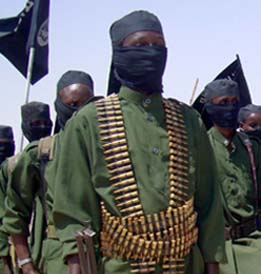
With the Pakistani government ceding authority (but not autonomy) to the Taliban and al Qaeda, Coalition and Afghan forces will now be placed in a more difficult tactical situation along the Afghan-Pakistani border. With the threat of the Pakistani Army removed in North and South Waziristan, the Taliban and al Qaeda can now consolidate power and focus their efforts on attacking coalition forces in Afghanistan, as well as expand further into the greater North West Frontier Province. Operations such as Medusa in Kandahar and an offensive in the Konrangal River Valley in Kunar will become less of offensive actions and more like holding actions as the Taliban continue to operate from safe havens within Pakistan.
As we noted in January, Osama bin Laden was clear about his objectives along the Afghan-Pakistani border. His words were not bluster:
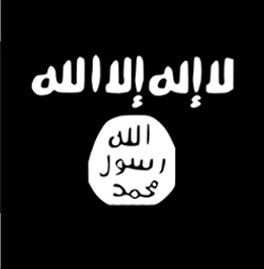
The Asia Times’ Syed Saleem Shahzad states Osama bin Laden’s most recent video tape “marks [al Qaeda’s] announcement that the new strategy it has been developing is now very much in place,” which includes a reorganization of al Qaeda’s structure and “the acquisition of various bases in the shape of small pockets” in the tribal regions “along the Pakistan-Afghanistan border areas, including Khost-North Waziristan, South Waziristan, Kunar-Chitral and Kunar-Bajur.”
While there has been much speculation that the creation of the Islamic Emirate of Waziristan would give U.S. Special Forces and Air Force a green light to take out al Qaeda targets in the emirate, this is not an option due to political considerations in both Pakistan and the United States. North Waziristan, while under control of the Taliban, is still part of a nuclear armed Pakistani state. During his visit to Afghanistan, President Musharraf recognized that any major strikes inside Pakistani territory will result in great political unrest and his eventual ouster. “On our side of the border there will be a total uprising if a foreigner enters that area,” he said. “It’s not possible at all, we will never allow any foreigners into that area. It’s against the culture of the people there.”
Pakistan and the Taliban signed a similar “peace agreement”in South Waziristan during the spring of 2004, which quickly broke down. South waziristan is now under de facto Taliban control, with its own Shura, recruiting centers and religious police to enforce Shairah. Bajaur considered a Taliban and al Qaeda base of operations, and was the location of a U.S. airstrike against Ayman al-Zawahiri in January of 2006. Tank, Khyber, Peshawar and Dera Ishmal Khan are contested agencies,and now that the Taliban has had success, they will be targeted with greater effort.
Despite any “truce” signed in North Waziristan, the Taliban are quite active elsewhere in region. Within 24 hours after the agreement was signed, Taliban forces attacked a pro-government cleric in Bajaur. The cleric survived, but a 12 year old girl was killed in the incident. “Authorities believe militants may have wanted to attack Mabood because he supports government efforts to hunt down militants,” reports the Times of India. “Authorities have said al-Qaida-linked foreign militants and local tribesmen sympathetic to them operate in Bajur.”
Newsday touches on a crucial aspect of the truce: the agreement does little to stem the flow of Taliban to and from Afghanistan. The local tribes, and not the Pakistani Army, will control the vital border crossings into Pakistan.
The accord asserts that “there will be no cross-border traffic for military activities,” but contains the loophole that “for traffic … for trade, business and family visits, there will be no restriction, according to the customs and traditions” of the border area. In practice, the ethnic Pashtun tribes on both sides of the border cross with little attention paid by Pakistani border guards, who traditionally are members of those same tribes.
Under the deal, Pakistan agreed that tribal paramilitary forces, rather than army troops, will handle border control duties, as they did before the recent army offensive. The poorly trained, underpaid paramilitaries have proved no barrier to Taliban infiltration past the border, U.S. troops say.
The Times Online incorrectly states “A key provision of the deal is that tribesmen will expel foreign fighters from the area.” “Foreign fighters,” or “miscreants” as the Pakistanis refer to al Qaeda, are allowed to remain in the region if they pledge to be “peaceful.” Dawn reports “The agreement envisages that the foreigners living in North Waziristan will have to leave Pakistan but those who cannot leave will be allowed to live peacefully, respecting the law of the land and the agreement.” The loophole exists, and will be exploited. Over 130 Taliban and “miscreants” have been released from custody, and there has been no effort to deport the “foreigners.”
Syed Saleem Shahzad reports al Qaeda commander Ghulam Mustafa, who “once close to bin Laden and has intimate knowledge of al Qaeda’s logistics, its financing and its nexus with the military in Pakistan,” will be released from Pakistani custody, along with a host of al Qaeda members. An American intelligence source confirms this report.
Newsday also notes that the “peace deal has left the Taliban running a parallel government that has largely displaced Pakistan’s administration. The militants there openly recruit, train and send men to fight over the borders against the Americans.” This “parallel government” is the Mujahideen Shura we mentioned yesterday, and this future for the rest of the Northwest Frontier Province if the Pakistani government doesn’t halt the appeasement of al Qaeda and the Taliban.

40 Comments
Our original goal in Afghanistan was to deny Al Qaeda a safe haven. If Al Qaeda now has a safe haven — indeed a safer haven, given the fact that we can’t endanger Musharraf — did we just lose this war?
Putting it another way, what is our goal in Afghanistan today?
If they are providing safe haven, then they are legitimate targets. If Musharaf does not have the will or the ability to control his own country then what is his value as an ally?
We cannot have another Laos/Cambodia where a defeated enemy is repeatedly allowed to reconstitute. Given the global reach of our enemy and the nuclear capability of Pakistan we cannot afford to just walk away this time.
Web Reconnaissance for 09/07/2006
A short recon of what’s out there that might draw your attention.
Pakistan Surrenders to the Taliban
Bill Roggio continues to report on the surrender of Pakistan to the Taliban in North Waziristan. As Roggio details, this is an absolute disaster for US counterterrorism efforts in the region, and it creates a ticking time bomb for the Bush administrat…
Will this take on a border war situation? Meaning, will be start looking for convoys, personnel, etc, coming across the border?
Will we be using special forces, indiginous fighter, foreign agents, etc, to prosecute a covert border war in the region?
We cannot let this lawless area become more of a Taliban stronghold than it already has.
If they are providing safe haven, then they are legitimate targets. If Musharaf does not have the will or the ability to control his own country then what is his value as an ally?
And yet, if carrying the war into Pakistan results in Musharaf’s ouster, the key to the country’s nukes will effectively be handed to al-Qaeda.
Nevertheless, as Pakistan clearly is unable to resist the jihadis, they will eventually obtain them anyway. I agree that leaving the Taliban to gain strength inside Pakistan is madness.
Remember that in Islam, a truce (hudna) is an opportunity to regroup and rearm.
The story is not over in Pakistan. Musharraf is not going to allow a permanent safe haven in his country for the people who’ve tried to assassinate him twice.
This is just one of the setbacks and bumps that President Bush was talking about.
Tom:
I have my doubts about that. What it looks like to me is that four or five years ago Musharaf thought he had the muscle to take on the tribes, and now he’s concluded that he doesn’t.
So what forces are in play that will cause him to feel more confident in a year or five years? From where will he draw the strength (and motivation) to return in force to a region he’s lost?
If he were so strongly motivated by revenge at assassination attempts it strikes me he’d not have signed a truce. On the contrary, one could conclude that he might have bought a little personal safety at the cost of Waziristan.
I’m not finding the “it’s all part of some master plan’ theories at all convincing.
Pakistan’s Peace Deal with Terrorist Factions a Major Blow to U.S.
The past week witnessed one of the most significant recent developments related to the global war on terror — a development that garnered surprisingly little attention from the media and analysts. As Pakistan’s Dawn newspaper explains, the Pakistani g…
I think what we are seeing with this truce is a general pattern that is occuring throughout the Mideast. The despots are getting bolder as they sense that the Bush administration is retreating from its stated policy “that if you support or allow terrorism you are going to be treated as a terrorist”. Given what Syria and Iran have gotten away with in Iraq it is evident that the U.S. is either unwilling or unable to follow through on that threat.
We had Musharaf more scared of us than he was of the militants after 9/11. That is apparently no longer the case.
The solution to this may be to simultaneously attack Waziristan and the Paki nuclear facilities to prevent them falling into the hands of AQ. Talk about terrible options.
Pakistan’s Under-the-Table Deal with al-Qaeda
During one of his campaign stops yesterday, President Bush touted his administration’s supposed success in combating al-Qaeda. One of his examples was Pakistan:
The Islamic Emirate of Waziristan and Greater Talibanistan
Courtesy of The Fourth Rail:
North Waziristan is not al-Qaeda’s endgame, the entire border region is the target.
References: Dawn provides an overview of the North Waziristan Truce. Compare this to my report from Tuesday night.
With the Pakis…
I would propose that we start a new jobs program in Afghanistan as a way to reduce unemployment and heroin cultivation.
Hire unemployed young men. Train them as terrorists and sent them across the border to Wazirstan to kill Taliban. Salary, training, equiping, medical care, vacation time off and a retirement plan is provided. Plus $500 bonus for each Taliban killed.
We can call it “Operation Two an play at this game”.
Why are we so afraid of “upsetting” Pakistan? Has McNamara been reinstated as Secretary of Defense? I thought that we had learned this lesson already. Must another 55,000 die in the name of political pussy-footing? Is pleasing the Pakis worth that price? I think not.
Damn the torpedos (and the Hollywood liberals), it’s time to sweep the rat nests of Kandahar and the Hindu Kush clean of terrorist incubators. Is that too offensive? Too bad. I put my butt on the line in Desert Storm and will likely be going back again on account of this political BS. I find THAT to be exceedingly offensive.
North Waziristan Update
However, the President said as the focus was now shifting from Al-Qaeda to Taliban, both Pakistan and Afghanistan need to locate their command structure and destroy it. Pakistan, he said, believed that the command structure was in Afghanistan’s south…
North Waziristan Tribes Sign Peace Pact With Musharaf
to win in Afghanistan you have to do three things: Kick everyone’s ass, demonstrate that you will persist, and then buy all the local warlords to your side. The warchest needs to re-open in southern Afghanistan, and we need to use it to corner Omar a…
Assuming Bin Laden is dead, and there is plenty of reason to assume that.
Assuming Al-Queda is defunct, and there is plenty of reason to assume that (my God, 911 was 5 yrs ago), and what is left of them is “police work”.
Assuming that there is no real reason for the Taliban to be our enemy, and there is plenty of reason to assume that, especially given all those trips to Houston in the late 90’s.
Assuming that Pakistan is our enemy and there is plenty of reason to assume that.
Assuming that the ISI is our friend, and there is plenty of reason to assume that.
Then perhaps this is the prelude to our making peace with the Taliban but carving out a piece of Pakistan before.
Given the Taliban presence in Balochistan, I’m sure they can assist with peeling that off also.
Plus, you get to use Peter’s map.
Bill: hi, welcome back! Originally posted this over at Rightwingnuthouse, but thought it would be appropriate for this audience as well!
This has ALWAYS been about Pakistan, unfortunately; from the WTC in ’93, until 9/11, til now!
Pakistani Jihahdis have been hellbent on JIHAD, ever since they, successfully in their eyes, drove the British out of the Empire of India, and forced the Partition of “greater India”
Dale is CORRECT
I would also offer this to the members here. Now we have the ‘Green Men’ being protected by the Paki Nuclear & F16 Umberalla.
From the British prospective all the jihadi nuts here are now going to stream to the new Islamic emirate to get the training that they need
What a monumental *****
“North Waziristan is not al-Qaeda’s endgame”
The Islamic Emirate of Waziristan and Greater Talibanistan Bill Roggio, back at Fourth Rail, on recent developments in the armpit of the world: With the…
Pakistan, Balochistan, and the Taliban
Bill Roggio has done a nice job in pointing out the dangers in the peace deal Pakistan has made with the Taliban in Waziristan, in NW Pakistan. The Taliban is now free to rest and refit in these areas, and can use these areas as rear bases. However, th…
Friday Winds of War: September 08/06
Welcome! Our goal at Winds of Change.NET is to give you one power-packed briefing of insights, news and trends from the global War on Terror that leaves you stimulated, informed, and occasionally amused every Monday…
Comments deleted by site admin, please see comments policy.
Bush will never attack Pakistan. They are letting the Trans-Afghanistan pipeline be installed over Afghanistan and a Bush-friendly company is doing it. Pakistan is not a friendly nation. They are enemies.
Bush will never attack Pakistan. They are letting the Trans-Afghanistan pipeline be installed over Afghanistan and a Bush-friendly company is doing it. Pakistan is not a friendly nation. They are enemies.
Hundreds of al Qaeda-linked foreign fighters in North Waziristan
On Friday, Pakistani Lieutenant-General Ali Mohammad Jan Aurakzai, governor of North West Frontier and the top administrator for the tribal areas, revealed there are “hundreds” of foreign al Qaeda linked fighters still at large in North Waziristan (als…
How about ceding the Pashto/Taliban-dominated areas of south and east Afghanistan to the Emirate of Waziristan, let them form one single jihadi country, and then bomb the stuffing out of them like we did Germany in WW II. Bomb them relentlessly and refuse to negotiate with anyone about it. Let them surrender, like Germany did. No invasion, no occupation, no boots-on-the-ground, no heart-and-minds. Just make it impossible for them to govern so long as they adhere to jihadi principles.
And if the disproportionate force of our reaction convinces the Europeans and the UN that we are insane….well, so much the better.
Europe (lest we forget) has had lots of experience at appeasing insane tyrants. So now they can appease us.
Michael: It’s a great idea; I’ve thought about something similar; it would be great IF we’d do it, though you and I both know, even Bush probably WOULDN’T do it; too bad!
But, before this is all over, Islam’s War on the West I mean, we may eventually be forced back to the bombing-type campaigns of WWII that we waged against Germany & Japan; it will be the only way to end this, permanently, actually.
For me, the invasion of Iraq became necessary, after, and once we invaded Afghanistan.
Depossing the Taliban, and evicting Al Qaeda from Kabul, meant that they were going to go SOMEWHERE!
Baghdad/Iraq was the next logical choice.
1) Saddam was just stupid enough to believe that we would never attack him, especially since Bush Sr. left him in power after the Gulf War.
2) Saddam’s ties to, and support of International Terror, including the continuingly being revealed ties between Saddam’s regieme – Al Qaeda/UBL, showing up over at FreeRepublic.com and at Capt Ed’s site at http://www.captainsquarters.com
3) Even though my experiences and knowledge as former Military/Intelligence Analyst, showed that Saddam definitely had WMD’s, used them, and definitely was retaining the Capability, as well as continuing the Program capability, if not some of the actual WMD’s themselves, I was never “comfortable” with the way the Bush Administration focused almost Solely on the WMD issue, in the lead up to the Iraq!
4) As far as I was concerned, that fact that Al Qaeda needed to reconstitute somewhere, the fact that Saddam had desmonstrable ties to International terror, as well as having been DIRECTLY tied into the WTC ’93 bombing, Salman Pak, etc.; the assassination attempt against Bush Sr.; his 13 years of refusals to confirm to UN Resolutions, etc., was for me, Enough to justify to the American Public, that it was time, to implement the Clinton Administation’s regieme change policy, and JUST DO IT!
If only the Bush Administration had taken that approach, history would be much different right now…
5) Regadless, Iraq was the most likely spot for Al Qaeda to move to, and reconstitute, and Al Ansar and Zarqawi presaged that; so the invasion was the logical thing to do, the Administration unfortunatly just “sold” the wrong message…
6) With Iraq gone for that purpose; the two most dangerous areas for us now, are Western Pakistan, and Somalia.
7) We have to come up with a Plan, NOW, of what to do with Western Pakistan; if Musharraf’s surrender to the Emirate of Waziristan is as complete as we fear it is, we need to get ready to move in, and just eliminate every single Mud-walled compound we can bomb into oblivion.
Frankly, we also need to force a war between the Taliban-Al Qaeda and Musharraf & the non-Pashtun Pakistanis!
Musharrah/the non-Pashtun areas of Pakistan will have to make a hard decision to make; Survival of themselves, or to be eliminated/taken over by the Emirate of Waziristan!
8) As far as Somalia is concerned; it’s too late; so we let the Al Qaeda surrogate the Islamic Courts Union, get comfortable, set up their Al Qaeda training camps, etc.; then we just bomb the hell out of them.
9) By then, the fight will have moved to the South American “triangle” and places like northern Nigeria, Southern Sudan, Chad, etc.; and we just have to follow them to each place, and bomb them out of existence; it will take decades; but that’s what they want, and for them, it is a Jihad, so for us, it should be a Crusade!
The fact is, this is a continuation anyhow, in their mind/eyes/philosophy/theology; so it’s time we got with it, and realized it for what it is!
And I’m not a “religious” person, so for me, this isn’t about the ascendancy of Christianity; far from it, it’s something more basic, it’s about Preventing the ascendancy of Jihadi Islam, and the FORCED conversion of my Family to Islam!
Bush announced this was appeasemet in his speech and, apparently, no can figure this out. Good job!
Bush will never attack Pakistan? The CIA bombed them. The guy who ordered it was fired.
The Threshold of Ignorance
DCP blogger Dwazhon turned me onto a blog called, The Fourth Rail. Here’s DW take on it: Please check out Bill Roggio’s The Fourth Rail. He’s former military and a reporter who’s done 2 rounds of embed, 1st in Iraq…
We must not discount India, the other regional nuclear power bordering Pakistan. If the nuclear keys are handed over to Pakistan following Musharif ouster, what then is the threat to India? What is India’s political position on the Warizistan horizon?
Pioneering screenwriter Nigel Kneale, best known for the Quatermass TV serials and films, dies aged 84…
Pioneering screenwriter Nigel Kneale, best known for the Quatermass TV serials and films, dies aged 84…
William Styron, whose Holocaust novel Sophie’s Choice became a film and an opera, has died, aged 81…
Singer George Michael lends the piano on which John Lennon wrote Imagine to an anti-war exhibition…
Singer George Michael lends the piano on which John Lennon wrote Imagine to an anti-war exhibition…
The first stage of a
Colombia’s vice president is "baffled" by Kate Moss’s success following cocaine allegations…
Alec Baldwin asks for his voice to be removed from an "unfair" documentary about Arnold Schwarzenegger…