
U.S. and Iraqi forces mix it up with Sadr’s Mahdi Army at a Baghdad Mosque, around 20 Madhi fighters killed
|
|
|
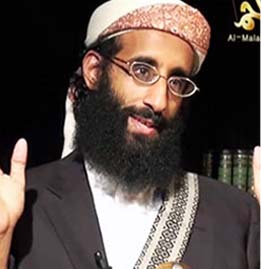
Muqtada al-Sadr. |

U.S. forces appear to have struck at Muqtada al-Sadr’s Shiite Madhi Army at a “husseiniya” (a Shi’ite house of worship) in Baghdad. Belmont Club rounds up reports from Zayed at Healing Iraq and the BBC. The Washington Post also reports on the event but states Iraqi forces were involved in the battle. U.S. military has yet to confirm the incident. The news accounts indicate anywhere from 18 to 21 Madhi militiamen were killed during the raid. No word on any U.S or Iraqi Army casualties. In a seemingly unrelated incident, Sadr’s home in Najaf was the target of a mortar attack.
The impending fight against the Shiite militias, and particularly Sadr’s Mahdi Army, has been telegraphed for some time. On March 18, Strategy Page predicted the ensuing conflict:
The U.S. has told Iran that the Iraqi Shia militias being supported by Iran (the Sadr and Badr organizations) are going to get taken apart soon, and Iran is well advised to back off when this happens. Hardliners in the already hard line Iranian government, have been helping Badr, Sadr and smaller groups, in order to keep the atmosphere hostile for the United States in Iraq. This has not been particularly popular in Iraq, because it’s obvious that the Americans chased Saddam out of power, and made it possible for Shia to run the country. But to old school Iranian Islamic radicals, hating and hurting the United States is more important than anything else.
Earlier this week, Zalmay Khalilzad, the U.S. Ambassador to Iraq, accused Iran of sponsoring the Shiite militias and inciting sectarian violence, and alluded to a future reckonning with the militias; “The militias haven’t been focused on decisively yet. . . . That will be tough,” Ambassador Khalilzad said. “More Iraqis in Baghdad are dying — if you look at the recent period of two, three weeks — from the militia attacks than from the terrorist car bombings.” On Saturday, Ambassador Khalilzad indicated “The militias need to be under control.”
The Washington Post reports U.S. forces have also “raided an Interior Ministry building and arrested 40 policemen after discovering 17 non-Iraqi prisoners in the facility. Police 1st Lt. Thayer Mahmoud said the arrested police were being held for investigation, but the reason was not known. Mahmoud said the U.S. forces remained at the building and were guarding the 17 foreigners.” Meanwhile, 30 men were beheaded and dumped near Baquba. It is automatically assumed the murders were the result of Shiite militias, but the New York Times rightfully notes “The area where they were discovered is mostly Sunni Arab and controlled by Sunni insurgents. It would be very difficult for Shiite death squads to operate there. Interior Ministry officials said they did not have enough information tonight to identify the victims.”
The move against Sadr’s militia and elements in the Interior Ministry may be isolated incidents, or may be the opening rounds of a campaign to defang the radical Shiite elements inside and outside the government. If the move is a concerted campaign against the radical militias, this indicates the U.S. and Iraqi Army are calculating there is enough ‘space’ to take on a second front; the security forces can safely handle both the Sunni led insurgency and combat operations against Sadr’s Madhi Army. Another possibility is the rogue militias can no longer safely be ignored, as their actions have now exceeding the threshold of tolerable violence and threaten to plunge the nation into civil war.
It should be remembered Sadr’s Madhi Army was thoroughly routed in Najaf during the Summer of 2004, with an estimated 2,000 plus of his fighters killed during a U.S. and Shiite assault on his forces. Sadr may have a following, but there are plenty of Shiites who do not support his antics, including the most powerful Shiite in Iraq, Ayatollah Sistani.

11 Comments
The Interior Ministry has been a contention for the Sunnis as those in Interior are accused of supporting the Shiite death squads.
This raid against an Interior Ministry Building shows evidence that the Sunnis may be onto something.
http://apnews.myway.com/article/20060326/D8GJIHT8G.html
“In an apparent effort to clamp down on police wrongdoing, American troops raided an Interior Ministry building and briefly detained about 10 Iraqi policemen after discovering 17 Sudanese prisoners in the facility, Iraqi authorities reported.
In this case the Americans quickly determined the Sudanese were held legitimately and had not been abused, said Maj. Gen. Ali Ghalib, a deputy interior minister.”
“Police Lt. Hassan Hmoud, who put the death toll at 22, said some of the casualties were at the Islamic Dawa Party-Iraq Organization office near the mosque. The incident started when U.S. forces came under fire from the direction of the mosque and the party office, he said. The party is a separate organization from the one headed by al-Jaafari.
Lt. Col. Barry Johnson, a U.S. military spokesman, denied that the troops targeted a party office.
“The building was not a party headquarters but a community meeting room, and there was substantial intelligence on this building showing that that was not, in fact, what it was used for,” he said.
It would seem that at this point, there is significant disagreement on what building was raided, and who did the raiding.
I see it saying another thing.
The Sunnis need to see a government they can trust. The government needs to control the violence coming from Sadr and rouge elements in the Interior ministry in order to get cooperation from Sunnis leaders.
Taking on Sadr and his Iranian backed militias shows the United States thinks that this is the time to clean them up in order to prepare for a showdown with Iran.
The “disassembling” of Al-Sadr’s militias has been long overdue. I only hope that the Coalition forces involved will be relentless in this, as it will likely be spun negatively in our press.
Thanks for the excellent article, Bill.
It is also imperative that the US win the propaganda wars. The Shiite radicals of the Sadr variety have perfected the art of propaganda to the masses in its utmost. It is not right for the US to have a laissez-faire attitude to the dissemination of critical information. There are millions of Shiites of the moderate bend that US needs to win over. If Sadr successfully comes through as yet another Husseyni martyr, then the US will not be able to take him on. That is certainly their plan.
The indictment against Sadr should be publicized and the details and facts given to the press. Remember the 200 tortured bodies found in his Najaf private prison, when he was routed? Let the 20 Iraqi TV channels talk about Sadr, and the atrocities of the Mahdi army. Let the newspapers write about him, and have MOD and intelligence forces pick up anybody who threatens the press.
Then Sadr should be picked up. It will not be easy. His place in Najaf is a catacomb of tunnels and hiding places, protected by Iranian intelligence. A wounded snake is a lot more dangerous…
It should be easy to pick up his 30 parliamentarians. Publish their arrest warrants, and put a couple of guards at the entrance to the parliament. If they don’t show up for debate and vote, then nobody is really going to miss them. I don’t think Hakim and SCIRI will miss them either. Of course Sistani needs to give his blessing for this to work out. With the proper sorts of guarantees, Sistani can be won over.
Sadr has now made a lot of enemies among the Sunnis, especially the less Islamist kind.
If Sadr comes under pressure, watch for al-Qaeda attacks on Sadr City residents, in order to generate Shiite sympathy for Sadr.
Playing one sectarian faction against another, will work for a short while. But is not a long term solution. Now with most of the core Sunni areas pacified and in a truce, the head of the snake can be cut off. This will only make the Sunnis (but not al-Qaeda) friendlier.
This is without a doubt important in the war on terror across Syria and Iran. Since we know that Sadr stated he would defend Iran, having met with Iran’s and Syria’s President, this is an important move. We must break apart the forces of Iran and Syria meddling in Iraq.
Thanks for helping to remove blinders Bill. I hope our President allows the generals to clean up and I hope we get good intel on the bad guys from Iran. Getting rid of Sadr should be top priority along with his Iranian backed financing and thugs.
It is interesting what has been brought to the light of day since we came into Iraq. We’ve discovered communications with Osama(not a talking point – an important fact). We’ve discovered financial terrorist support around the world from Iraq and other rogue nations. We discovered Russian intelligence support. We discovered worldwide graft, corruption in line with Saddam, nuclear plans from Pakistan.
I remember the relief of the Berlin wall coming down. Thinking the world will come together in peace. What I failed to realize is just how far all the roaches scurried into other areas of the world. The official cold war may have been deemed over, but whate we’re finding out is all along we were being undermined even by our closest allies in some places.
And now today we see lines drawn between the most unlikely of players. Syria(Baathist) -> Sadr(Iraq)
Good work Bill.
I agree with most of the posters that “cleric” al-Sadr and his thugs must go. He is just a tool of Iran. If he continues to kill and terrorize as a way of gaining power he should be put into a bottle.
And, I agree with Hamidreza that we have done a less than optimal job of fighting the Propaganda War. We really need to get the word out about al-Sadr and his bloody quest for power.
It looks like at least someone in the MSM is thinking past just standard Sunni vs. Shiite sectarian conflict.
“But it is not at all clear who killed the 30 men found beheaded this evening. The area where they were discovered is mostly Sunni Arab and controlled by Sunni insurgents. It would be very difficult for Shiite death squads to operate there. Interior Ministry officials said they did not have enough information tonight to identify the victims.”
The choice of beheading is interesting. Sybolizes a legitemate execution in the mind of whoever did it. That is why it was used previously.
Take off the turban and give him a good shave and Sadr could be a dead ringer for Curly Howard.
N’yuk- n’yuk-n’yuk!
Monday links
Not much chance to write today. So in the meantime cehck outMonday’s Winds of War and Iraq Report at Winds of ChangeRefuting the “Alternate QDR”…