
Late Friday I conducted an interview with Colonel Stephen W. Davis, the Commander of Marine Regimental Combat Team – 2, who is responsible for fighting in western Anbar province, also known as AO Denver. Col. Davis made himself available for a phone interview via phone, and I appreciate his patience with communications problems (between the the cell and satellite phone it was quite a challenge).
Bill: StrategyPage.com recently reported on the creation of the Desert Protect Force to patrol the Syrian border, which is comprised of local tribal groups. Is this accurate? And if so, is the DPF working closely with U.S. and Iraqi military and police?
Col Davis: The information on the creation of the Desert Protect Force is accurate. Coalition forces are working to reach out to the tribal groups to provide for security and enlist new members in the Iraqi Army. Currently there are no Iraqi police units in the AO at this time. Since June, there are an increasing number of Iraqi Army brigades being incorporated into the fight in the RCT-2’s area of operation as well. The Iraqi troops are magnificent in their initiative, courage, determination, will to fight and their knowledge of the culture and language is instrumental to establishing security in the region.
Bill: The city of Ramadi appears to be a trouble spot in Anbar. While Ramadi is out of your area of operations, but do you think River gate and Iron Fist have had an impact on the flow of foreign fighters to the city?
Col Davis: Ramadi is an important city as it is the provincial capitol of Anbar province and the largest city in the region. Prior operations up to and including River Gate and Iron Fist have absolutely had a positive impact on disrupting the flow of foreign fighters and insurgents moving from the border eastward.
Bill: What is your estimation of the number of insurgents in the region? Do the foreign fighters have a dominant voice in the insurgency?
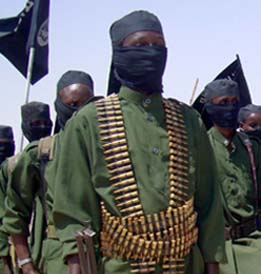
Col Davis: There are three levels of enemy in our area of operations – AO Denver. First there are the independent tribal fighters operating in this barren region who are traditional smugglers and are wrapped up in an assortment of criminal enterprises. There are the Baathists hardliners, the former regime elements that are fighting to rid the area of an American presence and are looking to return to power. Then there are the al Qaeda jihadist who are not interested in the stability of the region, but only interested in killing Iraqis and Americans, establishing their Islamist Caliphate and terrorizing the local population.
These various groups will work together or fight each other on any given day. The jihadists are not predominant in numbers but are providing the bulk of the leadership, the financiers that fund the terror activities and the technical knowledge of the insurgency. This area of Iraq is complex. Generations have been conditioned by Saddam to be survivalists and will do what is needed to survive. When the people become convinced we will remain to provide security and services, they cooperate with us. They hate the foreign fighters; they despise them for what they have done to their families and their towns and cities.
Bill: How are reconstruction projects proceeding in cities and towns along the Euphrates River basin such as Hit, Haditha, Rawah?
Col Davis: We are in the infancy in the reconstruction stage. The best results so far have been in the city of Rawah, where the Army’s 114th Civil Affairs group has done some wonderful work. We are also making some progress in the city of Hit.
I don’t like to talk in terms of winning and losing when it comes to the issues in the Middle East. Americans have a very Western way of thinking: you identify the problem; you analyze the problem and then fix it and move onto the next problem. Out here you need to be vigilant and do a lot of continuous maintenance work, which pays off over time.
Saddam never controlled this region of Iraq. It is very tribal and fiercely independent. He sent in the army to kill and intimidate the population. He established two tribes in the region: the Salmanis and the Karabilah tribes, to further his goals and counter balance existing dominating tribes. The Iraqis out west, particularly in Haditha are well educated and are able to provide for their own needs. They have operated this way for centuries and can do so again with the proper security environment. We have a simple equation we use out here:
Presence = Security = Stability = the environment for self governance.
Our goal is to enfranchise the Iraqi Security Forces and allow them to provide for the security in the region and improve the lives of the Iraqi people. We will continue to conduct civil/military affairs operations to improve the lives of the Iraqi people. In Haditha, we are rebuilding the hospital the jihadis attacked with a car bomb and then used as a base of operation. We are working to enhance schools and other services vital to the people. We will continue to maintain a presence until the Iraqi Army is capable of standing on its own.
Bill: What is the greatest threat to U.S. Marines and soldiers patrolling in the region?
Col Davis: The greatest threat by far is the IEDs (improvised explosive devices), VBIEDs (vehicle borne IEDs), SVBIED (suicide VBIEDs). This is the insurgent’s most deadly weapon. It has been rewarding to watch the proficiency develop in the Marines, sailors, soldiers and airmen serving out here to detect and disable these weapons. During Operation River gate, we encountered an average of four dozen IEDS a day during the course of a ten day period and 90-95% of these weapons were disabled or destroyed before they could be detonated.
Bill: Do you think domestic elements of the insurgency would be willing to lay down their arms and enter the political process, or are they too indebted to al Qaeda?
Col Davis: al Qaeda in Iraq will not lay down their arms to enter the political process, and they must be eliminated. They are vermin. We focus our efforts on destroying their networks and hunting the leaders, financiers, technical experts, and facilitators.
There is a possibility that the Sunni moderates can reach out to the Former Regime Elements / Baathist and encourage them to join the political process. But many of these FREs may not be willing to cooperate in power sharing.
Bill: Where do you think Zarqawi is operating? Do you believe he is still in the Euphrates River valley? Still in Iraq?
Col Davis: I don’t speculate on his whereabouts. RCT-2 doesn’t concentrate on targeting the big high value targets. The reality is that while one day Zarqawi will die or will be captured and nothing much will change. We will continue to fight and kill the insurgents in AO Denver with our focus being on dismantling the networks.
We have a great team out here and work with all Multinational Forces. Within the RCT-2 command is an Azerbaijani unit at Haditha Dam. Iraqi Army units are operating throughout the AO, and more are moving in. We have Marines, soldiers, sailors and airmen working together and in conjunction with the Multinational Forces.
Bill: What is the morale of the Marines, sailors, soldiers and airmen fighting in Anbar?
Col Davis: Sky high. There will be down days as are to be expected but the morale is high. I can clearly differentiate between Vietnam and today; I’m old enough to still hold my draft card. We have an all volunteer force that joined to serve their nation. They know the enemy they face is a threat to the United States, and want to fight them here and not back in my home town in New York or elsewhere, in the U.S.
We have had progress in this fight, but it has come at a cost. We have lost good friends, and others have been seriously wounded.
Please tell our families they are always in our thought and prayers, and as long as they support us and do not lose faith in us or our mission, we will accomplish that mission. There is good news to be reported from Iraq but at the same time it’s not all milk and honey. We have difficult work to do. We have set out with a purpose and a goal, and are progressing nicely to achieve these goals.
The realities of history are never as clean as the revisionists make them appear to be. The history of World War II shows us that the peace won is never easy. There were failures throughout the war, and after the defeat of Germany, the country lay in ruins for two years before the Marshall Plan began, and years later before the German people built their government.
Today’s war is no different. Miscalculations were made but there is real progress here today that needs to be known. We are giving Iraq the chance to rejoin the world of free nations.
Bill: Thank you for your time and I look forward to meeting you and the Marines, sailors, soldiers and airmen serving with RCT-2.

28 Comments
Bill,
Very informative interview and a wonderful kick-off to prepare for your trip.
There is really one hard question for me to grasp – understanding the extent of tribal politics in Iraq and how the Coalition has to adjust to such politics. My guess is that they will leave the Iraqis to work with these independent tribes within the context of an acceptable understanding that these tribes take no action to undermine wherever governmental authority is established. I’m just concerned that these tribes represent a potential thorn for the future of the Iraqi government.
The Col is reporting sky high morale. I am getting emails from liberals saying they are hearing from Marines that the morale is in the dirt in Ramali. What’s the real story?
Bill,
Y’all’s site is “da bomb”.
I am interested in Matthew’s question, too. There is no lack of history of tribal politics finding unions (enduring, or of convenience). In European traditions, one married a prince and princess. Incorporating locals into the military and government service AWAY from the tribal land has been a way of doing it.
I think it was Garibaldi who said something along the lines of “Now that we have an Italy, we need to make Italians.” I suspect that Iraq will need a Garibaldi-type institution.
Good luck on your trip to Anbar.
MG
From the London Sunday Times:
British policy in southern Iraq is to use the new Iraqi army to patrol the border while UK troops are held in reserve. The Iraqis, however, have proved unable to prevent incursions by Iranian Revolutionary Guards, the sources said.
Iranian soldiers are going into Iraq to cause trouble? You think you’d hear more about that…
http://corner.nationalreview.com/05_10_30_corner-archive.asp#081220
Jamison1,
“British policy in southern Iraq is to use the new Iraqi army to patrol the border while UK troops are held in reserve.”
Part of “taking off the training wheels” is accepting that things will be a bit “wobbly” for a while. The British definition of “wobbly” is quite different than the American definition.
Jamison1,
“British policy in southern Iraq is to use the new Iraqi army to patrol the border while UK troops are held in reserve.”
Part of “taking off the training wheels” is accepting that things will be a bit “wobbly” for a while. The British definition of “wobbly” is quite different than the American definition.
Col Davis is one of the Marine Corps’ finest. I thoroughly enjoyed everytime I heard him speak to our battalion.
He is never one to sit in an office, he was constantly on the road visiting his units in the field.
He has an excellent grasp of the challenges of AO Denver and he is one of America’s greatest leaders and heroes.
Bill, thanks for your work and best wishes for your adventure.
I appreciate this site so much. I am so grateful for the internet and people like Bill. This is so, so different from the Vietnam era. Thank you.
Excellent, Bill.
Iraq Roundup
Omar at Iraq The Model attended the recent conference of “The Oath Of Iraq”. A group formed to ensure that the new Iraqi government protects and preserves the new freedoms given to every Iraqi Citizen:
Today, Mohammed and I had the privi…
http://tinylink.com/?poJrsnGcMw
Talabani is unhappy that the US isn’t providing the Iraqi Army much more responsibility over operations.
Talabani is offering that the Iraqi Army patrol Baghdad and other hot points were IEDs are taking US lives, and the US isn’t getting any response.
Thank you for giving us a window’s view of what you see and are encountering in Iraq Col. Davis. We honour you and all the brave soldiers in Iraq (and Afghanistan)!
…and keep up the good work Bill.
-RP
US Ex-Pat
Sydney, Australia
IMO, giving the ISF more responsibility would be a bit of a bad thing. i have read on Michael Yon’s site that Iraqi Judges are allowing terrorists back onto the streets. i would suggest we maintain our momentum and allow them to govern their areas, but we should be doing most of the heavy lifting, at least until AQI cracks and dissolves. once Zarqawi is finished, then i would give Iraq to Talabani to fix his internal problems while we secure Southern Iraq and the Iranian border. but for now, and i know these guys are good at heart, i dont entirely trust the ISF to clean the streets of mainstreet Iraq. if the divisions within the ISF were to fall into corruption, it would only aid AQI and further hamper our efforts.
plus, it might be a good idea to keep these guys a little agitated with us; once we finish our priorities, it will look good from their positions to demand an American withdrawl…
Iraqi and coalition forces….
….continue to achieve success after success in Iraq. In one operation, six terrorists were killed and six others taken into custody. In othe…
Dear Mr. Roggio, The similarity between your interview with Col Stephen Davis and what in my day was known as Saigon’s “5 O’clock Follies” is absolutely remarkable. It indicates nothing so much as a willingness to be deceived matched by an oppossing willingness to accomodate. I wish you the very best of luck in your attempt to provide your fellow citizens with the material so many of them hope to discover, despite the inescapable evidence to the contrary. When it comes time to sort all of this out and then pay the bills, I can only imagine your shock at the depth of the deception.
ghoullio, if we aren’t willing to bet on the Iraqi Army in the next couple months we might as well leave Iraq. Because, center isn’t going to hold in the US for too much longer.
The Pentagon has been extremely hesistant to give them anything in terms of equipment, most of what they have is 60s and 70s Soviet era junk the Iraqi government has bought from Eastern Europe.
Amazed,
Bill will be heading to the front lines in a few weeks. You might be amazed with what he finds.
Amazed, if you by some means or manner have first hand experience to the contrary, then come with it. Otherwise your words are little more than humidified air.
Amazed sounds like Baghdad Bob. The Americans are no where near Baghdad. {BOOM} Uh, sorry, gotta run…
LA Times article on US moving out of big cities, and allowing ISF to take over security. Conditions by which US forces can re-engage in these areas.
http://news.yahoo.com/s/latimests/20051029/ts_latimes/usiscedingmorecontroltotheiraqis
This may allow the Sunni nationalists to “save face” and join the constitutional process.
A View from Anbar Province
On Sunday Bill Roggio interviewed Colonel Stephan W. Davis, Commander of Marine Regimental Combat Team 2, who offered some first hand insight into AO Denver, or west Anbar where his units are currently deployed. Below is a short excerpt, read the entir…
Amazed:
I’m amazed that any thinking, intellectually honest human being would see any parallels at all between the Vietnam War and Operation Iraqi Freedom, aside from the fact that both involve U. S. troops overseas.
Change the record, please. This one’s getting a bit boring.
thanks bill and thanks col davis – here in greenville, ny, we know how much we owe you
BAGHDAD, Iraq — The U.S. command says six American soldiers have been killed Monday in two separate roadside bombings.
http://www.washingtonpost.com/wp-dyn/content/article/2005/10/31/AR2005103100217.html
————————————–
There has got to be a better way around these IEDs, everything we have done up to this point to counter them hasn’t even managed to keep the US death rate from IEDs level.
Justin,
#19 is probably your solution
Jamison1,
We are moving troops out of certain areas of Iraq only to patrol other areas of Iraq.
While the US death count will eventually taper off in the next year and a half that way the US public will turned so against the war by that point that it will be almost impossible to get Congress to help the people of Iraq over the next four years.
Bill,
Now that’s a real report. Stright from the horse’s mouth. If you can’t depend on the leadership of the units to be truthful, then you have no truth anywhere in the force.
People who say the leaders are only spouting the party line are ignorant of where the party line comes from. The people fighting the war make up the military’s party line. They know what’s going on and what’s working. Give them the support they deserve to finish the job.
Subsunk