
As London recovers from the attack on its transportation system, Coalition forces continue on the offensive in Iraq’s Anbar province. Operation Sword was directed at the city of Hit, which lies west of Fallujah along the Euphrates river, has completed. Unlike some recent search & destroy operations in the Anbar province, Sword has left an Iraqi force in garrison.
Hit joins the major cities of Ramadi, Habbaniyah and Fallujah in having persistent presence of Iraqi Security Forces. Hit is now the Al Anbar city furthest west to maintain a fully-trained ISF presence. There are now approximately 1,500 more trained Iraqi soldiers working in Al Anbar than there were at the conclusion of Operation Matador on May 7.
This appears to be a carefully thought out plan to slowly create a presence of Iraqi Army units in the region. The Iraqi government is positioning Iraqi forces to secure cities along the Euphrates ratline, creating a nucleus of Army units familiar with the region that can further seed the future Iraqi Army units to follow in their path.
The newest operation is Scimitar and is being conducted in the town of Zaidan about 20 miles southeast of Fallujah. Like previous operations in Anbar, Scimitar is a battalion sized exercise conducted with Iraqi forces.
“The military said it did not announce the offensive earlier because commanders did not want to tip off insurgents that a major operation had begun. The campaign — named after a curved Asian sword — includes 500 Marines from the 3rd Reconnaissance Battalion, Regimental Combat Team-8, stationed in Okinawa, Japan, the military said. About 100 Iraqi soldiers were supporting the operation, which is designed to disrupt insurgent activity in the Anbar province.”
The Coalition retains the ability to conduct multiple battalion sized operations indefinitely indicating a reserve forces is being built. This strength is likely attributed to the rise of the Iraqi Army, which is increasing its capability to operate in hostile locations. The Coalition is taking the fight to the heart of the insurgency – Western Iraq.
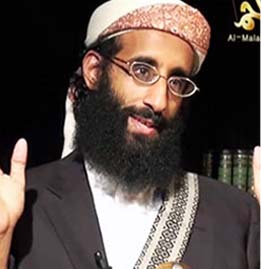
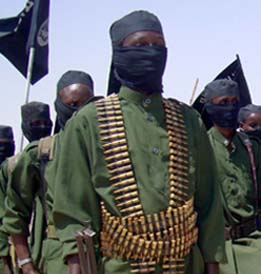
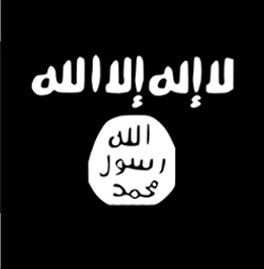
Zarqawi has recognized the threat, and has declared the Iraqi Army to be the real enemy. In a recent communiqu

18 Comments
Has anyone noticed that fewer and fewer Americans are needed in each subsequent mop-up action?
bq. “We think that the nation is committing a sin by failing to support the mujahidin.”
Says it all, doesn’t it Bill? I know that’s why you put it in bold.
Now if we could only get it on the front page of the NYT!
Keep up the great work.
Ricks
“the military did not announce the offensive” wtf is going on;lets all tell them that we are comming after you; well doh! wonder whose brain fart it was to do that? its called war-not an afternoon tea party. oorah! and semper fi.
Bill I was wondering if you could tell me what you make of this statement by Allawi. Is he just getting ready for the next election (and trying to show he isn’t a US stooge) or is this his way to warn Sunnis and Shia to see what they are moving toward and show them why they should come together?
————————————————
Allawi: this is the start of civil war
IRAQ’S former interim prime minister Iyad Allawi has warned that his country is facing civil war and has predicted dire consequences for Europe and America as well as the Middle East if the crisis is not resolved.
“The problem is that the Americans have no vision and no clear policy on how to go about in Iraq,”
Allawi’s remarks seem to me to be about the question of how independent the federal states of Iraq should be. He is arguing for a strong central government, as against the Kurds having near independence. Kirkuk and the oil there are the key problems.
Thanks for the article, very thoughtful. Building a centralized government (again) in Iraq, and ignoring the identities of disparate regions and peoples inside the nation, is only going to cause more problems down the line. Is the Iraqi National Army going to be used for the same purposes Saddam used them for? To “mop-up” Kurdish insurgencies when the Allies leave?
And you know that how, the english guy? You are assuming the centeralized government being build is on the mirror image of Saddam’s, and there’s the rub.
Bill,
came across a story on Drudge this morning
stating that the US and UK are planning a rapid withdrawl of troops from Iraq. I wonder if you put any stake in these claims. I, for one, am skeptical but also recognize that is a tremendous amount that I do not know about the GWOT.
Also, I wonder if it is possible that the Iraqi troops are far better trained than the US military has let on and that the former are more capable, both militarily and culturally, to take on what remains of the Iraqi “insurgency”. In particular, I wonder if they will be able to take actions of a kind that an outside force like the US would be roundly criticized for.
Starling,
Absolutely absurd assertion posited at Drudge.
I would say the training of the Iraqi troops is about where it is being reported (without the negative spin, that is).
Bill,
“Drudge Report”
IMHO the 66,000 number is a bit agressive, however, a little simple math and a couple of assumptions would indicate that some troops reductions are coming.
.
Assumptions – TF Baghdhad
Divided into 6 battle spaces, each battle space requires a brigade.
2 of the 6 battle spaces are currently owned by the Iraqi Army Brigades, probably requiring a US Battalion as a QRF. 3rd ID commander has stated that all 6 battle spaces will be owned by Iraq Army by October. Assuming 2 steps forward, 1 step back, assume 4 battle spaces by October 2005, 6 battle spaces by April 2006.
That would indicate 6 battalions for TF Baghdad, basically 1 1/2 Brigades – call it 2 for good measure.
TF Liberty – currently 4 brigades, 1 each for Diyala,Salladin and Tamin provinces. Plus 1 patrolling the Iranian border. Assume Tamim province drops to a battalion and transfers to TF Freedom, Diyala province drops to a battalion and transfers to TF Baghdad. Leave 1 Brigade for Salladin and 1 Brigade for the Iranian border.
No sense having 2 division headquarters, TF Liberty and TF Baghdad merge.
TF Freedom – Currently 2 brigades – stays the same (picks up Tamin province)
Marines in Al Anbar – 4 brigades, stays the same.
SD,
No doubt, but Drudge’s immediate withdrawal, especially after London is out there
4 Brigades in Anbar? Are you sure that isn’t 4 battalions? If you have a breakdown I’d love to see it (email it to me if you do not want to post online).
If you read the story that Drudge linked to, it was an absurd headline to put on the article. Basically, both the British & US are working out different scenarios, one of them being able to withdraw forces starting in Spring 2006. But, as they have said all along – that won’t happen unless the conditions on the ground warrant it. There is nothing about a “secret plan to withdraw forces in a hurry”.
Bill,
Al Anbar – 2nd Bridage, 2nd Infantry Division + 2 Marine regiments + Air + Engineers. Maybe 3+ Brigades. Lot of real estate in Al Anbar.
Monday Winds of War: July 11/05
London stricken; Last SEAL is recovered; Good news from Kuwaiti mosques; Russia hearts Iran; IRGC cop power grab; Enter Scimitar; Bombs in Iraq; PA strikes it rich; PA MP resigns over reforms, security; Saudis discover jihadi teachers in rural schools;…
The pace of offensive operations has increased dramatically in the last few months. The reason being that thousands of US troops have been relieved of garrison duty around Baghdad by IA forces, as well as additional IA forces coming to battle themselves. That is remarkably important news, and the pace will continue to increase as more and more Iraqi forces come online.
Operations Sword & Scimitar
The offensive along the Euphrates River continues. I’ve posted on Operations Sword & Scimitar over at The Fourth Rail. Iraqi troops are beginning to garrison the cities involved in the recent operations with company sized…
The Increasing Effectiveness Of The Iraqi Army
Bill Roggio at The Fourth Rail recently posted a comprehensive (as usual) analysis of the recent offensive operations by Coalition forces in Western Iraq. Operations Scimitar and Sword, which concentrated on the city of Hit, west of Fallujah, are batta…
nice blog. i enjoyed this.keep it up.